

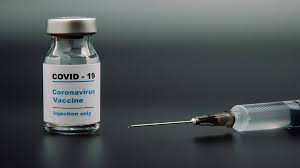
Equitable distribution of COVID-19 vaccines will represent an “acid test” for the international community, the President of the UN Economic and Social Council (ECOSOC) told journalists on Wednesday, highlighting the importance of global cooperation and solidarity in beating back the disease.
Speaking during a virtual press briefing, ECOSOC President Munir Akram also outlined objectives for the coming year, including plans for a facility to support infrastructure investment in developing countries, and forums to examine issues critical to recovery and achieving sustainable development.
Mr. Akram, who is Pakistan’s Ambassador to the UN, stressed that COVID-19 vaccines must be viewed as “a global public good” and thus accessible to everyone, everywhere.
More Read
He highlighted the groundbreaking international collaboration working to achieve this goal, known as the COVAX Facility, but stated it ultimately was a question of political will whether the entire global population will receive vaccines.
“It is up to governments to be able to decide that they will allocate a portion of the vaccine production for other countries: for developing countries, for the vulnerable in developing countries,” he said, responding to a journalist’s question.
“This will be an acid test, and certainly we as developing countries, as international actors here at the United Nations, we must press for this equity.”
Emergency response and structural change
ECOSOC is one of the UN’s six main organs and promotes peace through international economic cooperation.
Mr. Akram detailed how the pandemic is having deep impacts globally, but especially in the world’s poorest countries, meaning the international community must fight both the virus and its consequences.
He said this calls for an emergency response to mobilize financing for poorer nations, and to support the COVAX Facility and the Secretary-General’s Global Humanitarian Response Plan, both of which are facing significant funding shortfalls.
But he also emphasized the need for broader structural change to address inequality globally.
Invest in sustainable infrastructure
“Another important aspect of structural change is the need for investment in sustainable infrastructure”, said Mr. Akram.
“If we are to build back better, as the Secretary-General has said, and to build a new green economy which prevents and avoids the climate disaster that is facing us, we need to invest in sustainable infrastructure and to move away from the fossil fuel economy.”
The ECOSOC President has proposed the creation of a public-private partnership to accelerate investment in sustainable infrastructure in developing countries. Consultations are currently underway.
The facility would also utilize the UN’s Resident Coordinator system: a vast network of agencies working on development issues in more than 130 nations worldwide.
“They are excellent instruments to be able to identify the possible infrastructure projects, to help the developing countries build the capacity to formulate good pre-feasibility and feasibility studies for those projects, and the facility would be designed to find the right partners for those projects in the investment world”, he said.
‘Build back better’ with science
The rapid development of COVID-19 vaccines has shown how science, technology and innovation can be harnessed towards a common goal, and also applied in global efforts to achieve a sustainable future for all people, he continued.
However, Mr. Akram observed that developing countries have often been blocked from accessing breakthrough technologies due to intellectual property issues.
“We need to see how to align the intellectual property regime with the SDGs”, he said, referring to the Sustainable Development Goals, the blueprint for achieving a more just and equitable world by 2030.
Mr. Akram further called for action to “digitalize” developing economies through improving internet connectivity and access.
“Eighty per cent of the populations of developing countries today under lockdowns, they are in the dark. They are left behind. They have no ability to communicate, to conduct commerce, to conduct business, to be able to lead a normal life because they are isolated, virtually and physically”, he said.
Forums for the future
Mr. Akram announced that ECOSOC will convene several forums next year where it is hoped countries will make “ambitious decisions” to respond to the fallout from the pandemic, and to address climate change and achieving the SDG targets.
The meetings will include a Financing for Development Forum in April, with the Science, Technology and Innovation Forum taking place the following month, culminating with the annual High-Level Political Forum in July.
Source:UN news centre