

Public Agenda NewsPaperPublic Agenda NewsPaper
  • General News
  • Politics
  • Business
  • Health
  • Development Agenda
  • World News
  • Features & Opinions
  • Election watch
  • Editorial
Font ResizerAa
Public Agenda NewsPaperPublic Agenda NewsPaper
Font ResizerAa
  • General News
  • Politics
  • Business
  • Health
  • Development Agenda
  • World News
  • Features & Opinions
  • Election watch
  • Editorial
Search
  • General News
  • Politics
  • Business
  • Health
  • Development Agenda
  • World News
  • Features & Opinions
  • Election watch
  • Editorial
Follow US
Breaking NewsWorld News

Nigeria’s black market fuel ‘less toxic than imports’

Latifa Carlos
Last updated: July 1, 2020 11:15 pm
Latifa Carlos
Share
1 Min Read
Nigeria's black market fuel 'less toxic than imports'
SHARE

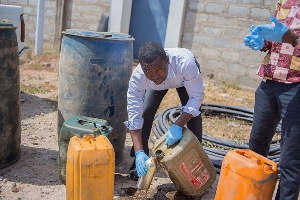
Black market fuel made in Nigeria is less toxic than the petrol and diesel sold to Nigeria by European traders, a report says.

Stakeholder Democracy Network (SDN), a non-governmental organisation, compared 91 samples of imported fuel and black-market petrol from Nigeria’s oil-producing Niger Delta region.

Its study showed that imported diesel and petrol sometimes contained more than 200 times more sulphur than the limits set by the European Union.

More Read
MiDA Moves to Transform Volta Corridor into Agro-Industrial Powerhouse
Bitter times for cocoa farmers as chocolate market slumps
Kufuor calls for higher pay for public servants to curb corruption
Ghana urges Commonwealth of Nations to back UN Slave Trade resolution
Middle East tensions could disrupt trade, spike energy prices – IMF

In comparison, fuel from black market sources in the Niger Delta contained more than 150 times more sulphur than those limits.

SDN is now calling for fuel quality tests to be carried out nationwide immediately to explore the full extent of the problem.

In 2017 improved standards for fuel quality were approved by the Standards Organisation of Nigeria, but SDN says there has been little enforcement.

Nigeria is one of the world’s largest producers of oil, but with its refineries closed or dysfunctional, the country relies heavily on the fuel being processed abroad before it is sold back to Nigeria.

Source: BBC

Share This Article
Facebook Whatsapp Whatsapp Email Copy Link Print

Latest News

NPA scraps fuel and LPG discounts effective March 16
March 4, 2026
Oil prices surge, Asian stocks fall over Iran conflict
March 2, 2026
Ghana has over 5 weeks of fuel stock despite Middle East tensions – NPA
March 2, 2026
Stabilised economy must benefit ordinary Ghanaians – Vanderpuye
February 26, 2026
PURC summons ECG over rapid depletion of prepaid units
February 26, 2026
‘I’m a cocoa farmer too’ — Mahama speaks on price cuts and farmer pain amid crises
February 17, 2026
RJN–Ghana Convenes to Strengthen Natural Resource Governance,Validate GESI–ABFA Report
February 17, 2026

You Might Also Like

Breaking NewsBusinesstop stories

Fuel prices edge up after NPA sets new price floors

February 16, 2026
Breaking NewsDevelopment Agendatop stories

President Mahama rallies his fellow world leaders to support Accra Reset

February 16, 2026
Breaking NewsBusinesstop stories

Cocoa sector reforms will protect farmers – Ato Forson

February 13, 2026
Breaking NewsBusinesstop stories

BoG Governor Reaffirms Commitment to Prevent Excessive Volatility in the Ced

February 10, 2026

About Us

Public Agenda is fou­nded and owned by Pu­blic Agenda Communic­ations.

Public Agenda was founded as a public interest Me­dia entity. Its Visi­on is to contribute to building a well-i­nformed society where accurate informati­on dissemination is the cornerstone of a democratic, just and equitable society.

Its mission is to inform, guide and bui­ld responsible citiz­enship and accountab­le decision making and strive for excell­ence in the media in­dustry. Public Agenda Communications is managed by a Board of Directors.

Welcome Back!

Sign in to your account

Username or Email Address
Password

Lost your password?