

Ghana’s forest reserves are dwindling at an alarming rate of 2% per annum, with about 480.000 m3 woods harvested illegally for both export and domestic use. To regulate the sector and conserve the remaining forest, the government of Ghana has signed a Voluntary Partnership Agreement (VPA) to only export legal timber to the European Union Market. To ensure the sustainability of the VPA and forest conservation, the government in collaboration with CSOs, private lumbering companies, and other key stakeholders are collaborating to develop a domestic legal wood market policy.
The process which is been led by the Ministry of Lands and Natural Resource (MNLR) in collaboration with Nature and Development Foundation (NDF), Forestry Commission of Ghana, private logging companies and other key stakeholders, developed strategies for the implementation of sustainable consumption of wood by government for re-submission for Cabinet review.
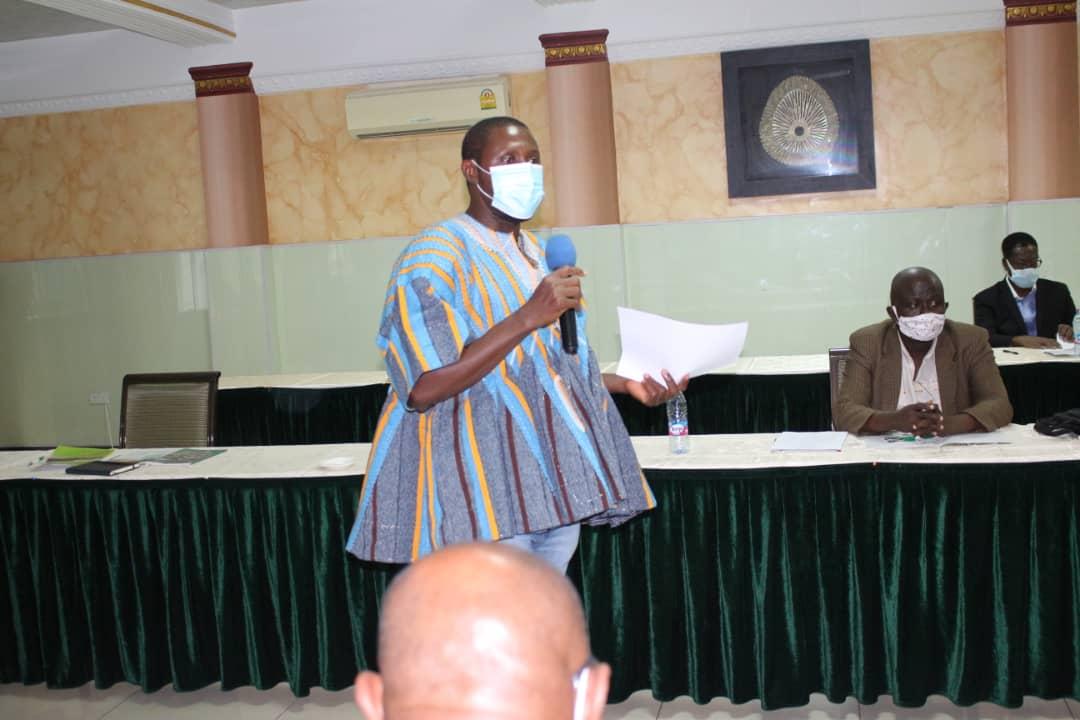
At as stakeholder dialogue meeting organized by NDF in Accra to review the proposed domestic market strategies, Mr. Mustapha Seidu, Director of NDF, stated that government as the biggest procurement entity must use its purchasing power to lead the process of increasing the production of legal wood for the local market. He lamented that the government uses public funds to procure illegal wood for its construction projects, therefore contributing to the increase in the degradation of its natural resources. He applauded the government’s commitment to collaborate with CSOs and the private sector to come up with guidelines for driving legal wood trade locally.
More Read

Mr. Abu Juam, the Technical Director of the Department of Forestry at MLNR, bemoaned how fast Ghana’s timber stock is being depleted, which can lead to its inability to provide enough wood to meet local demand shortly if proactive measures are not put in place to remedy the situation. He intimated that, if the government leads the way and demand for legal timber during procurement, it will encourage the private sector to follow suit. He reiterated that despite the dwindling forest reserves “if we are disciplined enough, we can ensure that legal wood is available for both the domestic market and export.
Mr. Francis Ayittey, the Principal Operations Officer for Policy Planning and Research at the Public Procurement Authority stated that the PPA is committed to ensuring the legal wood market policy is implemented should cabinet approve the policy. He informed participants that, the Public Procurement Act 2003, Act 663 has been amended to include the issues of environmental sustainability as a key component in government procurement and therefore can be adopted for the implementation of the Domestic Legal Wood Market Policy. He allayed the fears of government and individuals that legal wood is more expensive by restating that, sustainably sourced timber for government’s projects in effect prevents environmental degradation and reduce the cost involved in reafforestation and restoring degraded forest.
Dr. Kwame Asamoah Adam, the Chief Executive Officer of Ghana Timber Millers Organisation (GTMO), affirmed the private sector’s commitment to the supply of legal timber for the domestic market, saying “as part of their business ethics the associations members don’t want to engage in illegal logging of trees. He appealed to the government to regulate the activities of illegal chainsaw operators and punish culprits to serve as a deterrent to others.
In his closing remarks, Mr. Mustapha Seidu thank all the stakeholders for their contributions to the discourse and their commitment towards further engagement on the establishment of the Public Procurement Policy on Timber and Timber Products. He also informed the participants that, NDF, is currently developing a Timber Market App to help consumers to identify companies producing legal timber.
Source: Evelyn Addor