

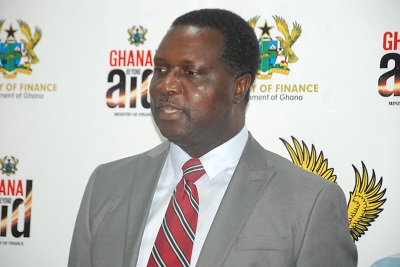
Deputy Education Minister Dr Yaw Adutwum has challenged Ghanaians to be globally competitive rather than seek to be champions of mediocrity.
Instead of touting our educational system and products as being better than Senegal, Gambia, Sierra Leone, Dr Adutwum said Ghana should “break from the African mediocrity trap” and start competing with the likes of Singapore, Finland and the USA.
He said Ghana can only achieve that through education, and more importantly through a deliberate curriculum that addresses issues of access, quality and relevance at the same time.
More Read
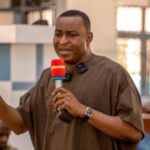
He was speaking at the National Stakeholder Engagement on the Common Core Programme (CCP), the curriculum to be implemented from Basic 7 to Basic 10 (JHS1-SHS1).
Well Rounded Curriculum
According to the Deputy Minister, the country has over the years adopted a piecemeal approach in its educational reforms and has therefore not been able to achieve the optimum results.
He cited instances where the number of years at the SHS was increased and reduced, schools were built to address issues of access, parts of the curriculum was changed at different times all in effort to bring the best out of the students.
“You cannot implement one thing in the educational system and expect things to change; you have to do different things at the same time before optimum results will be achieved,” he stated.
Whilst admitting that quite a number of things are implemented in the last three years which appear a bit “dizzying”, he was quick to add that it is only when you have all the different policy measures and institutions working at the same time that the desired results will be achieved.
“This reform is the first holistic, well-rounded educational reform in the history of our country,” he said, adding, if the curriculum is changed but the structure of the teaching or the capacity of teachers is held constant, nothing will be achieved.
It is for this reason that the National Teaching Council (NTC) and National Inspectorate Board (NIB) are heavily involved in the implementation of this new curriculum, with teachers now having to be trained for four years.
In addition, there is now the Professional Development Days in the calendar for teachers to develop their competencies as well as professional learning communities set up by GES for the teachers to take advantage of.
“Whatever NaCCA is doing, if we don’t create the right ecosystem it will not be effective,” he stated.
Caning
Dr Adutwum addressed the age-long debate about whether canning should be reintroduced into the classrooms.
The Deputy Minister said “I lived in a country that did not cane children yet they have been to moon and back; we have been caning our children for 60 years but where have we gotten to?” he asked.
He said there is enough literature and science to prove that “If Children are afraid they can’t learn. Children acquire language easily when there is zero anxiety.” He was surprised teachers who have been trained in child psychology are also shockingly advocating for children to be caned.
Nomadic knowledge workers
The Deputy Education Minister said the object of the CCP curriculum is to ensure that the children acquire the soft skills of the 21st Century in order for them to be globally competitive.
He cited instances, where persons he referred to as Nomadic Knowledge Workers, were brought into the country to fix one problem or another, especially in the oil sector for a week and were paid salaries better than he received for a year.
“These are individuals who are so versatile with unique skills, including teamwork and who can solve problems across the world,” he said, adding, this curriculum is expected to create such Nomadic knowledge workers amongst Ghanaians.
Dr Adutwum said if we do not ensure our children have the requisite skill to be globally competitive, we are in trouble because menial jobs, such cleaning, washing, packing etc which some of our graduates have been doing, have been lost to robots.
The Executive Secretary of NaCCA, the outfit championing the Curriculum reform and the Stakeholder Engagement said the country must know where it wants its children to be in 20 years.
“What kind of citizens do we want in 20 years? Do we want graduates who will finish and set up unemployment associations or those who would have the Entrepreneurial skills to set up their own jobs?
A shift from knowing to doing
Dr Prince Armah said the CCP emphasizes “on what people can do and not what people know.”
He said there are nine Common Core subjects including mathematics, English Religious and Moral Studies, Physical and Health Education which will be made compulsory from Basic 7-10.
In-built in the Curriculum are the 21st Century soft skills including, leadership, ability to communicate, good analytic skills and problem solvers, Dr Armah added, with moral values, religious tolerance, counselling and guidance all embedded in the curriculum.
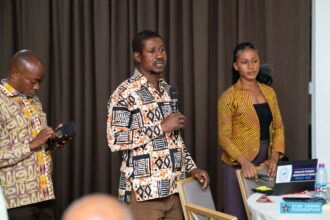
As part of the stakeholder engagement, curriculum leads in Mathematics, English and Career Technology made presentations about what the new curriculum entails in their various subjects, the gaps it seeks to bridge and outcomes it will produce in the children.
Stakeholders from universities and colleges of education, teachers and student unions, faith-based organizations, NGOs and CSOs, Trade Unions, industry players etc.
The stakeholders were made to make inputs by asking questions, recommendations all of which will consider and incorporated into the Common Core Programme which will begin this academic year for students in Basic 7 (JHS1).
Source: Myjoyonline.com