Public Agenda NewsPaperPublic Agenda NewsPaper
  • General News
  • Politics
  • Business
  • Health
  • Development Agenda
  • World News
  • Features & Opinions
  • Election watch
  • Editorial
Font ResizerAa
Public Agenda NewsPaperPublic Agenda NewsPaper
Font ResizerAa
  • General News
  • Politics
  • Business
  • Health
  • Development Agenda
  • World News
  • Features & Opinions
  • Election watch
  • Editorial
Search
  • General News
  • Politics
  • Business
  • Health
  • Development Agenda
  • World News
  • Features & Opinions
  • Election watch
  • Editorial
Follow US
Breaking Newstop storiesWorld News

Iran attack: Oil prices rise after Iraq missile attacks

Latifa Carlos
Last updated: January 8, 2020 10:58 pm
Latifa Carlos
Share
3 Min Read
SHARE

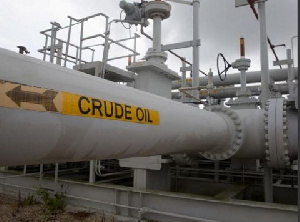
Oil prices have risen after two bases hosting US troops in Iraq were hit by ballistic missiles.

Brent crude was up by 1.4% at $69.21 per barrel in the middle of the Asian trade, easing back from earlier gains.

So-called safe haven assets, like gold and the Japanese yen, also rose on the news.

More Read

UK scraps £45 million girls’ education programme
Ghana’s inflation could ease below 5% in July – Databank
Mahama declares July 10–11 National General Cleaning Days in flood-affected regions
Study Recommends Royalty Share for Landowners in Mining Communities
Fuel prices drop for second consecutive time

At the same time, global stock prices were sent lower on concerns over the growing conflict in the Middle East.

Japan’s benchmark Nikkei 225 stock index fell by 1.3%, and Hang Seng in Hong Kong was down 0.8%.

Iranian state television said the attack was a retaliation for the killing of the country’s top commander Qasem Soleimani.

The attack happened just hours after the funeral service for Soleimani, who was killed by a US drone strike on Friday.

His death had raised concerns that the conflict between the US and Iran could escalate further.

That could disrupt shipping in the world’s busiest sea route for oil, the Strait of Hormuz. Around a fifth of global oil supply passes through the strait which connects the Gulf with the Arabian Sea.

The Strait of Hormuz is vital for the main oil exporters in the Gulf region – Saudi Arabia, Iraq, the UAE, and Kuwait – whose economies are built around oil and gas production. Iran also relies heavily on this route for its oil exports.

Qatar, the world’s biggest producer of liquefied natural gas (LNG), exports nearly all its gas through the strait.

After the latest attacks, the US aviation regulator banned American airlines from flying over Iraq, Iran and neighbouring countries. The ban includes the Gulf of Oman and the waters between Iran and Saudi Arabia.

The Federal Aviation Administration (FAA) said the decision was in response to heightened military activity and increased political tension in the region.

Before the latest guidance, the FAA had already prohibited US airlines from flying below 26,000 feet (7,925 metres) over Iraq and from flying over an area of Iranian airspace above the Gulf of Oman since Iran shot down an American drone in June 2019.

At the same time, Singapore Airlines has said that all of its flights would now be diverted from Iranian airspace.


Source: BBC
Share This Article
Facebook Whatsapp Whatsapp Email Copy Link Print

Recent Posts

  • UK scraps £45 million girls’ education programme
  • Ghana’s inflation could ease below 5% in July – Databank
  • Mahama declares July 10–11 National General Cleaning Days in flood-affected regions
  • Study Recommends Royalty Share for Landowners in Mining Communities
  • Fuel prices drop for second consecutive time
  • From Trauma to Recovery: Strenthening Support for Victims of Torture
  • Drug networks infiltrating schools – NACOC warns
  • NDC renames National Headquarters after J. J Rawlings
  • GTMO Condemns Attack on Forestry Commission Checkpoint in Bono East Region
  • World leaders converge in Accra for high-level reparatory justice conference
  • Mining, water supply and transport emerge biggest drivers of Producer Price Inflation
  • “Men’s Mental Health: Breaking the Silence, Saving lives
  • NADeF Micro-Credit beneficiaries seek increased funding amid business growth
  • Gbetsile: Six-year-old girl drowns in septic tank while searching for water
  • Recurring Floods Continue to Threaten Lives and Property in Oyibi Community
  • Africa poised to lead global digital finance evolution — MTN CEO
  • Ghana risks outsourcing economic sovereignty under IMF PCI deal — ISODEC
  • Accountability Labs Engage Birim North Assembly on Development Needs

You Might Also Like

Breaking NewsFeatures & Opinionstop stories

From Trauma to Recovery: Strenthening Support for Victims of Torture

June 27, 2026
Breaking NewsGeneral Newstop stories

Drug networks infiltrating schools – NACOC warns

June 25, 2026
Breaking NewsPoliticstop stories

NDC renames National Headquarters after J. J Rawlings

June 22, 2026
Breaking NewsGeneral Newstop stories

GTMO Condemns Attack on Forestry Commission Checkpoint in Bono East Region

June 19, 2026

About Us

Public Agenda is fou­nded and owned by Pu­blic Agenda Communic­ations.

Public Agenda was founded as a public interest Me­dia entity. Its Visi­on is to contribute to building a well-i­nformed society where accurate informati­on dissemination is the cornerstone of a democratic, just and equitable society.

Its mission is to inform, guide and bui­ld responsible citiz­enship and accountab­le decision making and strive for excell­ence in the media in­dustry. Public Agenda Communications is managed by a Board of Directors.

  • Contact us
  • Advertise with us
Welcome Back!

Sign in to your account

Username or Email Address
Password

Lost your password?