


Ghana yesterday signed a grant agreement of €5,026,027 (GH¢31 million) with Germany for the construction of a community waste-to-energy project in the Ashanti Region.
The 400-KW demonstration project, which will use a hybrid solar PV, biogas and a pyrolysis plant to generate electricity from domestic waste, will start on October 1, 2019 and be completed by November 30, 2023.
More Read

Apart from contributing to provide sustainable solutions to the waste and energy challenges in the country, the project will also create more than 50 jobs for Ghanaians.
The successful implementation of the project will make way for 10 more to be established in the country.
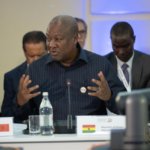
The Minister of Environment, Science, Technology and Innovation, Professor Kwabena Frimpong-Boateng, signed the agreement for Ghana while the German Minister of Education and Research, Ms Anja Karliczek, initialled for her country.
There are nine research partner institutions involved in the project. They comprise six from Ghana and three from Germany.
Appreciation
Prof. Frimpong-Boateng expressed his gratitude to Germany for the support it continued to give Ghana in various sectors.
“Today I wish to further thank the Government of Germany for the grant to establish a community renewable energy project.
We will ensure that this project is successfully implemented for the benefit of the people at the local level,” he said.
He mentioned land management and biodiversity as potential areas for further cooperation with Germany.
He stressed that Ghana was committed to reclaiming degraded lands and restoring water bodies polluted through illegal small-scale mining activities.
“We have strengthened our monitoring systems for illegal small-scale mining and have augmented monitoring systems with modern technology for real time information,” he said.
Collaboration
Ms Karliczek expressed her optimism for the project’s success in not only helping Ghana to address her energy and sanitation challenges but also in efforts to replicate the project nationwide.
“We are tackling two urgent challenges in Ghana together: waste and energy.
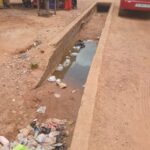
We learn that every day 12,000 tonnes of municipal waste is produced in Ghana and is inadequately processed,” she said.
She said the inadequate treatment of waste had serious consequences especially for the health of the people and the environment.
Ms Karliczek said domestic waste was responsible for about a quarter of the total greenhouse gas emissions and “that does not include the tonnes of waste which washes up on Ghana’s coasts.”
She said collaboration between experts from both countries would provide innovative solutions to the challenges.
Ms Karliczek stated that what made the upcoming project special was its ability to reduce carbon dioxide emissions and also produce fertiliser.
She expressed her gratitude to Prof. Frimpong-Boateng for the role he played in bringing the project to fruition, adding that without his commitment the agreement would not have matured.
Source: Graphic.com