


Discussants at a two-day policy dialogue meeting on Community Land Rights and Sustainable Development Goals (SDGs), have appealed to the Government to make the Plating for Food and Jobs (PFJ), as well as other Government flagship programmes more inclusive.
To ensure that no one was left behind in the implementation of the programme, the discussants called for the more inclusion of women, and persons with disability under the PFJ programme, so that they would all benefit from the fruits of the project.
The policy dialogue meeting, in Accra, which brought together Diocesan Development Officers from all the Dioceses in Ghana as well as representative of civil society organisations and some government institutions, was on the theme: ‘Making the SDG Principle of Ensure No One is Left Behind relevant in Ghana.’
More Read
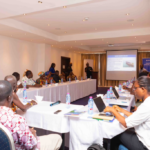
Nana Ama Yirrah, Founder and Executive Director for Community Land and Development Foundation (COLANDEF), and Co-Chair at the meeting, urged Government and stakeholders to not only look at provision of high yield seeds and fertilisers under the PFJ programme but also focus on community land rights and land acquisition.
She entreated Government to ensure that targeted outcomes of the PFJ programme benefits everyone especially women and persons with disability.
Speaking on the essence of the dialogue, Mr. Samuel Zan Akologo, Executive Secretary for Caritas Ghana, organisers of the meeting, said evidence-based public policy dialogue was an important part of participatory governance, which affords citizens the opportunity to tell duty-bearers why certain policies were working well or not.
He noted that the good practice of integrating the SDGs into the National Budget process, should be extended to other sectors of the economy, to emphasize the need for qualitative implementation of government’s pro-poor programmes.
While commending Government for including ‘Rearing for Food and Jobs’ in the 2019 Budget statement, Mr. Akologo stated that the programme may be strategic to the achievement of SDG Goal 2 on Food Security and Nutrition, “only if it passes the test of safety-valves that ensures that no one is left behind.”
Mr. William Sabi, Deputy Minister of for Monitoring and Evaluation, commenting on the key components of the results framework (2017-2020) for planting for food and jobs programme, including food security, providing employment and reducing poverty, said as a result of increased accessibility of improved planting materials and fertilizer, farmers have as at October 2018 boasted yields of selected crops under the programme.
He however admitted that there was no specific provision in monitoring and evaluation for women and persons with disability under the programme, and assured that Government and partners in the implementation of the programme would consider the recommendation of the discussant.
A co-Chair at the function, Sr. Ignatia Safowaa Buaben, HHCJ, Provincial Superior of the Handmaids of the Holy Child Jesus Congregation, also ppealed to Government to continue working with stakeholders to ensure that no one was left behind in the implementation of these programmes.
The meeting, which incorporates Caritas Ghana’s Annual Learning and Review Meeting (ALARM) on Land Grabbing reviewed some cases of large scale land acquisitions of land in different parts of Ghana, as well as shared ideas with Government on appropriating community lands for commercial farming interests to the detriment of peasant and small-holder farmers.
By Kwesi Yirenkyi Boateng