

A research finding has revealed that the lack of bridges in some communities in the Bongo District of the Upper East Region has had adverse effects on agriculture production in the area.
The situation has made it very difficult for famers to transport their farm produce to marketing centres to sell, the findings stated.
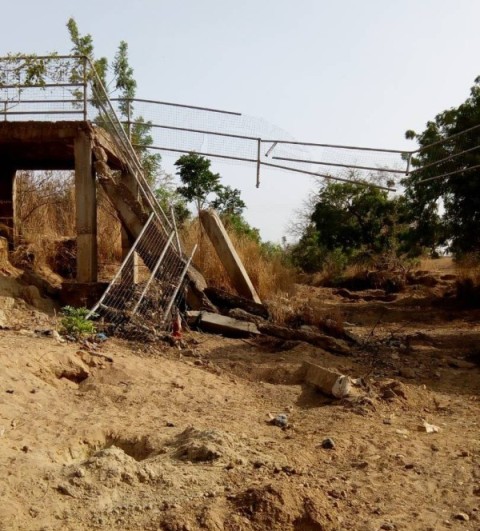
Among the challenges being experienced is with the collapse of the Akayonga Bridge and the absence of a bridge on the Dua-Kantia River.
More Read

The Akayonga Bridge for instance, used to facilitate market access for agricultural produce and other livelihood activities in the Beo Nayire, Tankoo, and Dua–Kantia communities as well as trade among markets such as: Akayonga, Bongo, Kongo, and Dua markets.
The advocacy action research was funded by the Business Sector Advocacy Challenge (BUSAC) Fund and its Development partners DANIDA, the USAID and the European Union (EU) and conducted by the Tankoo-Noyine Cooperative Farmers Society, Nayire vegetable farmers and the Tankoo vegetable farmers.
It was on the topic: “Construction of bridges on Akayonga and Dua-Kantia Rivers to facilitate market access for agricultural and other livelihood activities for Beo-Nayire and Tankoo communities in the Bongo District”.
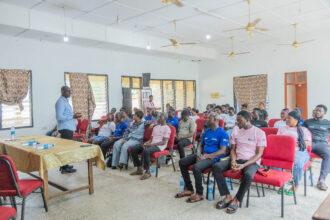
The research findings which was made known during a sensitization programme brought together chiefs, assembly members, women and youth groups, members of the farmer Associations in the Bongo District, Staff of Ghana Education Service, opinion leaders and political party functionaries.
“Many as 92 percent of the farmers have difficulties in transporting large quantities of their farm produce to the market centres due to the lack of bridges that link them to the market centres. The post-harvest losses resulting from poor road networks in the areas is 15.6 percent, 20.1 percent, 17.7 percent, 15.6 percent, 6.5 percent for millet, maize, rice, groundnut and cowpea respectively,” the research said.
It revealed that there are no input shops in any of the affected communities and that what is compounding the problem is the inaccessible nature of the bridges to reach where farm inputs are sold.
The study revealed that the Community Based Rural Development Project (CBRDP) in the year 2006 collaborated with the Bongo District Assembly to construct a foot bridge on the Akayonga River which subsequently collapsed in 2014.
It also revealed that although the Bongo District Assembly had captured the Akayonga River in their action plan for 2016 and 2017 to construct a foot bridge valued at GHC 105, 000.00, construction work has still not started on that footbridge.
Mr Asebila Alfred Nyaapika, the Coordinator of the Tankoo-Noyine Cooperative Farmers Society, said his outfit decided to seek funding support from the BUSAC Fund to empower the farmers in the area to advocate for the construction of needed bridges.
The Coordinator mentioned that among the objectives of the research was to estimate the quantum of food lost as result of the absence of the bridges linking to the various markets; the negative impacts on the absence of the bridges on the two rivers on agriculture, education, health and other sectors in the communities; identify relevant stakeholders responsible for the construction of the bridges and roads as well as identify other secondary key stakeholders capable of influencing duty bearers towards the construction of the two bridges.
Source: GNA