


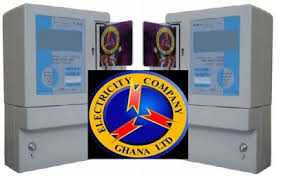
Electricity Company of Ghana (ECG) has long being devising ways to maximize revenue collection, whilst ensuring the general public efficiently use electric power generated wisely. In their quest to meet this set objective, the Company introduced prepared meters in certain parts of the country in the year 2003.
Information gathered at the end of 2004 indicated that ECG was able to increase its revenue collection at locations where these meters were installed, but with little infractions in such as faulty meters, illegal connections preventing the meter from reading and poor service delivery by staff of ECG in charge of loading prepaid credit on prepaid cards.
ECG then increased the number of staff offering services to the general public who had prepaid meters installed in their homes and work places. That was a step in the right direction. Plans were that ECG was to expand its operations of installing prepaid meters to every district of the country.
More Read

This was not achieved as there was still areas in the capital with no installed prepaid meters. In 2018, ECG embarked on a pilot project which sought to install prepaid meters in villages and towns in each district.
Views of a section of the public in these areas indicate that ECG is not taking into consideration how residents in villages can afford to pay for electricity before use.
A section of the general public claim residents leaving in villages are engage in minor jobs which pay little or no moneys at all. For example, most farmers in the villages engage in small scale farming which they depend on to feed their families no matter the yield of farm produce.
These farmers hardly sell their farm produce for money except when they have abundant food harvest. How can they then afford to pay electricity before use?. For some residents in the villages they depend on their relatives working in the capital or abroad for money which they receive mostly at the end of every month hence they prefer the post billing system to the prepaid system.
Others say thanks to government initiatives like free primary, Junior high and Senior high schools including the school feeding programme, residents in villages have somewhat relieved their relatives working in the capital and abroad but they still face problems such as good drinking water and lack other basic amenities on top of that ECG wants them to pay for electricity before use.
The residents claim the move by ECG would take them back to the days when school children in villages use candles and lanterns for studies at night endangering their sight in this modern dispensation. According to them, if ECG is to install prepaid meters in villages, it should be installed in government bungalows and flats as persons occupying them earn monthly incomes and can afford to pay electricity before use. They therefore call on ECG to as a matter of urgency revise their notes and rather install prepaid meters in urban areas and not in villages where there are little or no jobs for the residents and no money to pay for electricity before use.
By: Rodney N. Abugre