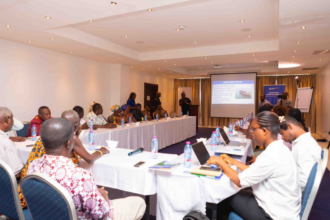


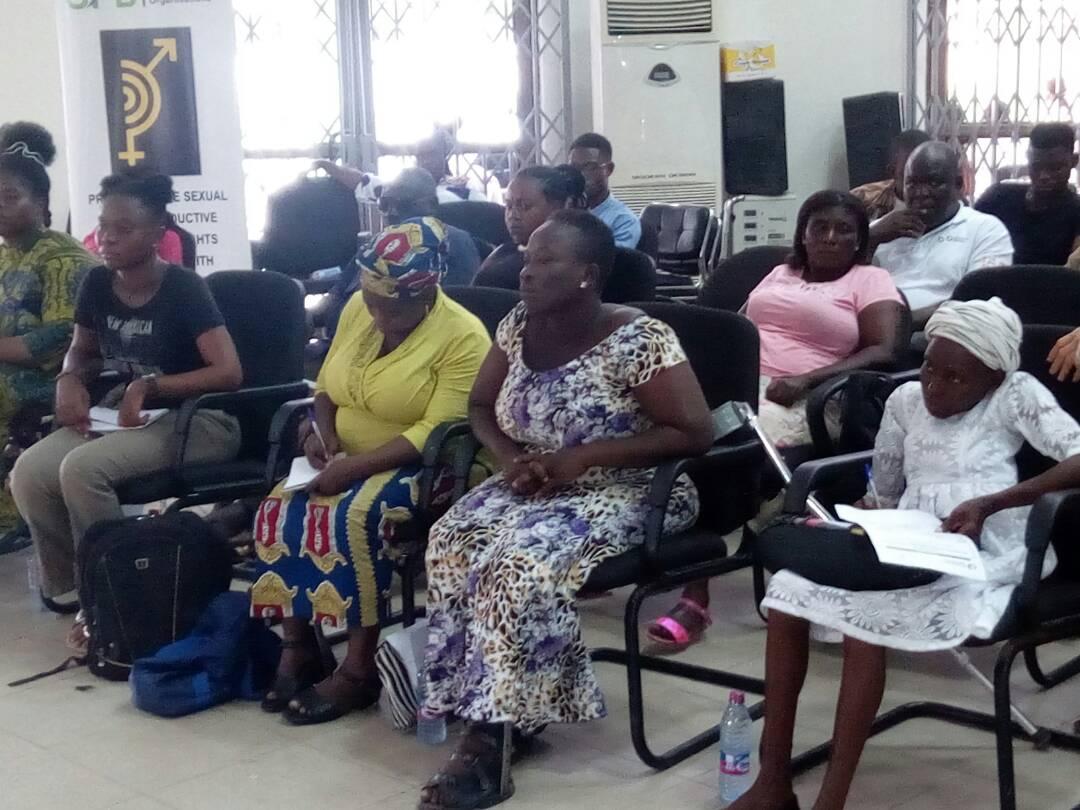
Persons with Disability (PWDs) in four Municipal and District Assemblies within the Greater Accra Region have been given some tutorials relative to sexual and reproductive health rights.
The move was meant to raise awareness and equip PWDs with the requisite knowledge on available family planning methods, sexually transmitted infection prevention methods as well as how to demand for their rights at various health facilities.
The Health Session was put together by the Ghana Federation of Disability Organizations (GFD) under its Amplify Change Project.
More Read

Hosted at Amasaman in the Ga West Municipal Assembly of the Greater Accra Region, the event brought together other participants from Ga East, Ga South and Ada West.
Making a presentation to participants who were mainly PWDs, Ms. Nasiratu Imoro, and Health Promotion Officer at the Amasaman government Hospital stated that it is important to ensure that everyone especially PWDs take good care of their reproductive health.
Ms Imoro explained that reproductive health is a state of complete Physical, Mental and social wellbeing and that before a human body could function properly it must have all the aforementioned attributes. Therefore, it is important for every individual to have access to the services related to reproductive health, adding that, “it is your right and the services are available.”
She advised that sexually Transmitted Diseases (STDs) can be prevented through family planning services including the use of condoms among others. She recommend to the participants, particularly the women to seek family planning services after delivery.
Mr. Fredrick Ofosu, Programme officer at the GFD, emphasized the need for PWDs to understand their sexual lives and ensure that they take good care of their sexual health.
Mr. Ofosu encouraged the participants and the PWDs fraternity in general to be “bold and access the health facilities, “to access medical care.
Explaining the rationale of the Amplify Change Project, Mr Moses Forjour, Officer in charge of Monitoring and Evaluation at the GFD, said his organization aims to facilitate it by developing tools and strategies for effective Sexual Reproductive Health Right (SRHR) advocacy and to ensure that legislation and implementation properly recognizes the SRHR of Ghanaians living with disabilities.
According to Mr Forjour, the right to sexual and reproductive health is a fundamental element of the right to health.
The right to health includes access to acceptable and affordable health care and services of appropriate quality (WHO 2013). Marginalized and vulnerable groups – whether excluded because of inequality, poverty, gender, discrimination, displacement or proximity – have least access to the information, care and services needed to promote and protect their sexual and reproductive health and rights (SRHR).
Access to SRHR services is determined by many factors, such as place of residence (urban or rural), marital status, age, gender, ethnicity, disability, economic status, cultural norms, education or social status. National policies, resource allocation and organisation of services play an important role in either enabling or limiting provision and availability of services among marginalised groups.
Participant were pleased with the way the session was conducted and appealed to GFD to do more of the awareness raising so as to reach others who did not get the opportunity to be part of that session.
By Mohammed Suleman