Public Agenda NewsPaperPublic Agenda NewsPaper
  • General News
  • Politics
  • Business
  • Health
  • Development Agenda
  • World News
  • Features & Opinions
  • Election watch
  • Editorial
Font ResizerAa
Public Agenda NewsPaperPublic Agenda NewsPaper
Font ResizerAa
  • General News
  • Politics
  • Business
  • Health
  • Development Agenda
  • World News
  • Features & Opinions
  • Election watch
  • Editorial
Search
  • General News
  • Politics
  • Business
  • Health
  • Development Agenda
  • World News
  • Features & Opinions
  • Election watch
  • Editorial
Follow US
Breaking NewsBusiness

Food imports cost US$2.4bn annually

Latifa Carlos
Last updated: July 17, 2018 12:05 pm
Latifa Carlos
Share
2 Min Read
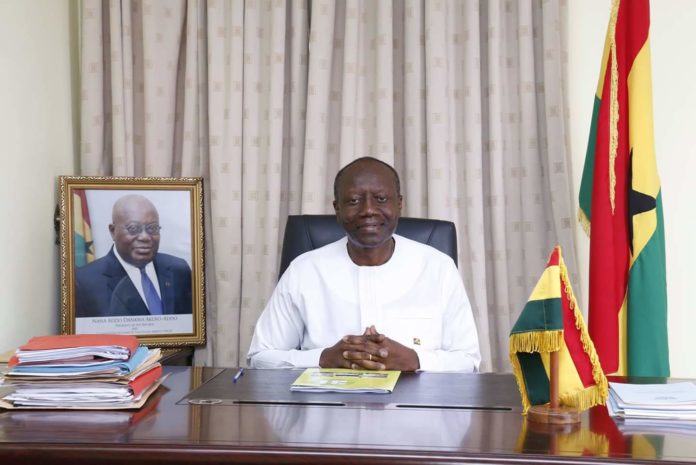
Ken Ofori-Atta
Ken Ofori-Atta
SHARE

The Minister of Finance, Mr Ken Ofori-Atta has revealed that food imports cost the nation an average of US$2.4 billion every year.

This means that about GH¢10.8 billion (one dollar to GH¢4.5) is used to import rice, sugar, sorghum, frozen chicken and meat, among other food items, for domestic and industrial consumption on annual basis.

At US$2.4 billion, the cost of food imports is about a quarter of the value of non-oil imports, which closed 2017 at US$10.66 billion.

More Read
13 new Mpox cases confirmed; total reaches 993
Ghana suspends citizenship process for people of African descent
IGP reshuffles top Police Command
Raw commodity exports undermining Africa’s growth – Mahama
Ayariga accuses NPP minority of hypocrisy over certificates of urgency

While bemoaning the impact of the huge food import bill on the economy, the minister told members of the Ghana Trades Union Congress (TUC) in Accra that the development was fueled by the corresponding strong appetite for imported consumables.

He said the importers were only taking advantage of a business opportunity that had been occasioned by a deficit in food supply and a strong preference for imported food.

The President of the Chamber of Agribusiness, Mr Anthony Morrison, said the dwindling fortunes of the sector were a reflection of how state funding had eluded the sector over the years.

Unlike other sectors, which are directly funded by state resources, Mr Morrison said the funding of agricultural activities was left to donors, making it difficult for growth enhancing programmes to achieve their desired objectives.

He intimated that almost 70 per cent of agric programmes were currently financed by donors, whose facilities were mostly channelled into administrative expenses and wages and salaries rather than capital expenditure.

That, he said, contributed to the sluggish nature of growth in the sector, leading to a hike in food imports to supplement dwindling domestic output.


Source: Graphic.com.gh

Share This Article
Facebook Whatsapp Whatsapp Email Copy Link Print

Latest News

Every cedi lost to corruption is a loss to national development – Deputy Finance Minister
January 27, 2026
ISODEC Introduces Whistleblower Policy to Strengthen Transparency and Accountability
January 27, 2026
Minister assures resumption of Kpong Irrigation Scheme amid funding delays
January 27, 2026
Reproductive mental health underreported among Ghanaian women- Gynaecologist
January 26, 2026
Ghana cedi best-performing currency in Africa for 2025 – IMF
January 26, 2026
Gold surges past $5,000 for first time
January 26, 2026
How Ghana is losing water before it reaches the tap
January 22, 2026

You Might Also Like

Breaking NewsBusinesstop stories

Over 360,000 Ghanaians exited poverty in Q3 2025 – GSS report

January 21, 2026
Breaking NewsBusinesstop stories

GH¢107m EXIM loans recovered; dubious deals sent to security agencies – Trade Minister

January 21, 2026
Breaking NewsGeneral Newstop stories

Ga West MCE Calls for Stronger Enforcement of Disability Laws

January 20, 2026
Breaking NewsBusinesstop stories

IES defends NPA price floor policy amid debate over fuel pricing

January 19, 2026

About Us

Public Agenda is fou­nded and owned by Pu­blic Agenda Communic­ations.

Public Agenda was founded as a public interest Me­dia entity. Its Visi­on is to contribute to building a well-i­nformed society where accurate informati­on dissemination is the cornerstone of a democratic, just and equitable society.

Its mission is to inform, guide and bui­ld responsible citiz­enship and accountab­le decision making and strive for excell­ence in the media in­dustry. Public Agenda Communications is managed by a Board of Directors.

Welcome Back!

Sign in to your account

Username or Email Address
Password

Lost your password?