

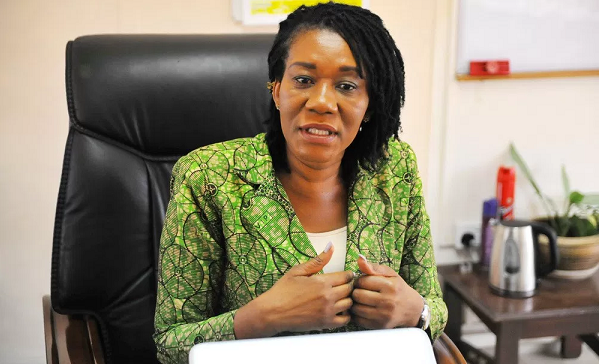
The Executive Director of the National Population Council, Dr Leticia Adelaide Appiah has expressed concern over what she says are the escalating Ghanaian population and reproductive health issues.
According to her, many Ghanaian teenagers are getting pregnant particularly along the coastal communities, explaining that 30 per cent of women who are delivered of babies in the country are teenagers.
Statistics
She said almost a quarter of children in the Volta Region get pregnant during their teens, adding that Volta and Central Regions have teenage pregnancy rates of 22 and 21 per cent respectively.
More Read

Dr Appiah made the remarks when she met Rev. Dr. Joyce Aryee at her office in Accra to discuss the effects of the soaring population and reproductive health issues in Ghana and solutions.
“The teenage pregnancy in the developed world is less than 2 per cent,” she said, adding “Our teenage pregnancy rate is 14 per cent nationwide”.
Dr Appiah explained that the standard Replacement Level Fertility rate (which is the total fertility rate — the average number of children born per woman—at which a population replaces itself from one generation to the next, without migration) is 2.1 but the country has 2.7.
“The population structure is important for economic development,” she said, stressing that the escalating nature of the country’s population contributes to the high incidence of poverty among majority of the citizenry.
Population policy
She said although Ghana was among the earliest African countries to adopt a comprehensive population policy in 1969, not much has been achieved in controlling the country’s population.
The 1969 Population Policy was aimed at reducing the country’s high population growth rate which in 1960-1970 was 2.4 per annum.
The 1969 population policy under the theme “Population Planning for National Progress and Prosperity” was last reviewed in 1994 to enable the government to accelerate the pace of economic modernization and improve the quality of life of Ghanaians.
Dr Adelaide Appiah said the high population growth rate repudiates the country’s effort at sustainable economic development, eradication of poverty, and the realisation of government’s vision of ensuring quality life for Ghanaians as the government alone could not provide for the needs of all citizens.
Controlling measures
She expressed the worry that the country would continue to suffer economic setbacks if the high population growth rate is not controlled.
She said no developed country has tripled its population since 1960 and explained that the maximum they have done is two-and-half times their population.
Dr Appiah said many developed countries have taken keen interest in controlling their population in line with their economic capabilities.
She said some countries including Senegal have started taking key steps such as family planning as part of measures to control their population.
She therefore called on religious leaders as well as politicians, traditional rulers and opinion leaders to preach family planning in their messages to their followers, arguing that the huge population growth is responsible for the poor state of most of the developing countries, including Ghana.