

A research conducted by Send- Ghana in 188 Kindergartens (KG) in the country has depicted a gloomy picture of Ghana’s Foundation of education, a situation that calls for urgent attention from duty bearers.
The survey which was conducted in both public and private kindergartens in 30 districts of four regions including the Greater Accra, Northern, Upper West and Upper East region, found that 49 per cent of KG teachers were untrained, and the situation was worse in private KGs where about 76 per cent of teachers were untrained, exceeding GES target of five percent of untrained teachers teaching in KGs.
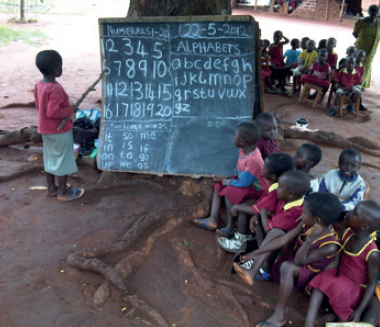
It also found that 24 percent of public KGs do not have classrooms. The situation is common in the Upper West Region where KGs lack not only classrooms, but appropriate furniture, resulting in most of the pupils sitting on mats, plastic containers, wooden logs, stools, and in some cases, on the bare floor to learn.
More Read

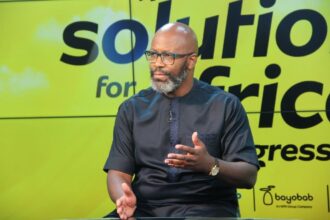
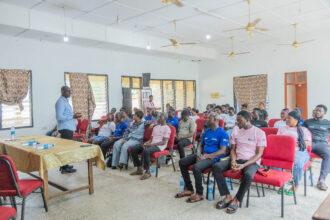
Presenting the research report dubbed, “Education for All: Is Ghana Leaving Kindergarten Behind?” in Accra on Wednesday, Mrs. Harriet Nuamah Agyemang, Senior Programme Officer at SEND-Ghana stated that the availability of teaching and learning materials is a major challenge for most KGs. Textbook to pupil ratio stood at 0.2 books per pupil. Other materials such as flash cards, puzzles, Lego, wall charts, brushes, poster colours and crayons are either mostly unavailable or inadequate. Parents (directly or indirectly) bear 69 percent of textbook costs.
Mrs Nuamah Agyemang said the study found that 32.2percent of KGs lacked toilet facilities, resulting in most of children practicing open defecation, while 23.1 percent of KGs do not have hand washing facilities, exposing children to diseases such as diarrhea.
Again, 22.9 percent of the KG schools do not have access to potable water supply, and 23.7 percent of KGs do not have storage facilities for water due to cost constraints.
She said 20.5 percent of four and five year olds are not enrolled in pre-school mostly due to poverty and long distance travel from their homes to the nearest KG schools. In other words, their communities lack KG facilities.
The report recommended that the Ghana Education Service (GES) must ensure that all qualified private KGs are accredited before they are allowed to operate. The time limit must not exceed one year of operations for owners of private KGs to comply with regulatory standards where some considerations are given.
It said the GES must also monitor to ensure that KGs keep to standards. The report also advised the GES to immediately assess unaccredited schools and provide those that qualify with the certification to operate. At the same time, unqualified KGs should be supported to meet the required standards.
“It is unacceptable for KG schools to employ so many unprofessional teachers. It is therefore, key for the Ministry of Education (MOE) to create training modules that allow untrained teachers in the field (both private and public) the opportunity to upgrade their knowledge and skills on how to convey the right content to KG pupils. The Metropolitan, municipal and district assemblies must play a critical role in ensuring that professional teachers are deployed,” it added.
Mr Samuel Otopah Ntow, the Coordinator in charge of National Private Schools, GES, said even though government was doing a lot on the issue of accreditation, there were still challenges due to the non-existence of endorsed policy to address the situation.
He said for this reason a new National Inspectorate Board had been inaugurated to regulate the operations of private KGs.
He, therefore, urged district officers to go on enrolment drive to intensify education on the importance of education to parents and children to help address the situation.
Prior to the new millennium, KG education was mostly left to the private sector. During those times, KGs were few and mostly found in cities and towns, and were very expensive for impoverished people in both rural and urban areas to enroll their wards.
In recognition of the importance of KG education as a basis for proper acquisition of numeracy, literacy and problem-solving skills in children of school going age, government in 2003 made plans to develop a well-grounded foundation for basic school pupils. However, it was not until the educational reform of 2007 that KG became part of the public education system in Ghana.
By Mohammed Suleman