

Public Agenda NewsPaperPublic Agenda NewsPaper
  • General News
  • Politics
  • Business
  • Health
  • Development Agenda
  • World News
  • Features & Opinions
  • Election watch
  • Editorial
Font ResizerAa
Public Agenda NewsPaperPublic Agenda NewsPaper
Font ResizerAa
  • General News
  • Politics
  • Business
  • Health
  • Development Agenda
  • World News
  • Features & Opinions
  • Election watch
  • Editorial
Search
  • General News
  • Politics
  • Business
  • Health
  • Development Agenda
  • World News
  • Features & Opinions
  • Election watch
  • Editorial
Follow US
Breaking NewsGeneral News

Farmers advised to stop using antibiotics on healthy animals

Latifa Carlos
Last updated: November 13, 2017 1:22 pm
Latifa Carlos
Share
3 Min Read
SHARE

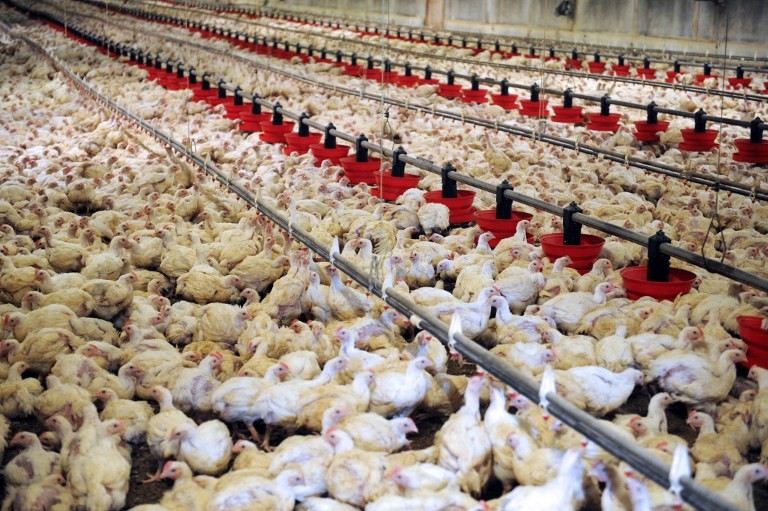
 Farmers and the food industry should stop using antibiotics routinely to promote growth and prevent disease in healthy animals, the United Nations health agency has said.

“A lack of effective antibiotics is as serious a security threat as a sudden and deadly disease outbreak,” said Tedros Adhanom Ghebreyesus, Director-General of the World Health Organization (WHO) in a news release on the new guidelines aimed at helping preserve the effectiveness of antibiotics for humans by reducing their unnecessary use in animals.

“Strong, sustained action across all sectors is vital if we are to turn back the tide of antimicrobial resistance and keep the world safe,” he added.

More Read

Callistus Mahama warns against early succession talks, urges discipline and focus on governance
Ghana rises to 39th in Press Freedom Index amid structural challenges
Water Justice Network Pushes for Affordable, Inclusive Water Systems
Overall cost pressures in construction are easing – Government Statistician
Ghana can’t industrialise without power, water – Nii Moi Thompson

In some countries, some 80 per cent of the total consumption of medically important antibiotics is in the animal sector, largely for growth promotion in healthy animals.

Over-use and misuse of antibiotics in animals and humans is contributing to the rising threat of antibiotic resistance. Some types of bacteria that cause serious infections in humans have already developed resistance to most or all of the available treatments, and there are very few promising options in the research pipeline.

WHO strongly recommends an overall reduction in the use of all classes of medically important antibiotics in food-producing animals, including complete restriction of these antibiotics for growth promotion and disease prevention without diagnosis.

Healthy animals should only receive antibiotics to prevent disease if it has been diagnosed in other animals in the same flock, herd, or fish population, according to the updated WHO guidelines on use of medically important antimicrobials in food-producing animals.

Many countries have already taken action to reduce the use of antibiotics in food-producing animals. For example, since 2006, the European Union has banned the use of antibiotics for growth promotion. Consumers are also driving the demand for meat raised without routine use of antibiotics, with some major food chains adopting “antibiotic-free” policies for their meat supplies.

Alternative options to using antibiotics for disease prevention in animals include improving hygiene, better use of vaccination, and changes in animal housing and husbandry practices.


Share This Article
Facebook Whatsapp Whatsapp Email Copy Link Print

Latest News

Ghana walks away from US health agreement over sensitive data concerns
April 28, 2026
Mali at risk of splintering after jihadi and separatist attacks
April 28, 2026
Create ‘water markets’ to fix Ghana’s supply challenges — Former GWL MD
April 28, 2026
National Water Justice Campaign Launched to Tackle Inequality in Access
April 21, 2026
ISODEC Urges Collective Action to Secure Safe Water for All Ghanaians
April 21, 2026
Man kills seven of his children, and an eighth child, in Louisiana mass shooting
April 20, 2026
A decade of African politics: democratic gains and new pressures
April 20, 2026

You Might Also Like

Breaking NewsPoliticstop stories

Minister Faults Nana Akufo-Addo Government’s Decentralisation Record

April 20, 2026
Breaking NewsGeneral NewsPolitics

Bawumia engages Ken Agyapong ahead of 2028 polls

April 20, 2026
Breaking NewsGeneral Newstop stories

Over 100 communities in Volta Region at risk from tidal waves — Anlo MP

April 20, 2026
Breaking NewsGeneral NewsNews paper Headlines

Underperforming ECG districts risk major shake-up — Jinapor

April 15, 2026

About Us

Public Agenda is fou­nded and owned by Pu­blic Agenda Communic­ations.

Public Agenda was founded as a public interest Me­dia entity. Its Visi­on is to contribute to building a well-i­nformed society where accurate informati­on dissemination is the cornerstone of a democratic, just and equitable society.

Its mission is to inform, guide and bui­ld responsible citiz­enship and accountab­le decision making and strive for excell­ence in the media in­dustry. Public Agenda Communications is managed by a Board of Directors.

Welcome Back!

Sign in to your account

Username or Email Address
Password

Lost your password?