Public Agenda NewsPaperPublic Agenda NewsPaper
  • General News
  • Politics
  • Business
  • Health
  • Development Agenda
  • World News
  • Features & Opinions
  • Election watch
  • Editorial
Font ResizerAa
Public Agenda NewsPaperPublic Agenda NewsPaper
Font ResizerAa
  • General News
  • Politics
  • Business
  • Health
  • Development Agenda
  • World News
  • Features & Opinions
  • Election watch
  • Editorial
Search
  • General News
  • Politics
  • Business
  • Health
  • Development Agenda
  • World News
  • Features & Opinions
  • Election watch
  • Editorial
Follow US
Breaking NewsDevelopment Agenda

Domestic Violence still rife in Ghana

Latifa Carlos
Last updated: October 23, 2017 11:43 am
Latifa Carlos
Share
3 Min Read
SHARE

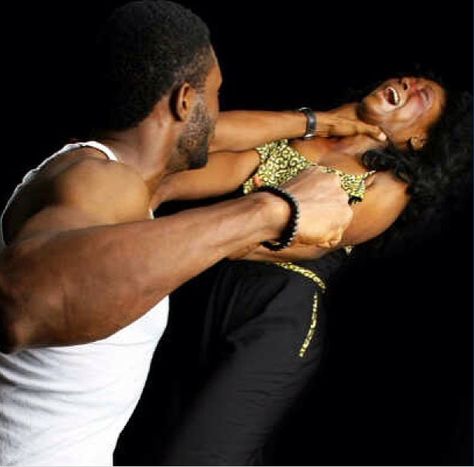
In spite of  efforts  being  put in place by governments, Development partners, civil  society   and  other relevant  stakeholders  to educate the populace on  gender  based- violence, there  is  no denying  the  fact  that  the menace  continue to prevail in the country, particularly in  most rural communities and  in the  northern part of  Ghana.

In 2008,38.7 percent of Ghanaian women between the ages of 15 and 49 who had ever been married had experienced physical, emotional or sexual violence by a husband or partner at some point in their lives.

According to the World Health Organisation (WHO), women are more likely to suffer from depression, anxiety, mental challenges, eating problems and sexual dysfunction as a result of violence.

More Read

11 Arrested for Illegal Mining Activities in Pra Anum Forest Reserve
GPC2025 Calls for Stronger Domestic Resource Mobilisation to Accelerate National Development
Traditional medicine is now a global reality: WHO
Transparency International rejects calls to scrap OSP as ‘unnecessary and premature’
EC to hold Kpandai rerun on December 30

Violence against women and girls is a grave violation of human rights. Its impact ranges from immediate to long-term multiple physical, sexual and mental consequences for women and girls, including death.

It negatively affects women’s general well-being and prevents women from fully participating in society and has tremendous costs, from greater health care and legal expenses and losses in productivity, impacting national budgets and overall development.

Domestic violence, in the form of physical or sexual violence, is experienced by 35 per cent of women globally during their lifetime. Emotional abuse and controlling behavior is experienced by 75 per cent of women across the world.

The problem of domestic violence is more prevalent in rural areas and the northern regions of Ghana. According to a 2011 survey by MICS, 60 percent of Ghanaian women believe that husbands are justified in beating their wives, for a variety of reasons.

Ghanaian women who are poorly educated and from poor socioeconomic backgrounds are more likely to believe domestic violence is justified.

Domestic violence causes immediate devastating consequences to those affected: physical injuries, mental health problems and poor well-being among others. But it also has long-term, far-reaching effects, including persistent inequalities between men and women, which limit women and girls’ abilities to fulfil their potentials.

Those who experience domestic violence have longer-term poor physical and mental health, higher risk of contracting HIV and sexually transmitted diseases, and restricted choices in terms of accessing education and jobs. It is also likely that they will have lower levels of education, income and productivity.

Prevalence of sexual and gender-based violence, particularly affecting girls and young women remains high. More than half of Violence against Children cases reported to the DOVVSU in 2013 was defilement.

Ghana’s 2016 study shows that, about 39.4 percent of children have suffered indecent assault, 17.9 percent defilement, 8% rape and 5.4 percent had experienced incest.

By: Latifa Carlos

Share This Article
Facebook Whatsapp Whatsapp Email Copy Link Print

Latest News

SSNIT makes Annual Pensioner Certificate Renewal mandatory from April 2026
December 11, 2025
Mahama Ayariga, Dafeamekpor draft bill to scrap OSP
December 10, 2025
Gov’t withdraws lithium agreement for further stakeholder consultations
December 10, 2025
Mahama assents to COVID-19 Health Recovery Levy Repeal Act
December 10, 2025
Ghana’s economy records 5.5% growth in Q3 2025 — GSS
December 10, 2025
Govt introduces peak-hour bus services to cushion commuters in Accra
December 10, 2025
Ex-GIIF board member ordered to submit 16 Emeails in sky train trial
December 10, 2025

You Might Also Like

Breaking NewsGeneral Newstop stories

Prez Mahama to receive final Bawku peace mediation report on Thursday

December 9, 2025
Breaking NewsGeneral Newstop stories

Humanitarians launch $33 billion appeal for 2026

December 8, 2025
Breaking NewsGeneral Newstop stories

Parliament notifies EC over vacant Kpandai seat following court re-run order

December 8, 2025
Breaking NewsGeneral Newstop stories

Ghana, EU strengthen partnership to address Sahel security challenges

December 4, 2025

About Us

Public Agenda is fou­nded and owned by Pu­blic Agenda Communic­ations.

Public Agenda was founded as a public interest Me­dia entity. Its Visi­on is to contribute to building a well-i­nformed society where accurate informati­on dissemination is the cornerstone of a democratic, just and equitable society.

Its mission is to inform, guide and bui­ld responsible citiz­enship and accountab­le decision making and strive for excell­ence in the media in­dustry. Public Agenda Communications is managed by a Board of Directors.

Welcome Back!

Sign in to your account

Username or Email Address
Password

Lost your password?