


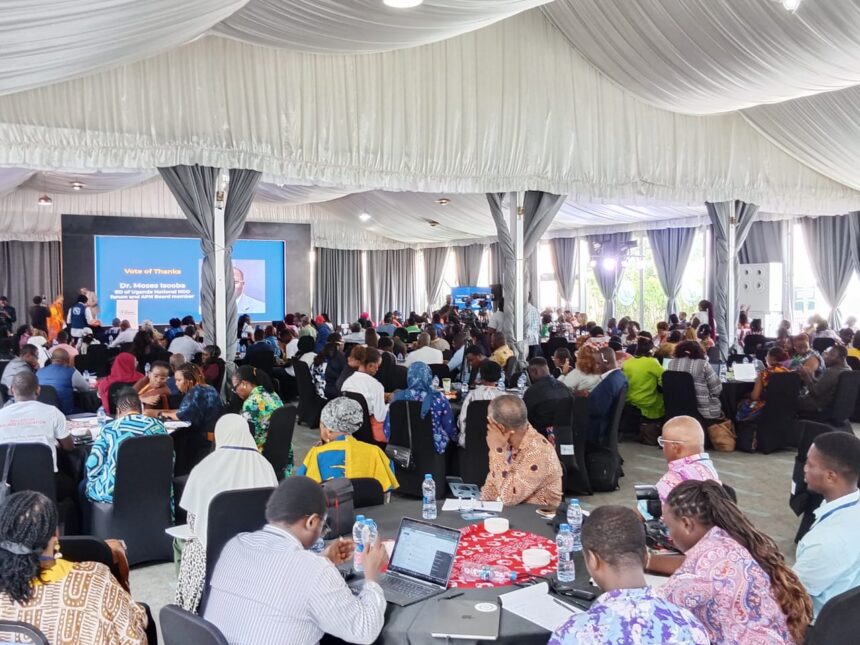
The Executive Director of STAR-Ghana Foundation and Board Chairman of the African Philanthropy Network (APN), Mr Ibrahim Tanko-Amidu, has called for stronger African philanthropy, collective action and increased local ownership of development initiatives to advance sustainable development across the continent.
Speaking at the opening of the 2026 African Philanthropy Network (APN) Biennial Assembly in Accra, Mr Tanko-Amidu said Africa’s development challenges required coordinated efforts among civil society organisations, communities, governments, businesses and other stakeholders.
He drew parallels between Ghana’s independence and the principles underpinning African philanthropy, recalling the country’s historic role as the first sub-Saharan African nation to gain independence in 1957.
More Read

Referencing Ghana’s first President, Osagyefo Dr Kwame Nkrumah, he recalled his famous declaration that Ghana’s independence was meaningless unless it was linked to the total liberation of the African continent.
According to him, Ghana’s independence was never intended to be a prize to be enjoyed in isolation but a responsibility to contribute to the freedom and development of the wider African continent.
“Ghana did not treat its freedom as a prize to keep. It treated it as a debt to pay, to pay forward,” he stated.
He emphasised that the struggle for independence demonstrated the importance of collective action, solidarity and shared responsibility, principles he said remained equally relevant to African philanthropy and the continent’s pursuit of social justice and inclusive development.
Mr Tanko-Amidu further challenged the perception that Africa’s independence was primarily financed by external development partners, arguing that ordinary Africans played a significant role in financing the liberation struggle.
He noted that market women, farmers, workers and ordinary citizens contributed their limited resources towards a collective cause greater than themselves.
“Africa’s independence was African philanthropy in its purest sense: pooled resources, mutual aid and solidarity across borders,” he said.
He argued that this history should inspire a renewed commitment to African-led development financing and philanthropy, particularly at a time when traditional aid and multilateral support are increasingly retreating.
He challenged African leaders and development actors to confront fundamental questions about ownership, financing and decision-making in the continent’s development process.
“Who owns our development? Who pays for it? Who decides? How do we work across borders and organisations for effectiveness and sustainability?” he asked.
He said these questions could no longer be avoided, stressing the need for African institutions and philanthropic organisations to strengthen collaboration, mobilise domestic resources and develop sustainable approaches to addressing the continent’s challenges.
The 2026 APN Biennial Assembly is being held under the theme, ‘African Philanthropy in Action: Adopt, Advance, Amplify.’
Mr Tanko-Amidu urged participants to approach discussions with courage and openness, challenging existing approaches, relationships, assumptions and ambitions for the continent.
He also highlighted the connection between African philanthropy, social justice and the global Shift the Power movement, noting that efforts to redistribute power and strengthen locally driven development must go hand in hand.
He observed that the challenges confronting Africa were too complex for any single organisation or stakeholder to address independently.
He therefore called for stronger partnerships among civil society organisations, communities, governments, the private sector and other development actors, guided by the principles of equality, inclusiveness and integrity.
As the Assembly brings together stakeholders to exchange experiences and ideas, Tanko-Amidu expressed hope that participants would move beyond discussions and translate their deliberations into tangible actions.
“I hope that at the end of this Assembly, we will leave Accra with commitments, not just conversations,” he said.
He subsequently declared the 2026 APN Biennial Assembly officially open on behalf of the Board and Secretariat of the African Philanthropy Network.
The Executive Director of the African Philanthropy Network (APN), Dr Stigmata Tenga, expressed gratitude to the APN Board for its leadership and efforts in organising the 2026 APN Assembly.
She described the Assembly as a product of collective effort and co-creation, emphasising that its success and impact depended on the active participation and contributions of all stakeholders.
Dr Tenga noted that the Assembly was already serving as a platform for driving meaningful change by bringing together diverse actors to exchange ideas, share experiences and explore collective responses to the challenges confronting Africa.
She further stressed that the struggles facing African communities and institutions were interconnected and could not be addressed in isolation. According to her, stakeholders must recognise their shared challenges, strengthen partnerships and support one another in advancing common development goals.
In her Keynote address, Erelu Bisi adeleyele- Fayemi, CEO of Above Whispers Media Group, said African philanthropy must move beyond conventional charitable giving to mobilise local wealth, address structural inequalities and support home-grown solutions to the continent’s development challenges.
Madam Adeleyele- Fayemi explained that the African Grantmakers Network, which later became the African Philanthropy Network, was established to promote solidarity, learning and growth among local philanthropic organisations across Africa.
She stressed the need to encourage wealthy Africans to embrace strategic giving that addresses structural and systemic challenges while mobilising other influential individuals and institutions to support development initiatives.
By: Mohammed Suleman/ Publicagenda.news