

The real work begins now.” That was the resounding message from the Integrated Social Development Centre (ISODEC) following the recent historic passage of a United Nations resolution on Reparative Justice, an achievement hailed as a major breakthrough in the long-standing global campaign for justice and accountability.
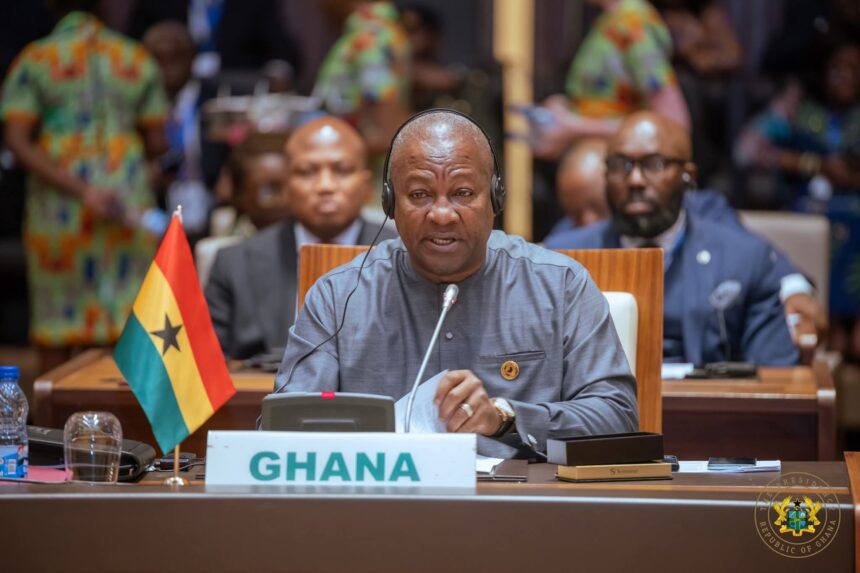
In a Press Statement issued in Accra on Wednesday , March 31st 2026, ISODEC extended its congratulations to Ghana’s President, John Dramani Mahama, alongside his team of experts and government officials, for their leadership in securing the resolution, while also acknowledging the collaborative efforts of the African Union and CARICOM in advancing the global reparations agenda.
For decades, the issue of reparative justice has lingered on the margins of international diplomacy, often discussed but rarely acted upon. The newly adopted resolution signals a turning point,placing the issue firmly within the framework of global policy and accountability.
More Read

However, ISODEC emphasized in the statement that the resolution must not become symbolic. “Resolutions without implementation are mere paper,” it stated, urging immediate and concrete steps from UN member states to translate commitments into action.
Among its key recommendations, ISODEC called on Ghana, the African Union, and CARICOM to lead efforts toward establishing a formal United Nations mechanism dedicated to reparative justice. Such a body, according to ISODEC, would be tasked with facilitating negotiations, documenting ongoing historical harms, and coordinating the repatriation of cultural artifacts taken during periods of exploitation and colonization.
The organization also appealed to countries that either opposed or abstained from the resolution to reconsider their stance. It stressed that while some states may be reluctant to accept legal liability, this should not prevent them from embracing moral responsibility.
According to ISODEC, formal acknowledgments, public apologies, and contributions to reparations funds represent acts of leadership and justice.
In addition, ISODEC urged the international community to adopt the CARICOM 10-Point Reparations Plan as a guiding framework. The plan outlines a comprehensive approach, including formal apologies, debt cancellation, investments in public health and education, cultural restitution, and long-term development initiatives for affected communities.
ISODEC further called on civil society groups, scholars, and advocates to seize the momentum created by the resolution. It encouraged sustained pressure on governments to develop and implement both domestic and foreign policies that meaningfully advance reparative justice.
Read the Full statement Below…
The Historic UN Resolution on Reparative Justice for Slavery
The Integrated Social Development Centre (ISODEC) congratulates the President of Ghana, His Excellency John Dramani Mahama, and his team of experts and officials, as well as the entire government, for leading the successful passage of the UN resolution on Reparative Justice. For many years, Reparative Justice has remained in the corridors of global politics, often lacking the needed action and acknowledgement.
This historic resolution declaring the transatlantic slave trade “the gravest crime against humanity” is a major win not only for people of Africa and African descent but also for all those who strive for justice in the world. The text formally acknowledged that the transatlantic slave trade, which involved the forced displacement of more than 12 million Africans, was not merely a historical tragedy but a systemic crime of enduring consequence.
The resolution “urges” member states of the UN to consider making formal apologies for the slave trade and to contribute to reparations aimed at addressing the lingering social, economic, and racial inequities that stem from this tragedy. It further calls specifically for the repatriation of cultural artifacts looted during the colonial era and for educational initiatives to preserve the memory of enslaved peoples and their resistance.
Crucially, the resolution frames reparative justice not as a matter of charity or symbolic gesture, but as a necessary component of addressing the root causes of contemporary racial inequality, underdevelopment, and human rights violations that continue to affect the descendants of enslaved people, particularly across Africa, the Caribbean, the Americas, and Europe.
The Significance of this Resolution
While the Resolution is not legally binding, it represents a significant moment in the global movement for reparative justice. It establishes the normative principle that slavery is the “gravest crime against humanity” and opens up a dialogue towards the repair of this harm and a fairer world. For decades, advocates have argued that the transatlantic slave trade constitutes a crime against humanity under modern international law and with this resolution; the UN General Assembly has formally affirmed that position.
The Resolution serves to:
1,Establish a historical record by formally characterizing the slave trade as the gravest crime against humanity and rejecting the longstanding argument that such wrongs are too remote or were legally permissible at the time. It affirms that certain crimes, regardless of their historical context, are universally condemnable and demand remedy.
2.Provide moral and political momentum: While previous calls for reparations often face dismissal as fringe or impractical even among Africans, the UN resolution places reparative justice firmly within the mainstream of international diplomatic discourse. It creates a platform upon which affected groups such as the Caribbean Community (CARICOM), African Americans, and the African Union can build coordinated political pressure.
3.The resolution signals a shift away from the narrow corrective justice framework, which historically stalled reparations claims due to statutes of limitations and sovereign immunity. This framework is broad, providing for tackling structural inequalities rooted in slavery and colonialism. It accounts for present-day injustice that demands structural remedy, regardless of the difficulty of tracing individual causation.
A Call to Action
1.The passage of this resolution is a victory for justice, but it is not the destination. Resolutions without implementation are mere paper; the real work begins NOW! We call upon all member states to move beyond rhetoric and translate this resolution into concrete action:
2.While we congratulate Ghana, the African Union,and CARICOM, we call upon these states to champion the establishment of a formal UN mechanism for reparative justice, i.e., a body with a mandate to facilitate negotiations, document ongoing harms, and coordinate the repatriation of cultural artifacts.
3.We urge states that opposed or abstained to reconsider their positions and engage constructively in the reparative process. The refusal to accept legal liability cannot be a permanent shield against moral responsibility. Acknowledgment, apology, and material contribution to a reparations fund are not admissions of liability under domestic law—they are acts of statesmanship and justice.
4. We call on the International Community to adopt the CARICOM’s 10-Point Reparations Plan as a working framework. This includes full formal apologies, debt cancellation, investment in public health and education, cultural repatriation and the establishment of development programs for affected communities. It recognizes that reparative justice is not merely about financial transfer but about restoring dignity, culture and opportunity.
5. For civil society, scholars, and advocates, the UN resolution has given us a platform. We must now demand that our governments develop concrete domestic and foreign policies that advance reparative justice.