

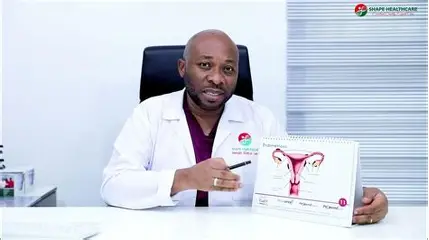
Gynaecologist and obstetrician Specialist, Dr Promise Sefogah says the reproductive mental health challenges among Ghanaian women remain largely underreported and poorly understood, with serious consequences for families, communities, and national productivity, a mental health.
Speaking on Joy FM Super Morning Show on January 26, Dr Sefogah explained that a significant portion of women’s mental health challenges are linked to reproductive functions—a field known as reproductive mental health—which receives little public attention despite its widespread impact.
The report has been sighted by Joy Business.
More Read

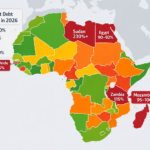
The IMF data shows that the cedi appreciated by more than 40 per cent against the US dollar in 2025, making it the strongest-performing currency in Africa over the period, ahead of more than 20 other African currencies tracked in the assessment.
The findings come at a time when earlier reports by some international news wires and global financial firms had ranked the Ghana cedi as the fourth-best-performing currency on the continent.
“Many people don’t realise that reproductive mental health affects a woman’s well-being, her family, and society at large,” the expert said.
According to him about one in every 67 couples globally struggles with conception. In Ghana, however, infertility is often framed as a woman’s problem.
“In practice, everyone looks to the woman when a couple cannot conceive,” the expert said. “But medically, 30 per cent of infertility cases are due to the woman, 30 per cent to the man, 30 per cent to both, and 10 per cent are unknown.”
Local data, the expert revealed, show an even more striking reality: “In up to 70 per cent of couples struggling to conceive, the challenge is actually related to the man. Yet society often shields men from blame, leaving women to carry the emotional burden.”
Beyond infertility, women naturally experience hormonal fluctuations during their menstrual cycle, which can affect mood and emotional well-being.
“These hormonal changes are normal, but when combined with societal pressure and stigma, the mental health impact can be severe,” the expert noted.
The situation often intensifies during pregnancy, a period marked by anxiety and emotional adjustments. The expert warned, “If we fail to address reproductive mental health properly, it affects not just women, but families, communities, and even national productivity.”