

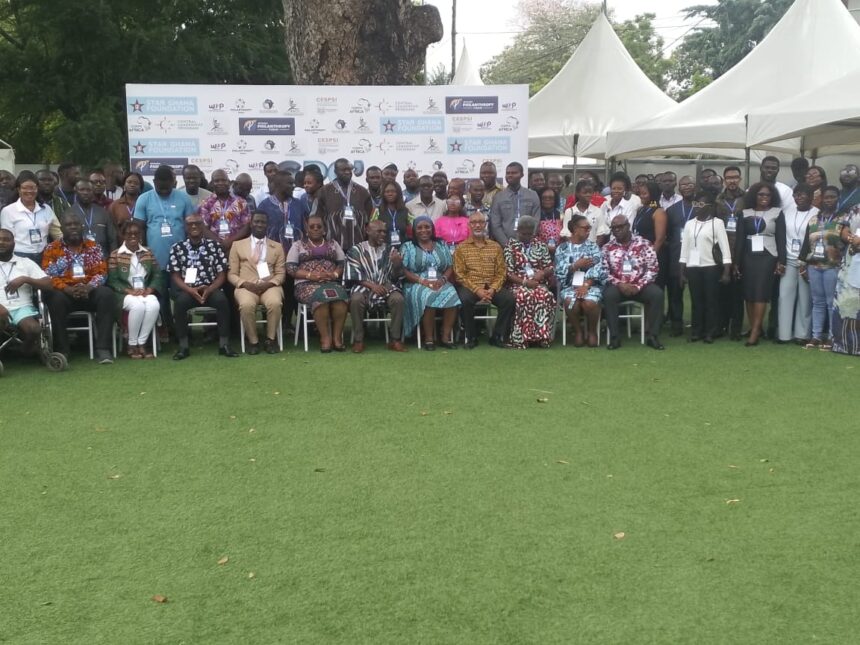
The Ghana Philanthropy Conference 2025 (GPC25) has concluded in Accra with a call for Ghana to prioritise domestic resource mobilisation as a key driver of inclusive and sustainable development.
The two-day event, held from 27–28 November 2025 in Accra, brought together civil society organisations, government agencies, the private sector, academia, youth groups, faith-based institutions and philanthropic networks.
Convened by STAR-Ghana Foundation in partnership with WACSI, Philanthropy Ghana, CESPSI-Pentecost University, Central Leadership Programme, Women in Philanthropy-Ghana, CorpsAfrica, African Philanthropy Network and the Ghana Philanthropy Forum, the conference explored the theme: “Repositioning Domestic Resource Mobilisation as a Catalyst for Accelerating Development.”
More Read
Participants underscored the need for Ghana to reduce its reliance on external aid by strengthening local giving traditions, leveraging private-sector innovation, and promoting collaborative leadership.
The communiqué issued at the end of the conference highlighted the Ghana’s diverse philanthropic landscape, from family and faith-based giving to corporate contributions and digital fundraising—and stressed the importance of a coordinated ecosystem supported by clear national policies.
Read the full communique Below…
COMMUNIQUÉ
GHANA PHILANTHROPY CONFERENCE 2025 (GPC25)
27th – 28th November, 2025-Accra Ghana
Repositioning Domestic Resources Mobilisation as a Catalyst for Accelerating Development
We, the participants of the Ghana Philanthropy Conference 2025, representing civil society organisations, government agencies, the private sector, foundations, academia, faith-based institutions, youth groups, and philanthropic networks, convened at the AVI Event Centre, Airport View Hotel, from 27–28 November 2025, to deliberate on the theme:
“Repositioning Domestic Resource Mobilisation as a Catalyst for Accelerating Development.”
The conference was convened by STAR-Ghana Foundation in collaboration with the West Africa Civil Society Institute (WACSI), Philanthropy Ghana, Centre for Strategic Philanthropy and Social Investment – Pentecost University (CESPSI-PU), Central Leadership Program (CLP), Women in Philanthropy-Ghana, CorpsAfrica, African
Philanthropy Network (APN), Ghana Philanthropy Forum (GPF).
We discussed that through local resources mobilization, Ghana can build a more resilient and self-sustaining development ecosystem. We acknowledged the power of indigenous giving traditions, emerging private
sector innovations, policy and regulatory reforms and the critical role of collaborative leadership. Collectively, we explored how these forces can strengthen national resilience, reduce dependency on external aid and
position philanthropy as a strategic driver of inclusive and sustainable development.
Key Reflections
Participants affirmed that Ghana’s development cannot continue to depend predominantly on external financing. Domestic resource mobilisation, grounded in indigenous philanthropy, private capital, voluntary civic action and effective state–citizen collaboration, is fundamental to sustaining national progress, reducing aid dependence
and advancing equity.
1 We further recognised that philanthropy in Ghana is dynamic and multifaceted, expressed through family networks, faith-based giving,community solidarity, corporate contributions, digital fundraising, endowments and the growing social enterprise sector. Unlocking the full potential of these assets requires a coherent and well-coordinated
ecosystem, trusted institutions and national policies that enable generosity, transparency and long-term investment in social development.
Our Commitments
As practitioners and leaders within Ghana’s philanthropy ecosystem, we
commit to the following:
1. Strengthening Indigenous Philanthropy
• Elevate Ghana’s long-standing traditions of giving as the cultural foundation of contemporary philanthropy.
• Systematically document local giving practices to deepen evidence, visibility and legitimacy.
• Champion community-led models that uphold dignity, reinforce ownership and promote shared responsibility.
2. Expanding Domestic Resource Mobilisation
• Build strong organisational capacity in strategic fundraising, digital mobilisation, blended finance and impact investment.
• Promote the creation and growth of endowment funds to secure
long-term sustainability.
• Facilitate partnerships with the private sector to unlock diverse and innovative funding streams.
3. Improving the Policy and Regulatory Environment
• Advocate for an enabling legal framework for philanthropy, including the enactment and implementation of the Not-for-Profit Organisations Law, Philanthropy policy and other policies that incentivise giving.
• Encourage constructive government–CSO collaboration to enhance trust, accountability and co-creation.
• Promote tax incentives and regulatory clarity to stimulate individual and institutional giving.
4. Fostering Learning, Innovation and Professionalism
• Invest in continuous skills development in fundraising, volunteer
management, social enterprise strategies and financial
sustainability.
• Establish platforms for peer learning, research, innovation and
knowledge exchange.
• Nurture young philanthropists, emerging leaders and digital
innovators as catalysts for the sector’s future.
5. Advancing Transparency, Trust and Social Justice
• Uphold the highest standards of ethical practice, integrity and
accountability.
• Embed equity, inclusion and justice in funding decisions and
community engagement.
• Promote philanthropy as a powerful instrument for advancing
human rights, social protection and environmental sustainability.
Call to Government
We call on the Government of Ghana to:
• Develop a national policy and law for domestic resource mobilisation that harnesses
contributions and citizen-led giving.
philanthropy, private-sector
• Integrate philanthropy and volunteerism into national education
systems and civic development programmes to nurture a culture of
service from an early age.
• Introduce supportive policies and incentives that stimulate
charitable giving, social investment and long-term resource growth.
• Institutionalise a National Philanthropy and Volunteerism Week to
recognise, celebrate and scale civic engagement nationwide.
Conclusion
The Ghana Philanthropy Conference 2025 reaffirms that the country’s
development future depends on our collective ability to mobilise local
resources, empower communities and build a resilient, inclusive and self
sustaining nation. We renew our commitment to this shared mission.
3
This communiqué is issued by the convenors of the Ghana
Philanthropy Conference 2025 on behalf of participants.