

As the UN tax negotiations concluded on 19th November, I leave with a deep sense of
responsibility, renewed clarity, and a strengthened conviction that Africa, when united, assertive, and strategic, can reshape the global tax landscape in ways that genuinely advance our development aspirations.
Participating in these negotiations has not only been an intellectual engagement; it has been an
emotional, political, and moral experience. The discussions revealed the stark realities of global
power asymmetries, but they also illuminated the growing confidence and determination of African
countries to drive systemic change.
In many ways, this moment represents a turning point. And what happens next matters profoundly
for Ghana, for Africa, and for global equity.
My Experience inside the Negotiation Rooms
From the opening statements to the late-night drafting sessions, one thing was clear: the global tax
system is at a breaking point, and the world is finally ready, however reluctantly, to discuss
alternatives.
There were moments of strong alignment, especially within the Africa Group, which consistently
pushed for ambitious, transparent, fair, and development-centered outcomes. Equally, there were
moments of tension, where certain member states sought to dilute commitments, delay decisions,
or keep the UN Tax Convention closely aligned with the status quo.
Yet what stood out most for me was the unwavering clarity of purpose from developing countries,
particularly African negotiators who repeatedly emphasised the lived realities of revenue loss, illicit
financial flows, and the urgent need for a new architecture that serves all countries, not only the
powerful.
I witnessed Ghana’s delegation speak firmly, grounded in evidence, practicality, and a deep
commitment to equity. Despite the technical complexity, Ghana remained consistent in advocating
for tax justice and for a Convention that reflects Africa’s priorities.
These experiences reinforced for me the importance of African voices at the table not as
observers, but as architects.
Key Outcomes of the Negotiations
While these negotiations are still an early step in a longer process, several outcomes stand out:
1. Broad Recognition That the Status Quo Is Not Working
For the first time, there was widespread acknowledgment that existing frameworks dominated by
the OECD are insufficient, unrepresentative, and unable to address the specific needs of
developing countries. This marks a historic shift and a significant victory for Africa’s advocacy
efforts.
2. Agreement to Develop a Menu of Mechanisms for Tax Dispute Prevention and Resolution
This includes Advance Pricing Arrangements, joint audits, simultaneous examinations, and a
strengthened Mutual Agreement Procedure. While the devil will lie in the details, the acceptance
of a multi-option, flexible approach is encouraging.
3. Openness to Exploring Arbitration, Mediation, and Other Tools
Although views differed widely, the very fact that arbitration and alternative dispute mechanisms
are now on the table means developing countries can push for versions that are fair, affordable,
and reflective of their realities.
4. Strong Support for Improving Access to Transfer Pricing Information
This includes exploring the creation of a public UN transfer pricing database, a major potential win
for developing countries that currently spend enormous resources accessing proprietary
databases.
5. Growing Momentum for a Truly Multilateral Tax System
Perhaps the most important outcome is the shift towards a UN-led system where every country,
big or small, has an equal voice. This alone has significant implications for global fairness.
What These Outcomes Mean for Ghana
For Ghana, these developments are more than procedural advances; they are strategic
opportunities.
1. Stronger Tools to Combat Illicit Financial Flows
Improved information exchange, dispute prevention, and access to global data can transform how
Ghana monitors multinational enterprises, particularly in extractives, telecommunications, and
digital services.
2. Greater Ability to Tax Multinationals Fairly
A move towards more equitable dispute resolution and better transfer pricing information
strengthens Ghana’s ability to secure its fair share of revenue.
3. Empowerment of Domestic Resource Mobilisation Efforts
A fairer global system means Ghana can reduce reliance on external borrowing and increase
investment in education, infrastructure, climate adaptation, health, and social protection.
4. Enhanced Voice and Influence
Standing shoulder-to-shoulder with African peers amplifies Ghana’s ability to shape global
economic governance.
What This Means for Africa More Broadly
For Africa as a whole, the outcomes of these negotiations signal the beginning of a long-overdue
shift.
1. Africa Is Now a Central Player, Not a Passive Recipient
The coordinated leadership of the Africa Group demonstrated unity, strength, and a clear vision.
This is critical for future negotiations.
2. Redistribution of Global Economic Power
A functioning UN Tax Convention has the potential to reduce the dominance of a few rich
countries in global tax decision-making.
3. A Pathway to Closing the Annual US$89 Billion IFF Loss
If Africa secures access to information, fair tax rules, and dispute mechanisms, the long-standing
drain of resources can finally be reversed.
4. A Foundation for Continental Development
Tax justice is not only a fiscal issue; it is a development issue, a sovereignty issue, and a justice
issue. It underpins Agenda 2063, the AfCFTA, and national ambitions across the continent.
More Read
What Ghana Must Fight For
Ghana, as a leader in tax justice advocacy across Africa, must ensure that the final UN Tax
Convention includes the transformative solutions our economy urgently needs. These include:
3
1. A New International Tax System for Multinational Enterprises
A move from the broken transfer pricing system to:
Unitary taxation with formulary apportionment
A global minimum effective corporate tax rate
This shift will prevent multinationals from shifting profits out of Ghana while exploiting our
mineral wealth, markets, labour, and infrastructure.
2. A Global Asset Register
A UN-backed system linking assets, companies, trusts and other legal vehicles to their real
owners. This will:
Unmask hidden wealth.
Expose shell companies.
Enable Ghana to tax high-net-worth individuals fairly.
Crack down on illicit financial flows.
3. Automatic Information Exchange for All
Not a selective club for rich nations, but a universal, multilateral system that:
Gives Ghana access to financial information automatically.
Provides transition periods and non-reciprocal access for developing countries.
4. Mandatory Public Country-by-Country Reporting
Multinational corporations must be required to publish:
Expenditure
Revenues
Profits
Employees
Taxes paid, country by country
Such transparency will transform our ability to stop profit shifting.
5. A Commitment on Extractive Industry Taxation
Africa proposed this, and Ghana must defend it. Our gold, oil, and bauxite sectors are at the
centre of IFFs. The Convention must:
Establish fair taxation rules for extractive industries.
Prevent base erosion.
Support value addition and industrialisation.
Align extractive taxation with climate goals.
6. Progressive Taxation and Gender-Responsive Tax Policy
The Convention must champion:
Inequality reduction.
Environmental taxation.
Gender-disaggregated data.
Fair taxation of high-net-worth individuals globally.
Ghana cannot build a resilient, inclusive future without these pillars.
My Reflection: This Is Only the Beginning
Leaving the negotiations, I am convinced of three things:
1. Africa knows what it wants.
2. Africa has the technical and political strength to secure it.
3. But success is not guaranteed, this fight must continue.
The process ahead will be complex, political, and highly contested. But Africa’s resolve is strong.
We must remain united, focused, and unwavering in our demand for a fair, inclusive, and
development-centred global tax system.
For Ghana in particular, this is a moment to lead, not quietly, but boldly.
We owe it to our people, our future, and the continent we are part of.
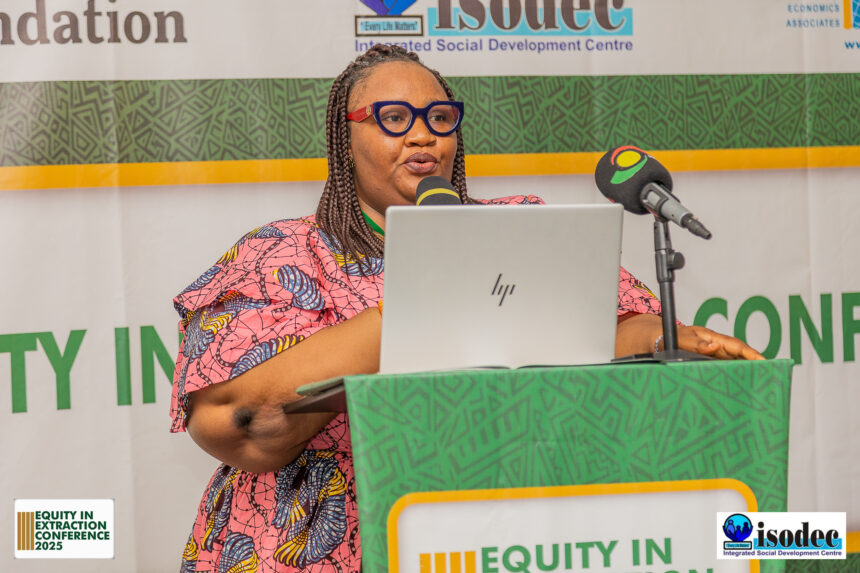
The Writer, Mrs. Charlotte Kpogli-Dzadey is a Policy Analyst in charge of Illicit Financial Flows at the Integrated Social Development Centre (ISODEC).