
Public Agenda NewsPaperPublic Agenda NewsPaper
  • General News
  • Politics
  • Business
  • Health
  • Development Agenda
  • World News
  • Features & Opinions
  • Election watch
  • Editorial
Font ResizerAa
Public Agenda NewsPaperPublic Agenda NewsPaper
Font ResizerAa
  • General News
  • Politics
  • Business
  • Health
  • Development Agenda
  • World News
  • Features & Opinions
  • Election watch
  • Editorial
Search
  • General News
  • Politics
  • Business
  • Health
  • Development Agenda
  • World News
  • Features & Opinions
  • Election watch
  • Editorial
Follow US
Uncategorized

Mahama’s new Code of Conduct for Ministers: 10 key rules

Suleman
Last updated: May 7, 2025 11:18 am
Suleman
Share
3 Min Read
SHARE

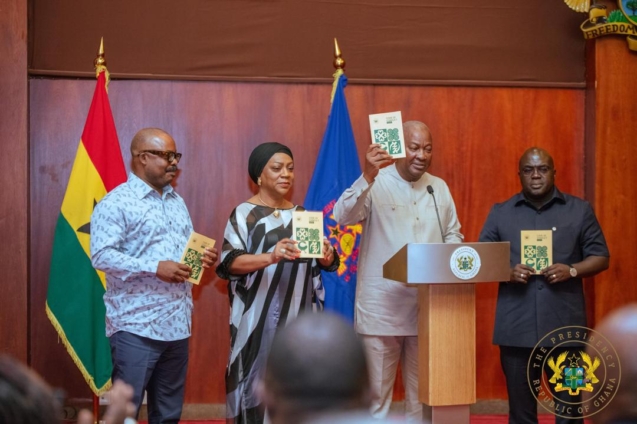
President John Dramani Mahama has unveiled a stringent Code of Conduct (2025) for ministers and political appointees, outlining strict ethical standards to combat corruption, conflicts of interest, and misuse of power.

The 66-page document, emphasizes transparency, accountability, and professionalism in governance.

Ministers must avoid any situation where personal interests clash with public duties. They are barred from owning businesses that contract with government or using insider information for gain. Significant conflicts may require divestment or resignation.

More Read
Mental Health Groups Demand Criminal Probe into Alleged Sexual Assault of 14-Year-Old at Bolga Girls SHS
Bekwai residents give Chinese quarry firm one-week ultimatum over blasting, environmental concerns
Recurring Floods Continue to Threaten Lives and Property in Oyibi Community
Ghana’s economy records 5.5% growth in Q3 2025 — GSS
King’s Baton Relay arrives in Ghana on August 8 ahead of 2026 Commonwealth Games

2. Mandatory Asset Declaration

Under Article 286 of the 1992 Constitution, ministers must declare all assets (land, businesses, jewelry over GHC5 million, etc.) before taking office, every four years, and upon exit. Failure to comply is a breach of law.

3. No Purchase of State Assets

Ministers are prohibited from directly or indirectly buying government property (vehicles, land, shares, etc.). Violators face immediate dismissal.

4. Strict Rules on Gifts & Hampers

Gifts exceeding GHC20,000 must be declared to Cabinet. Ministers cannot use public funds for hampers unless approved by the Chief of Staff for staff rewards.

5. Social Media & Public Conduct

Ministers must maintain civility, avoid offensive language, and refrain from undermining the judiciary or other government agencies. Public attacks on institutions could lead to sanctions.

6. Confidentiality of Cabinet Documents

Leaking Cabinet papers is a fireable offense. Documents marked “Secret” must be stored securely, and drafts shredded after use. Electronic records require equal protection.

7. Travel & Sponsorship Transparency

Ministers must seek prior approval from the Chief of Staff for foreign trips. Sponsorships from third parties must be disclosed, and retroactive approvals are banned.

8. No Influence Peddling or Quid Pro Quo

Using one’s position to secure favors for family/friends is prohibited. Ministers must recuse themselves from decisions benefiting personal contacts.

9. Collective Cabinet Responsibility

Ministers must publicly support all Cabinet decisions or resign. Dissenting privately is allowed, but public defiance is grounds for dismissal.

10. Workplace Integrity & Anti-Harassment

Ministers must ensure safe, respectful workplaces, address harassment promptly, and avoid appointing relatives to their offices.

Source: Myjoyonline.com
Share This Article
Facebook Whatsapp Whatsapp Email Copy Link Print

Recent Posts

  • 2027 Budget: Inside Mahama’s US$10bn New Economy programme
  • Gov’t won’t borrow to finance New Economy Programme – Ato Forson
  • ACA Participates in 15th VINACAS Golden Cashew Rendezvous in Vietnam
  • Farmers demand compensation over Newmont Ahafo North land acquisition
  • African Philanthropy Leaders Call for Collective Action to Drive Sustainable Development
  • Nkoranman Community Bank records 37% pre-tax profit growth
  • Ghana reaffirms commitment to women’s economic empowerment at Addis Ababa dialogue
  • Seven missing fishermen located in Togo’s waters – Western Regional Minister
  • Deploy more military, police to fight galamsey – Christian Council
  • Petrol, diesel prices set to fall from Oct. 16 as LPG faces 18.5% hike
  • IMF raises Ghana’s 2026 growth forecast to 5.7%, exceeding government’s target
  • CSOs, Fisheries Stakeholders Demand Revocation of Offshore Gold Licences
  • ActionAid ‘deeply alarmed’ by US government’s sanctions on the International Criminal Court
  • Mental Health Alliance Calls for 5% Employment Quota for Persons with Disabilities
  • A call for GoldBod-Type Financing Model for NAFCO
  • ISODEC Forum Calls for New Thinking on Ghana’s Economic Management
  • 24-hour economy markets’ renamed District Economy Markets – Ayariga
  • Ghana’s tuna industry collapsing under high operating costs – NAFAG

You Might Also Like

Uncategorized

Ghana secures $370M from IMF after successful review

July 8, 2025
Uncategorized

Mfantseman Youth Trained to Strengthen Local Governance Participation 

July 2, 2025
Breaking NewsBusinesstop storiesUncategorized

We’ll excel beyond IMF programme – Dep. Min. Finance

May 27, 2025
Breaking NewsGeneral Newstop storiesUncategorized

Energy Ministry traces 2,637 ECG containers after audit

May 27, 2025

About Us

Public Agenda is fou­nded and owned by Pu­blic Agenda Communic­ations.

Public Agenda was founded as a public interest Me­dia entity. Its Visi­on is to contribute to building a well-i­nformed society where accurate informati­on dissemination is the cornerstone of a democratic, just and equitable society.

Its mission is to inform, guide and bui­ld responsible citiz­enship and accountab­le decision making and strive for excell­ence in the media in­dustry. Public Agenda Communications is managed by a Board of Directors.

  • Contact us
  • Advertise with us
Welcome Back!

Sign in to your account

Username or Email Address
Password

Lost your password?