

Public Agenda NewsPaperPublic Agenda NewsPaper
  • General News
  • Politics
  • Business
  • Health
  • Development Agenda
  • World News
  • Features & Opinions
  • Election watch
  • Editorial
Font ResizerAa
Public Agenda NewsPaperPublic Agenda NewsPaper
Font ResizerAa
  • General News
  • Politics
  • Business
  • Health
  • Development Agenda
  • World News
  • Features & Opinions
  • Election watch
  • Editorial
Search
  • General News
  • Politics
  • Business
  • Health
  • Development Agenda
  • World News
  • Features & Opinions
  • Election watch
  • Editorial
Follow US
Breaking Newstop stories

Ghana’s food insecurity soars by 5.77% amid economic challenges – Report

Suleman
Last updated: August 15, 2024 11:51 am
Suleman
Share
2 Min Read
SHARE

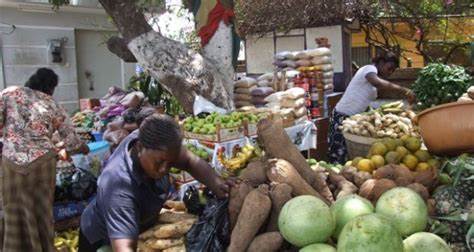
The July 2024 Food Security Monitor report reveals a troubling escalation in food insecurity across Ghana, with the rate of insufficient food consumption (IFC) surging by 5.77%.

This increase is largely driven by the ongoing cost-of-living crisis, fueled by persistently high inflation, a weakening currency, and soaring fuel prices.

These factors have notably inflated the cost of essential commodities, particularly staples such as maize and rice.

More Read
Prez Mahama to receive final Bawku peace mediation report on Thursday
Humanitarians launch $33 billion appeal for 2026
Parliament notifies EC over vacant Kpandai seat following court re-run order
Ghana, EU strengthen partnership to address Sahel security challenges
President Mahama links poor WASSCE results to neglect in basic education

This trend mirrors earlier projections from the World Food Programme (WFP) in their February 2024 report.

According to the WFP’s February 2024 country brief and preliminary March 2024 analysis, an estimated 1.05 million Ghanaians were expected to experience food insecurity between June and August 2024.

Contributing factors include climate change, low agricultural prices, inadequate infrastructure, and limited access to education, compounded by Ghana’s vulnerability to global market shifts, especially in the case of imported rice.

The report also highlights that, while the rate of IFC remained stable in most countries between June and July, Ghana, Nigeria, and Uganda saw increases of 5.77%, 3.98%, and 7.5% respectively. Zimbabwe, on the other hand, reported a 5.45% decrease.

On a year-over-year basis, the majority of countries have witnessed an increase in IFC, with exceptions being Mozambique, Rwanda, South Sudan, Uganda, and Zambia, where current levels are lower than those recorded a year ago.

Furthermore, the report identifies several nations as food insecurity hotspots—where more than half of the population faces IFC—including Burkina Faso (56.6%), Mali (69.1%), Niger (82.6%), and Nigeria (51.5%).


Share This Article
Facebook Whatsapp Whatsapp Email Copy Link Print

Latest News

Ghana needs strategic plan for critical minerals- Yao Graham
December 4, 2025
Congo mineral expert urges Ghana to adopt integrated Lithium strategy
December 4, 2025
Forestry Commission arrests 11 Chinese and 10 Ghanaians in an Anti – “Galamsey” Swoop at Yakombo Forest Reserve
December 3, 2025
Ghana’s inflation drops to 6.3% in November, lowest since 2021 rebasing
December 3, 2025
Ghana Launches First National Infrastructure Transparency Index
December 2, 2025
Presidency forwards petitions for removal of EC Chair, Deputies & Special Prosecutor to Chief Justice
December 2, 2025
Reflecting on the UN Tax Negotiations: A New Chapter for Ghana and Africa in Global Tax Justice
December 2, 2025

You Might Also Like

Breaking NewsDevelopment Agendatop stories

Ghana can unlock major domestic resources through Structured Philanthropy

November 28, 2025
Breaking NewsHealthtop stories

Global funding cuts devastating HIV prevention programmes says UNAIDS

November 27, 2025
Breaking NewsBusinesstop stories

Majority: 10% Lithium royalty deal violated mining law

November 25, 2025
Breaking NewsGeneral Newstop stories

Supreme Court directs Wesley Girls SHS to respond to Muslim Rights allegations

November 25, 2025

About Us

Public Agenda is fou­nded and owned by Pu­blic Agenda Communic­ations.

Public Agenda was founded as a public interest Me­dia entity. Its Visi­on is to contribute to building a well-i­nformed society where accurate informati­on dissemination is the cornerstone of a democratic, just and equitable society.

Its mission is to inform, guide and bui­ld responsible citiz­enship and accountab­le decision making and strive for excell­ence in the media in­dustry. Public Agenda Communications is managed by a Board of Directors.

Welcome Back!

Sign in to your account

Username or Email Address
Password

Lost your password?