

The corona virus disease 2019 (COVID-19) pandemic has had a significant impact on people’s mental health and well-being throughout the world, raising public concerns about increasing suicide rates.
World Health Organisation (WHO) Director-General, Dr Tedros Adhanom Ghebreyesus, described the COVID’s impact on the world’s mental health as “just the tip of the iceberg,” and said this was a wake-up call to all countries to pay more attention to mental health and do a better job of supporting their populations’ mental health.
These concerns about potential increases in mental health disorders engendered nations to incorporate mental health and psychosocial assistance into their COVID-19 response plans, although substantial gaps and worries remain.
More Read
The ramifications of the pandemic have touched many aspects of life, including economic, physical, social, and mental health losses among populations, with health professionals describing it as a grave health threat that has had a devastating impact on the lives of billions of people globally.
As a result, nations such as Ghana have implemented a number of general restrictive measures intended to safeguard their populations, including those with psychosocial disabilities from the spread of COVID-19. Closure of public spaces, installation of social distancing procedures, mass assembly limitations, and a quarantine mandate in the case of infections were among the restrictions.
The Global Picture
In the first year of the COVID-19 pandemic, the global prevalence of anxiety and depression increased by a massive 25%, according to a scientific brief released by the World Health Organization in March this year. The brief also highlights who has been most affected and summarizes the effect of the pandemic on the availability of mental health services and how this has changed during the pandemic.
The COVID-19 pandemic has caused the deaths of nearly 15 million people around the world, the World Health Organization estimates. This takes into account the number of people with psychosocial disabilities.
At the peak of the pandemic, concerns about potential increases in mental health conditions prompted 90% of countries around the world to include mental health and psychosocial support in their COVID-19 response plans. In spite of these measures, mental health advocates argue a lot more need to be done.
Studies on the pandemic show that persons with psychosocial impairments have a more difficult time obtaining vital medical supplies, which was made even more difficult since some people with such disabilities report higher degrees of social isolation than their non-disabled peers. Health experts and people advocating for the rights of persons with mental health say the majority of them suffer increased sensations of loneliness in response to physical separation measures. Increases in heart diseases, dementia, and other health issues have also been linked to social isolation and loneliness.
The Ghana case and emergency response
As earlier stated, the pandemic has had a huge influence on the lives of Ghanaians, especially those with psychosocial impairments and mental health difficulties.
While the adequate study on the impact of COVID-19 on Ghana’s disability population is still lacking, various studies have expressed concerns regarding the effects of COVID-19 on a variety of vulnerable groups, including those with mental health conditions.
In its assessment report on the impact of COVID-19, Ghana Somubi Dwumadie, a four-year disability programme in Ghana with a heavy focus on mental health and disabilities, discovered a number of hazards for people with disabilities.
The study found a higher risk of contracting COVID-19, as well as more severe economic and social consequences owing to limits, worsening of pre-existing mental health difficulties, and increased stigma, discrimination, neglect, aggression, and other forms of abuse.
The Ghana government’s response to the pandemic was well received by the general public, but disabled people’s organisations believed that more could be done to help people with disabilities, including those with mental health disabilities to stay safe and protected while also gaining access to services.
While the government-assisted disadvantaged families including persons with disabilities and mental health disabilities, people with psychosocial disabilities had little access to the available resources or services, largely owing to a lack of easily available information or targeted services. COVID-19 got extensive public education via television, radio, and information vans, but not in alternative formats such as braille or easy-read, thereby excluding many individuals with disabilities, including those with mental health conditions.
Efforts of MindFreedom Ghana
MindFreedom Ghana (MFGh), one of the country’s main mental health advocacy groups, played a key role in alerting the public about the COVID-19 epidemic’s implications and continues to do so.
According to Dan Taylor, Executive Secretary of MFGh, his organization took part in a project funded by the International Disability Alliance through the Pan African Network of Persons with Psychosocial Disabilities. Titled “Awareness Raising and Advocacy towards Addressing the Psychosocial Impact of the COVID-19 Pandemic on High-Risk and Marginalized People, including People with Psychosocial Disabilities in Selected Municipalities in the Greater–Accra Region”, the project was designed to educate the public about the pandemic, especially in case of persons with psychosocial disabilities. This helped in mitigating the stigma held against people with psychosocial disorders in Ghana.
The messages were in line with the WHO warning that people with the disease should not be referred to as having “COVID-19 cases”, “victims” “COVID-19 families” or “the diseased”. They are “people who have COVID-19”, “people who are being treated for COVID-19”, or “people who are recovering from COVID-19”, and after recovering from COVID-19 their life will go on with their jobs, families, loved ones and society as a whole. It is important to separate a person from having an identity defined by COVID-19, in order to reduce stigma.
On the societal impacts:
Additional mental health impacts include the stigmatization of people who have recovered from COVID-19, which had a negative impact on their recovery and ability to reintegrate easily into their communities. “It is regrettable that because people with disabilities and/or existing mental health conditions are already marginalized and stigmatized, they experience heightened rates or levels of stress and exclusion,” says Taylor.
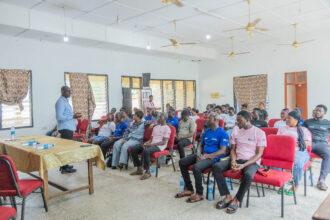
Following from all of the foregoing, the organization has had public engagements such as sensitization workshops and conducted public awareness campaigns using social media platforms such as Twitter and Facebook.
“Over 1,000 individuals have liked, retweeted, and commented on our social media postings,” Taylor said. “Some persons and organizations have utilized our write-ups in the media to make cases for concerns of persons with psychosocial disabilities and mental health in general,” says Taylor.
Furthermore, MindFreedom Ghana’s TV and radio appearances provided the public with the chance to phone in and express their opinions about their activities as well as to gain a better knowledge of mental health and psychosocial disabilities.
Additional mental health consequences, according to MindFreedom Ghana, include stigmatization of persons who have recovered from COVID-19, which hinders their rehabilitation and capacity to reintegrate back into their communities. According to the Executive Secretary, “People with current mental health issues are already marginalized and stigmatized, so they are stressed and excluded even more.”
Public awareness activities
MFGh has engaged with the media and the general public in both social and conventional ways. Many individuals have liked and re-tweeted the organization’s social media messages, as well as made some encouraging comments.
In addition, some individuals and organizations have leveraged media references to MFGh’s publications to make claims for psychosocial disabilities and mental health in general.
Furthermore, the organization’s television and radio appearances enabled members of the public to phone in and express their opinions about the organization’s operations as well as the support it could offer.
MindFreedom Ghana’s call
As one of the country’s trusted mental health advocacy organizations, MindFreedom Ghana is calling for the inclusion of people with disabilities and like-minded organizations in crisis response planning and implementation. It also emphasizes the need for the government to develop emergency response plans to address future crises like COVID-19. The organization states that such strategies must specifically identify ways to address the concerns of persons with psychosocial disabilities and mental health conditions.
Source: Dan Taylor