Public Agenda NewsPaperPublic Agenda NewsPaper
  • General News
  • Politics
  • Business
  • Health
  • Development Agenda
  • World News
  • Features & Opinions
  • Election watch
  • Editorial
Font ResizerAa
Public Agenda NewsPaperPublic Agenda NewsPaper
Font ResizerAa
  • General News
  • Politics
  • Business
  • Health
  • Development Agenda
  • World News
  • Features & Opinions
  • Election watch
  • Editorial
Search
  • General News
  • Politics
  • Business
  • Health
  • Development Agenda
  • World News
  • Features & Opinions
  • Election watch
  • Editorial
Follow US
Breaking NewsHealth

WHO recommends two new drugs to treat patients with COVID-19  

Suleman
Last updated: January 14, 2022 11:08 am
Suleman
Share
3 Min Read
SHARE

The World Health Organization (WHO) recommended on Thursday two new drugs to treat patients with COVID-19, one for patients with the critical disease and one for non-severe cases.

Contents
Non-severe casesRecommendations

The first drug, baricitinib, is a Janus kinase (JAK) inhibitor- a class of drugs used to treat autoimmune conditions, blood and bone marrow cancers, and rheumatoid arthritis.

According to the WHO Guideline Development Group, it is “strongly recommended” for patients with severe or critical disease in combination with corticosteroids.

More Read

Fiscal Reforms Needed to Maximise Gains from Extractive Sector, Says IEA
Ghana’s Inflation Falls to Four-Year Low; hits 8% in October 2025
GRA boss, senior officials ordered to appear before OSP in SML probe
Bosomoa Forest Reserve under Threat as Community Clears 20 Acres for proposed health College project
ISODEC, Shai -Osudoku Assembly Honour Ford Foundation’s Legacy of Social Justice

The group of international experts based their recommendation on “moderate certainty evidence” that it improves survival and reduces the need for ventilation.

There was no observed increase in adverse effects.

The experts note that it has a similar effectas other arthritis drugs called interleukin-6 (IL-6) inhibitors. Because of that, when both drugs are available, they suggest choosing the best option based on cost, availability, and clinician experience.

It is not recommended to use both drugs at the same time.

The experts also advise against the use of two other JAK inhibitors (ruxolitinib and tofacitinib) for patients with severe or critical cases of COVID-19 infection.

According to them, trials undergone using these drugs failed to show any benefits arising using either drug and suggested a possible increase in serious side effects with tofacitinib.

Non-severe cases

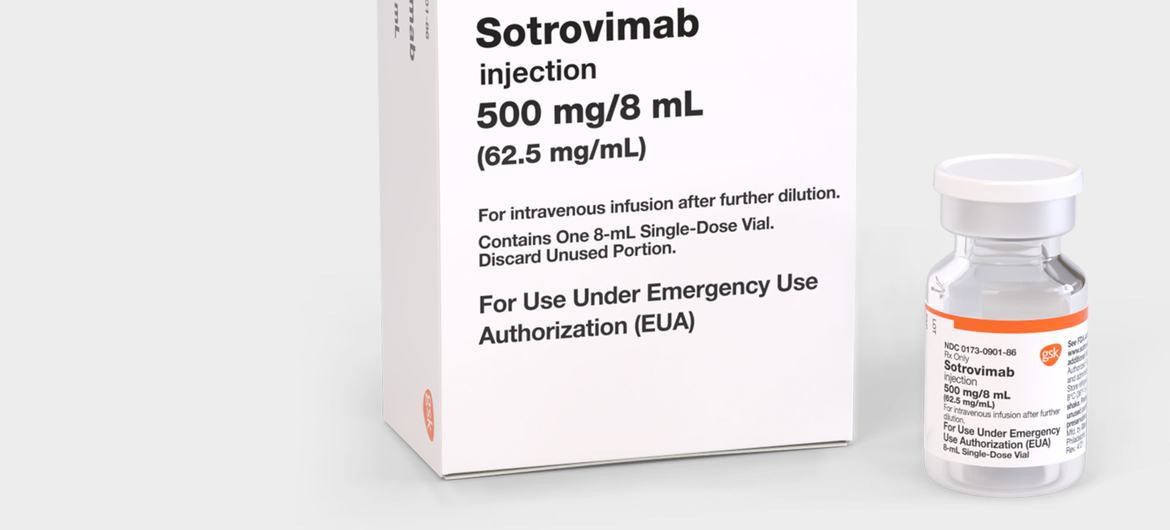
In the same update, WHO makes a conditional recommendation for the use of a monoclonal antibody known as sotrovimab in patients with non-severe cases.

According to them, the drug should only be administered to patients at the highest risk of hospitalisation. In those at lower risk, it onlyshowed “trivial benefits”. 

A similar recommendation has been madepreviously, for another monoclonal antibody drug, casirivimab-imdevimab, and the experts say there is insufficient data to recommend one over the other.

For both, the effectiveness against new variants, like Omicron, is still uncertain. 

The group will update their guidelines for monoclonal antibodies when more data becomes available.

Recommendations

These recommendations are based on new evidence from seven trials involving over 4,000 patients with non-severe, severe, and critical infections.

Developed by WHO with the methodological support of MAGIC Evidence Ecosystem Foundation, the guidelines provide trustworthy guidance and help doctors make better decisions with their patients.

According to the agency, the guidelines are useful in fast-moving research areas, because they allow researchers to update evidence summaries as new information becomes available.

The latest guidance also updates recommendations for the use of interleukin-6 receptor blockers and systemic corticosteroids for patients with severe or critical COVID-19; conditional recommendations for the use of casirivimab-imdevimab (another monoclonal antibody treatment) in selected patients; and against the use of convalescent plasma, ivermectin and hydroxychloroquine, regardless of disease severity.

Source: UN Newscentre

Share This Article
Facebook Whatsapp Whatsapp Email Copy Link Print

Latest News

NAIMOS, REGSEC dismantle illegal mining network in Oda River Forest Reserve
October 24, 2025
Gold Prices Plunge 6.3% in Largest Drop Since 2013
October 22, 2025
BoG Governor targets full de-dollarisation, wants cedi to be sole currency for all transactions
October 22, 2025
ISODEC to Plant 650 Trees to celebrate Ford Foundation’s 65 years in West Africa
October 21, 2025
Cedi erases Q3 losses recorded in 2025; posts 37% year-to-date appreciation against dollar
October 21, 2025
Resource Extraction, Climate Change Driving Inequality in West Africa — ISODEC
October 20, 2025
Assibey Antwi, Gifty Oware to face court today over NSA ghost names scandal
October 17, 2025

You Might Also Like

Breaking NewsBusinesstop stories

Govt spending falls 14% below target — BoG Report

October 13, 2025
Breaking NewsDevelopment Agendatop stories

GES to phase out double-track system by 2027 — GES

October 13, 2025
Breaking NewsDevelopment Agendatop stories

TUC warns of imminent water crisis, urges Mahama to declare State of emergency over galamsey

October 10, 2025
Breaking NewsBusinesstop stories

IMF reaches staff-level agreement with Ghana for $385m disbursement

October 10, 2025

About Us

Public Agenda is fou­nded and owned by Pu­blic Agenda Communic­ations.

Public Agenda was founded as a public interest Me­dia entity. Its Visi­on is to contribute to building a well-i­nformed society where accurate informati­on dissemination is the cornerstone of a democratic, just and equitable society.

Its mission is to inform, guide and bui­ld responsible citiz­enship and accountab­le decision making and strive for excell­ence in the media in­dustry. Public Agenda Communications is managed by a Board of Directors.

Welcome Back!

Sign in to your account

Username or Email Address
Password

Lost your password?