

National statistics indicate that more than 90 per cent of children in the country have reportedly experienced some form of violence, either in their residence or in the school environment.
The data from the 2011 Mapping and Analysis of Ghana’s Child Protection System report also shows that more than 21 per cent of women aged between 20 and 24 were married before the age of 18.
Ghana ratified the United Nations Convention of the Rights of the Child (UNCRC), the key international law that provides for the welfare of children in 1990 and enacted a progressive legislation, the Children’s Act 1998, Act 560, to guarantee basic rights of children and to protect them from any kind of abuse and exploitation.
More Read

Elaborate provisions
Under the country’s 1992 Constitution and the Children’s Act, a child is a person below the age of 18. The basic rights of the child are guaranteed in a number of elaborate provisions under these laws.
However, despite these achievements, children continue to suffer all forms of abuse in parts of the country, with persistent economic exploitation of children and all physical harm, psychological and social consequences.
This is in addition to the hardships and dramatic situations faced by children in times of armed conflict and the various forms of despair and suffering they experience as a result of the spread of poverty, famine, plagues and endemic diseases.
It is against this background that the Second Lady of Ghana, Mrs Samira Bawumia, launched the Ghanaians Against Child Abuse (GACA) social drive in November last year with the ultimate goal to “promote the wellbeing of children, prevent abuse and protect children from harm.”
The GACA campaign seeks to reduce the acceptance of social practices that have negative consequences on children by creating a critical mass of people to promote the adoption of behaviours favourable to the protection of children and adolescents.
Social drive programme
Ultimately, the social drive programme, which aims at reaching millions of Ghanaians with messages to prevent abuse and promote the wellbeing of children, is expected to support the reduction of violence against children and adolescents, including harmful practices.
The GACA campaign is a joint Programme of the Ministry of Local Government and Rural Development, the Ministry of Gender, Children and Social Protection, the Ministry of Education, the United Nations Children’s Fund (UNICEF) and NGO partners, and supported by Global Affairs Canada, KOICA, Korea and USAID Ghana.
November 19, 2018 was chosen to celebrate the GACA first anniversary, as the day coincides with the World Day for the Prevention of Child Abuse.
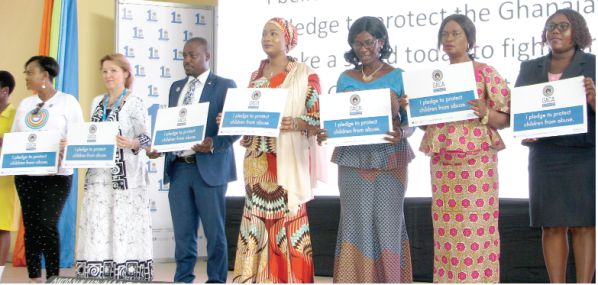
At an event to mark the first anniversary of GACA in Accra on November 19, Mrs Bawumia called on all stakeholders to intensify efforts to end all forms of child abuse.
She said despite impressive strides made by the Ghanaians Against Child Abuse (GACA) campaign, statistics indicated that children continued to suffer abuse and many forms of violence (Daily Graphic, November 20).
Achievements
Reflecting on the achievements of the GACA social drive, one year after the launch of the programme, in a statement issued by the United Nations Children’s Fund (UNICEF), the Minister of Local Government and Rural Development, Hajia Alima Mahama, said: “I am optimistic of a leap in our country’s human development if the momentum generated is sustained and scaled up.”
For her part, the UNICEF Representative in Ghana, Anne-Claire Dufay, said: “We are encouraged by the commitment and the wonderful stories and testimonials resulting from the campaign. With the communities and all partners, we look forward to further reducing the incidence of violence against children in the coming years.”
The statement said one year after the GACA campaign was launched, it was a good opportunity to show what was already changing in Ghana for the improved protection of children and adolescents and to inspire more people to join the national campaign, pointing out that it was also important to reflect on possible gaps and proposed strategies moving forward.
Thematic pillars
The GACA campaign currently has 11 thematic pillars addressing pressing child protection and sexual and gender based violence (SGBV) issues in Ghana, with a focus on adolescent girls and boys. The pillars of the campaign include child sexual abuse, physical abuse, child trafficking, corporal punishment, child labour, verbal abuse, bullying and child marriage, among others.
The Safe Schools Programme (SSP) within the GACA campaign seeks to address the root causes of violence at school, including corporal punishment, sexual harassment and bullying. It will be launched officially on the occasion of the GACA anniversary commemorative event.
A Safe School Resource Pack (SSRP), developed by Ghana Education Service (GES), with support from UNICEF, has been designed to help prevent school-based violence, including Gender Based Violence as well as equipping teachers, Guidance and Counselling Coordinators, children and adolescents with the needed skills to ensure that schools are free from all forms of violence.
According to Madam Barbara Asher Ayisi, the Deputy Minister of Education, the Safe Schools Programme within the GACA campaign sought to address key issues such as corporal punishment and offered alternatives in a positive outlook.
For her part, the Minister of Gender, Children and Social Protection, Mrs Cynthia Morrison, said: “Creating a safe and non-abusive society is a collective responsibility and I would like to call on every Ghanaian to join the campaign and make Ghana a safe place for our children.”
The statement urged the public to join in celebrating the success of the campaign “and commit to take the GACA pledge to be a Ghanaian Against Child Abuse as we fight for a violence-free future for our children and adolescents in Ghana.”
Source: Graphic.com.gh