

The Executive Director of Transparency International Ghana, Mrs Mary Awelana Addah has raised concerns about persistent vulnerabilities in key sectors of the economy, cautioning that gaps in oversight, particularly within the oil and gas value chain and public procurement continue to undermine efforts to combat corruption.
Mrs Addah revealed that despite existing frameworks, critical loopholes remain. “There are serious issues or gaps when it comes to fighting corruption within those sectors,” she noted, pointing specifically to irregularities in procurement processes.
She highlighted practices such as over-invoicing and other undisclosed infractions, suggesting that these challenges are more widespread than publicly acknowledged.
More Read

“You know the issues around oversight are one key area where we talk about corruption, and so you realise we have commitments like asset declaration, and it’s the COPO Bill, the Conduct of Public Officers Bill,” she said.
She added, “We have elements around oil and gas, and within the value chain, there are serious issues or gaps when it comes to fighting corruption within those sectors. There are issues of procurement; either there is over-invoicing or a lot of other issues that we cannot be talking about here, but these commitments ensure that the citizen is aware,” she said.
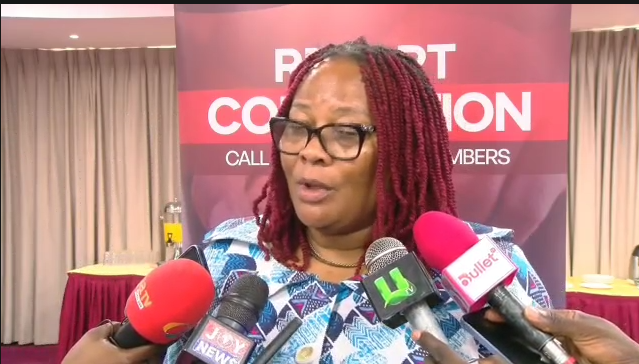
She made these comments recently during a quarterly CSOs–Parliament engagement on Open Governance Parnership (OGP) held in Accra.
The meeting,organized by Transparency International Ghana in collaboration with Ghana Anti-corruption Coalition (GACC) and Africa Centre for Energy Policy (ACEP), was meant to build participants capacity on the OGP National Action Plan 5 and its intersection with Anti-Corruption reforms needed to strengthen Ghana’s integrity systems.
It formed part of initiatives under the FCDO/ACEP consortium project which seek to enhance governance and accountability.
According to Mrs Addah, the dialogue was the first of a series of planned events aimed to engage on various issues of interest pertaining to the legislations and oversight role of Parliament and create a platform to provide Parliament with civic feedback regarding their legislative and oversight responsibilities.
Ms Addah further explained that the OGP framework promotes the use of technology to make information accessible to citizens across various digital platforms, a step she described as critical to strengthening transparency and combating corruption.
Addressing participants relative to the impact of the initiative, Member of Parliament for Ho West and Chairman of the OGPCaucus in Parliament, Mr Emmanuel Bedzrah, said the programme would make government more open and accessible to the public.
“This will make the government open to all of us. If you have citizens participating in governance, and if you have us being accountable to the people, and if people know exactly what goes on, that is what we are looking for, and that is what every democratic government is all about,” he said.
Mr Bedzrah explained that the engagement was organised to review commitments outlined in the National Action Plan 5 under the Open Government Partnership framework.
“The OGP Caucus in Parliament, in collaboration with civil society organizations, is organising this stakeholder engagement to take us through all the commitments that have been made in the National Action Plan 5, for us to know exactly what we should be looking for when we come to Parliament,” he said.
On Parliament’s oversight responsibilities, Mr Bedzrah stressed the need for strong legislative review and budget oversight to curb corruption.
“If there’s a need for us to support budget oversight or undertake legislative review, we must do so. We all know corruption is endemic, and we’re doing everything in our power as members of Parliament to make sure we fight it,” he said, adding that he also works with the African Parliamentarians Network Against Corruption (APNAC).
He further disclosed that the government has established a working group to develop the next National Anti-Corruption Action Plan (NAP2), following the completion of NAP1.
By: Mohammed Suleman/Publicagenda.news