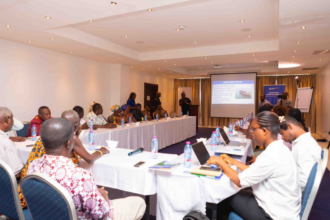
A two-day national forum to review the Ghana Child Labour Monitoring System{GCLMS} to improve child welfare and protection services across the country is underway in Accra.
The GCLMS is a holistic and dynamic process for monitoring all forms of child labour, with particular emphasis on the worst forms of child labour.
The review is expected to inject a high level of efficiency into the GCLMS and improve its functionality to ensure its full utilisation by all stakeholders.
More Read

The objective is for the system to identify vulnerable children, children at risk and those engaged in all forms of child labour and refer them for available interventions and services.
It will also foster the adoption of new strategies to cure the incoherence in the approach to addressing the problem of child labour across the country, making it less difficult for Ghana to report on its efforts in the fight against child labour at the national level.
The forum will thus elicit inputs from representatives of ministries, departments and agencies, the Ghana Trades Union Congress (TUC), the Ghana Employers Association, civil society organisations, UNICEF and the International Labour Organisation to enhance the system.
Why GCLMS
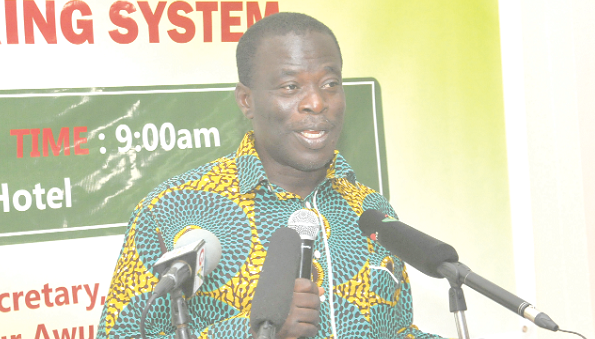
Speaking at the opening of the forum in Accra yesterday, the Minister of Employment and Labour Relations, Mr Ignatius Baffour Awuah, said the country established the GCLMS in 2010 as a means of monitoring child labour issues across the country.
The system, he said, had been designed to make for direct and regular observations, identify victims of child labour and determine the various risks they were exposed to and refer them to satisfactory and sustainable alternative services, as well as track them to ensure that they did not return to their former conditions.
He said the initiative was piloted by the government in 25 communities in six selected districts under the National Programme for the Elimination of Child Labour in Cocoa (NPECLC).
“The final pilot report identified some challenges and gaps and made some recommendations for a review to include tools and processes,” Mr Awuah said.
Linkages
The Deputy Minister of Gender, Children and Social Protection, Ms Gifty Twum Ampofo, said as the ministry in charge of the National Household Registry, the system would help it with common linkages and targeting mechanisms and provide a platform for identifying households affected by child labour as a result of poverty.
She said the child labour component of the Ghana Living Standards Survey showed an increase in child labour among children aged five to 17 years from 1.27 million recorded in 2003 to 1.89 million.
She contended that while population growth might have accounted for the increase in child labour, the level of awareness of the dangers of child labour, trafficking and all forms of abuse against children should rather have led to a decline in the number.
For his part, the National Coordinator of the Ghana National Coalition on the Rights of Children (GNCRC), Barima Kwasi Amankwa, said it was the collective responsibility of stakeholders to support a single system to comprehensively address the problem of child labour.
Source: Graphic.com.gh