
Public Agenda NewsPaperPublic Agenda NewsPaper
  • General News
  • Politics
  • Business
  • Health
  • Development Agenda
  • World News
  • Features & Opinions
  • Election watch
  • Editorial
Font ResizerAa
Public Agenda NewsPaperPublic Agenda NewsPaper
Font ResizerAa
  • General News
  • Politics
  • Business
  • Health
  • Development Agenda
  • World News
  • Features & Opinions
  • Election watch
  • Editorial
Search
  • General News
  • Politics
  • Business
  • Health
  • Development Agenda
  • World News
  • Features & Opinions
  • Election watch
  • Editorial
Follow US
Breaking NewsGeneral Newstop stories

Reduce family size to enhance development – population Council

Latifa Carlos
Last updated: August 2, 2018 4:59 pm
Latifa Carlos
Share
4 Min Read
SHARE

The Western Regional Directorate of the National Population Council says the alarming rate of children and youth under 24 in the western Region called for the cutting down of figures for development and growth purposes.

Such a bracket of almost 60 percent of the Western Regions population being under 24 according to Francis Asante, the Regional Head has rippling effects on reproduction and may continually increase this age bracket if nothing was done on time to change the demographic feature.

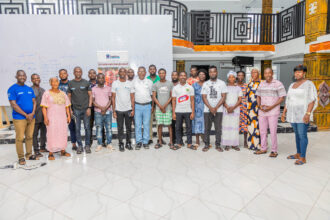
This came to light during a media engagement on Post-World Population day celebration in Sekondi. The worldwide theme is: Family Planning is Human Right but Ghana had added “An Imperative to National Development” to drum home the importance of family planning in population control.

More Read

Raw commodity exports undermining Africa’s growth – Mahama
Ayariga accuses NPP minority of hypocrisy over certificates of urgency
Every cedi lost to corruption is a loss to national development – Deputy Finance Minister
ISODEC Introduces Whistleblower Policy to Strengthen Transparency and Accountability
Minister assures resumption of Kpong Irrigation Scheme amid funding delays

He said family planning was the best since it saved families and the nation lots of resources that could be channelled into development and infrastructure for the well-being of society.

Mr Asante intimated that a well-planned family enabled parents to be more and more responsible towards the needs of their children and raise responsible children.

“Family planning could also help to reduce social vices, improve the health of mothers and children because parents become responsible in all areas and are able to guard and guide their smaller families to earn a better living for themselves”.

It is extrapolated that by 2040, the population of the Region could increase to 4.8 million from the current 2.4 million if steps were not adopted to curtail births among communities.

The Region has a total fertility rate of 4.3 percent, with two refugee camps accounting for more than 4000 people. The Region contributes 60 per cent of the country’s Gross Domestic Products.

Mr Asante said quality human resource was key to national development same way rapid population growth with less quality had negative effects on development and environment as a whole.

He said the fight against rapid population growth therefore called for available resources both financial and logistics to effectively engage communities to adopt birth control measures that could enable the country to achieve positive results in that area.

According to him, contraceptive use in Ghana was still low among both men and women and in the Region and accounted for 23.3 percent and pregnancy among both young and old stood at 2.7 percent.

The regional population team therefore proposed that one percent of the fund be distributed to constituencies into the regional and districts councils to fund more education and awareness on family planning and other related issues.

There must also be population desks at all the Development Authorities created by the government to manage and monitor population growth as well as the reconstitution of the population council to carry out their duties at the various strata of society.


Source: GNA

Share This Article
Facebook Whatsapp Whatsapp Email Copy Link Print

Latest News

Reproductive mental health underreported among Ghanaian women- Gynaecologist
January 26, 2026
Ghana cedi best-performing currency in Africa for 2025 – IMF
January 26, 2026
Gold surges past $5,000 for first time
January 26, 2026
How Ghana is losing water before it reaches the tap
January 22, 2026
Over 360,000 Ghanaians exited poverty in Q3 2025 – GSS report
January 21, 2026
GH¢107m EXIM loans recovered; dubious deals sent to security agencies – Trade Minister
January 21, 2026
Ga West MCE Calls for Stronger Enforcement of Disability Laws
January 20, 2026

You Might Also Like

Breaking NewsBusinesstop stories

IES defends NPA price floor policy amid debate over fuel pricing

January 19, 2026
Breaking NewsHealthtop stories

WHO Urges Governments to Raise Taxes on Sugary Drinks and Alcohol to Save Lives

January 14, 2026
Breaking NewsDevelopment Agendatop stories

Global employment stable but decent jobs in short supply

January 14, 2026
Breaking NewsGeneral Newstop stories

Supreme Court adjourns Nyindam’s case to January 28

January 13, 2026

About Us

Public Agenda is fou­nded and owned by Pu­blic Agenda Communic­ations.

Public Agenda was founded as a public interest Me­dia entity. Its Visi­on is to contribute to building a well-i­nformed society where accurate informati­on dissemination is the cornerstone of a democratic, just and equitable society.

Its mission is to inform, guide and bui­ld responsible citiz­enship and accountab­le decision making and strive for excell­ence in the media in­dustry. Public Agenda Communications is managed by a Board of Directors.

Welcome Back!

Sign in to your account

Username or Email Address
Password

Lost your password?