


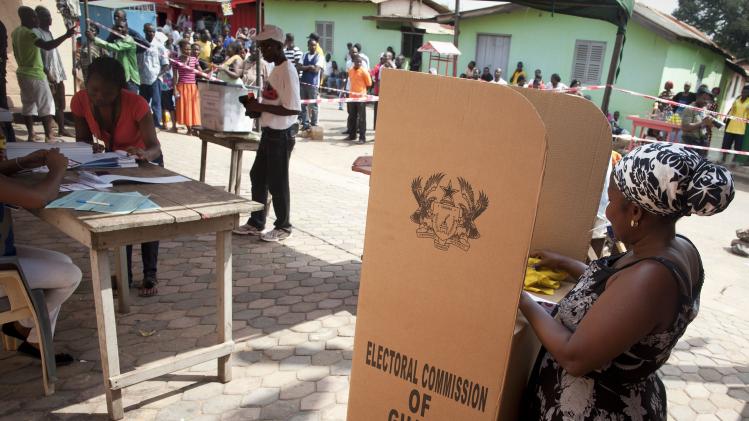
In a democratic government, the people’s views influence the laws and policies made by the government. Democracy is therefore seen as a system of government in which people decide matters as a group. Athens, the capital of Greece was the first city to allow ordinary citizens access to government offices and courts. In ancient Greece, the people of the city-state of Athens developed a way of making decisions that was different from the autocratic ways of the past.
However, modern democratic systems cannot accommodate the style of participatory democracy and inclusive governance as pertained in ancient Greece. The Athenian city-state form of democracy had long given way for the representative form of democracy. That notwithstanding, governments globally still institute various mechanisms such as ‘Town Hall Meetings’ to interact and dialogue with citizens on pertinent national issues.
In Ghana, with the return of democratic governance in 1992 following the adoption of the Fourth Republican Constitution, successive governments have adopted various approaches to engage with the citizenry especially those at the lowest echelons.
More Read

President J.K Kufuor
The John Kufuor led government in 2001 instituted the People’s Assembly concept which is synonymous to Town Hall Meeting as used in some advanced democracies. This novelty offered the average Ghanaian the opportunity to directly interact with the President and his Ministers and to seek answers on questions bothering on national interest and development.
The People’s Assembly provided a rare opportunity where the President opened himself up once in a year to the public and took questions from people of all social classes without any inhibitions at all. This innovation afforded Ghanaians to have a face-to-face interaction with their elected leader and to ask him questions on issues of governance and development.
Elitism and
Governance
Beyond the fact that ordinary citizens have the rare occasion to put out issues of development before the President and his Ministers, it also avoids the temptation of running an elitist administration. An elitist doctrine posits of a government of a small minority of members of the economic elite and policy-planning networks with unbridled powers.
In an emerging democracy such as Ghana, the pluralist system in policy and decision making is required in mirroring the ‘micro’ issues of those at the lowest stratums. Pluralism appeals to the masses and the underprivileged and evens the scale from distant class orders. By connecting directly with the citizens, it affords the President to have first -hand appreciation of the implications of his policies and development programmes. This direct feedback is particularly helpful to the President and his government due to the proclivity of Presidents’ appointees to give a one sided positive feedback regarding the state of the national economy and the wellbeing of the citizens.
Ezitors Forum
The John Atta Mills/John Mahama governments replaced the People’s Assembly concept with what was described as ‘Editors Forum’.This was equally laudable as far as the expansion of the frontiers of democratic accountability is concerned. The Presidents opened themselves up for questions from the media fraternity. The problem with this format however, was that it was restricted only to those in the media. No one outside the media fraternity had access to this platform. But, what was most nauseating was the behaviour of some partisan and ingratiating media organizations who would rather go and sing praises to the President instead of asking the hard questions.
Limitations
The People’s Assembly concept also had its own challenges, chief among them being the fact that there was no sufficient time to take as many questions as possible. Of course, others also used the opportunity to malign the personality of the President instead. But one would have to understand that democracy has space for the lunatic fringe.
Naturally, it is practically not possible for the President to be abreast of issues in all sectors of our national life. That is why with the People’s Assembly, the President was often flanked by his Ministers who assisted by bringing him up to speed on issues he was oblivious of.
The writer is with the Integrated Social Development Centre (ISODEC), in Accra.
Email: [email protected]