

A feasibility studies to construct a 700 MW super critical clean coal power plant at Ekumfi Aboano in the Central Region has been concluded by a consortium comprising the Volta River Authority and Shenzhen Energy.
According to Mr Suleman Abubakari, Deputy Director of Distribution at the Ministry of Energy, the addition of a coal generation plant into the energy mix is to increase reliability and the prospects of economic pricing of power and its affordability.
Mr Abubakari noted that the Ministry is also taking steps to ensure that the already existing plants that are not operational due to technical problems would be restored to commence operation as quickly as possible.
More Read
He said in the short term plan, over 1,000MW of generation capacity has been added to the installed generation capacity of the country since 2015 to bring the country’s installed generation capacity to 4,577MW by the end of August 2017.
The Ministry, he mentioned, is exploring the reverse flow of gas to Tema through the West African Gas Pipeline (WAGP) in the short term, as well as the construction of an overland/onshore pipeline from Aboadze to Tema (West-East pipeline) as an alternate gas transportation facility to the existing WAGP in the long term. This would convey indigenous gas from ‘’our’’ western gas discoveries to the east.
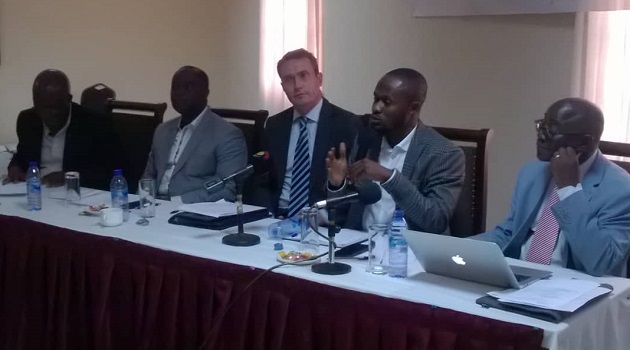
He was speaking during an Energy Roundtable conference which was organized in Accra recently by the Institute of Green Growth Solutions (IGGS) in partnership with the Konrad Adenauer Stiftung (KAS). The roundtable was held on the theme: ‘Ensuring a Sustainable and Efficient power sector.’
Dr. William Ahadzie, Director of Research, National Democratic Congress (NDC), in a presentation observed Ghana’s prolonged dependence on hydro generation was implicated in the energy shortfall that led to several rounds of load shedding over the years.
Dr Ahadzie added that, the energy sector itself has suffered from technical and commercial losses in power supply; aged, inadequate and unreliable energy infrastructure to meet growing demand.
Ghana’s per capita electricity consumption since 2010 has been 400kwh below the global average of 500kwh he said. He proposed that, government should support the Volta River Authority to construct a 75Megawatts Wind Park along the Eastern Corridor of the greater Accra Region to generate power from wind and also promote National LPG penetration (as contained in the Energy Sector Strategy and Development plan).
Institute of Statistical Social Economic Research (ISSER) notes that during the height of the energy crisis in 2014, Ghana lost production worth $2.1m a day or $55.8m a month. Firms without sufficient electricity experienced a drop in sales of about 37-48%.
Ghana lost an estimated $680m in 2014(2% of Gross Domestic Product) due to energy crisis a report by Institute of Statistical Social Economic Research (ISSER).
For the past few years, Ghana has been saddled with what is arguably the worst energy crisis in the history of the country. This situation led to many people losing their jobs and properties.
The crisis which was largely the result of low water inflows into the Akosombo Dam which limited the generation of hydroelectric power from the Akosombo Power Station; the two largest hydroelectric power generation plants in the country.
By: Latifa Carlos