

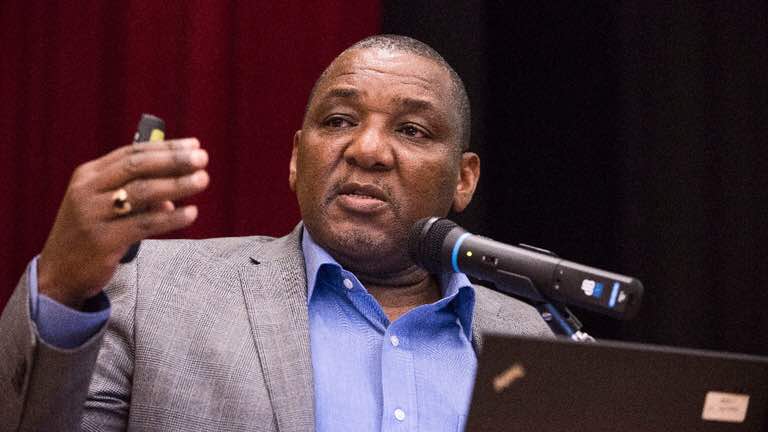
Dr. Koku Awoonor, Director, Policy, Planning, Monitoring and Evaluation (PPMED) of the Ghana Health Service, has stressed the need to address internal inequality in medical doctor population in the country.
Dr Awoonor noted that the country was saddled with inequality in doctor population and that required urgent attention.
He noted that about 75 per cent of doctor population in Ghana were in Accra and Kumasi with most hospitals in the regions being man sometimes by one doctor.
More Read

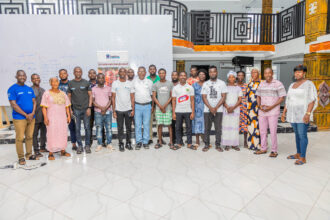
Dr Awoonor made the observation when he launched Hope For Future Generation (HFFG), a non-governmental organisation’s five year strategic plan (2018- 2023) in Accra.
Under the five year plan, HFFG will focus on Primary Health Care, Governance and Institutional Effectiveness, and Economic Empowerment and Sustainable Livelihood.
Dr. Awoonor commended HFFG for its immersed work carried out across the country as well as developing a strategic plan to guide them in their operations.
“No organisation can run effective without a plan,” he added.
He recounted that many organisations did not have strategic plan to guide them but HFFG had carefully worked on it plan to guide its staff.
The Director of PPMED recounted that Ghana was ripe to achieve universal health care through effective programmes on CHP Compounds and the National Health Insurance Scheme.
He said primary health care was paramount and debunked the assertion that primary health was meant for the poor.
Dr Awoonor further called for a change in behaviour in order to tackle sanitation issues in the country.
Rev. Abraham Nyarko, Board Chairman, HFFG, recounted how funding for development work had dwindled over the years in the country, adding that it had compelled the Board to take some uncomfortable and unpopular decisions.
“It is those very actions that have led some of us to the relatively strong positions that we find ourselves in today as an organisation…. We must respond to these challenges and see them as opportunities and then re-invent and position ourselves to deliver even better on our mandate,” Rev. Nyarko said.
Mrs Cecilia Lodonu- Senoo, Executive Director, HFFG, said under the primary health care, her organisation was going to provide services at all levels and embark on health promotion by using community mobilsation and innovation, so that behaviour change strategies would be acceptable to communities and beneficiaries.
Mrs Lodonu-Senoo was optimistic that HFFG’s work plan would provide a road map for an increase in government resource allocation to health as well as improve economic empowerment of women and girls in various communities.
She said HFFG was also going to put in place a monitoring mechanism to assess progress of work on the strategic plan to ensure that projected resources were attained.
“A mid-term review would be undertaken in 2020 to determine the extent to which earmarked activities have been implemented,” she stressed.
Angela Trenton-Nbonde, UNAIDS Representative, in a solidarity message, said her outfit was looking out for change that will bridge the gap of inequality in society as well as end AIDS as a public health threat.
Source:GNA