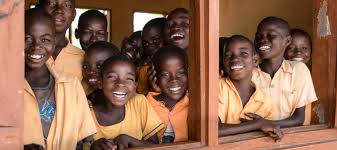
A maiden national report on child poverty in the country has established that three out of every four children are poor in many ways, a situation the report describes as “multi-dimensionally poor”.
The figure translates into 73.4 per cent of the country’s estimated 11.4 million child population.
The Multi-Dimensional Child Poverty Ghana Report defines multi-dimensionally poor children as children deprived of three or more of their basic human rights, services and needs required for their long-term development.
More Read

They include the right to education, health, nutrition, protection, sanitation, water, information and housing.
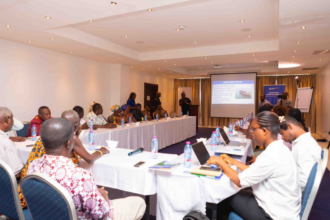
The report, which was launched by the First Lady, Mrs Rebecca Akufo-Addo, in Accra yesterday, seeks to provide empirical baseline information on the nature and levels of deprivation and the profile of vulnerable children in Ghana, with the aim to engender national dialogue.
It was initiated and put together by the National Development Planning Commission (NDPC), in partnership with the Ghana Statistical Service, the Social Policy Research Institute and the United Nations Children’s Fund (UNICEF).
Rationale
The report also ascertained the impact of a myriad of social intervention policies on child poverty.
In addition, it provided baseline data directed at enhancing processes to achieving target 1.2 of the Sustainable Development Goals (SDGs), which mandates all member countries of the United Nations (UN) to halve the proportion of men, women and children of all ages living in all dimensions of poverty by 2030.
This means that by 2030, the child poverty index should have been reduced from the current 73.4 to 36.7 per cent of the total child population in the country or better.
The report is to also guide the development of suitable policies, programmes and projects to address the specific needs of children.
Findings, recommendations
The report further established that only 2.5 per cent of children in Ghana were without deprivation.
It said also that at the national level, 28.2 per cent of all children were monetarily poor, a phenomenon much common in the rural areas.
Among its 12 recommendations, it called for a multi-sectoral approach through coordinated policy responses that encouraged both the scaling up of specific sectoral interventions and the provision of complementary services by relevant stakeholders.
It also called for an increase in political will to prioritise child poverty issues at all levels through sensitisation campaigns.
The report recommended support for poor households to acquire improved conditions relating to sanitation through cost-sharing mechanisms, increase in public investments towards providing low-cost social housing accessible to the poor and promoting household access to information and communications technologies and services.
The Ghana Living Standard Survey (GLSS 7) 2017 showed that 6.8 million people in the country were classified as “poor”, that is, surviving on as little as GH¢1,314 per year.
Future of Ghana
Mrs Akufo-Addo said she was particularly passionate about the welfare of children, adding: “To be able to lay the foundation for developing skilled, productive and responsible citizens for the future of Ghana, we need to be unapologetically passionate and committed to child welfare.”
The First Lady underscored the need to deal with inequality from its roots because every child deserved to have access to good nurturing, nutrition, health, education, water, sanitation and general well-being.
She said those were all critical building blocks for child development, without which Ghana could not derive the expected dividends from its human resource.
Useful data
The UNICEF Country Representative, Ms Anne-Claire Dufay, said the fund anticipated that the report would be a useful source of data and evidence for advocacy and policy making.
She said it would also serve as reference for many sectors to become better informed on the multiple facets of child poverty in the country.
She said the UN Secretary-General had launched the “Decade of Action” to indicate that UN member states had 10 years to deliver on the SDGs, and that with 2020 as a year of affirmation, stakeholders had to make the period a decade of accelerating development processes, such that no child was left behind.
Source: Graphic.com