A well-known British journalist and writer asked the question: “What has gone wrong with the language of politics”? This is what Ghanaian politicians and leaders ought to be asking themselves every day whether in election time or post-election times. And here, I am not referring to spin doctors. We do not have them in Ghana.
It is becoming a common occurrence in Ghana today for politicians, to use language which is not only offensive, but uncouth, culturally insensitive and unbecoming of people who are supposed to be role models in society. More so, the type of language used excludes many people from the discourse, is devoid of passion or ideological and political clarity.
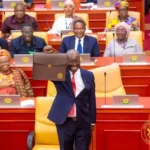
Recently, the Honourable NDC Member of Parliament for Tamale Hon. Alhassan Suhuyini, as a participant in a Television show, challenging the moderator to show him her ‘white pants’. Some people thought this was funny.
More Read
Before then, Ghanaians were regaled with unguarded comments from a Minister who thought saying that Northerners are ‘lazy and difficult’ people would make him appear intelligent. The debate of this Honourable minister’s claims is still raging.
The latest in these episodes is that statement by Ghana’s High Commissioner to South Africa, H. E George Ayisi Boateng. He is quoted as saying that the High Commission in South Africa “will prioritise the welfare of NPP members before considering other Ghanaians.” Many would have thought this was not party policy or directive until the Acting Chairman of the NPP, Hon Freddie Blay’s waded into the issue with a weak explanation that suggested that it could be a party policy poorly reflected by the High Commissioner.
In the NDC era, Ghana was inundated with similar unprintable comments from NDC activists, most of which were sexist insults aimed against women – mothers, sisters, wives and daughters, and in some cases, at particular ethnic groups. Some of the claims made by NDC ‘communicators’ against the current president are simply unprintable.
Ghanaians have developed a response template for this sort of unacceptable language couched in partisan political terms. It is easy to blame the partisanship culture which has developed as an excuse for tis wort of intemperate, uncouth language.
If the gargantuan claim is from an NPP politician, the opposition NDC will call for his (they are always men) removal from office. If it is from the opposition NDC, the NPP will do the same. ‘Sack him Mr. President’ is our answer. That is what we are hearing in the case of the High Commissioner to South Africa. None of the above cited statements can be classified as slips of the tongue.
These are politically partisan and ideologically driven statements made to gain the favours of big and powerful people in their parties, or in some cases, retaliatory statements forest wrongs. They do not improve the discourse, neither are they meant to draw Ghanaians into a useful debate because I believe most decent Ghanaians do not hold on to such partisan ideas every day.
This culture seems to suggest many things, after all, these are not the only politicians in our country’s history. What has changed. Firstly, the money for political appointments syndrome in which people contribute for elections campaigns are rewarded with appointments. Some call it ‘winner takes all.’ Secondly, the FM culture in which interviews are sought for and given without preparation.
The lack of adequate knowledge of guests are radio stations will astound anybody with a cursory knowledge of this country. They resort to spewing outrageous hateful claims replete with insults and doses of incomprehensible invectives which clearly exhibit lack of knowledge of the subject area. Political party foot soldiers can comment on medicine and environmental science today and discuss nuclear science tomorrow. Ghana’s airwaves are full of ‘experts’ in everything except decent language.
It is an ideological mindset which says as a duty bearer, I do not owe Ghanaian anything. My party is in power; I can say and do what I like because I have the protection of leaders of my party. It is a form of degenerate behaviour underpinned by power. A form of corruption which we have to deal with immediately and expunge it from the body politic.
What is surprising is that most Ghanaians are decent minded, church or mosque going types. Our culture abhors certain types of behaviour. How come this is not reflected in our language on air?
Time for decent Ghanaians to stand up against this sort of behaviour and nip it in the bud before we are all dragged towards gutters of hate and intolerance. A writer in on a Huff post blog had this to say about American politics:
“If we are not careful and if we don’t do something about it, the language of our politics will be reduced to static and will irreparably damage our democracy. There is something about a lot of the language of modern politics that has had the humanity sterilised out of it, leaving us with soundbites that are vacuous and sycophantic. Politicians must begin to move away from this mould and persuade us to get behind them as people. They need to put the passion and personality back into politics”.
The writer is the Managing Editor of Public Agenda
Mr Zaya Yeebo