

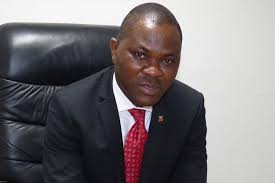
The Managing Director/CEO of Zeinth Bank Ghana, Mr Henry Oroh, has said that the recent recapitalisation exercise that has seen 23 banks increase their minimum stated capital to GH 400 million will increase competition in the industry which will subsequently drive interest rates down.
He said the recapitalisation exercise meant that every bank was now a big bank and ready to chase businesses that would ensure that their returns justisied the increase in capital.
That, he said, was good news for consumers who would benefit from the excess capital in the industry at a cheaper rate.
More Read

Mr Oroh was speaking in an interview with the GRAPHIC BUSINESS on January 4.
“The capital increase is going to make the business more competitive going forward.
What it means now is that every bank is a big bank and the assumption is that we are all really well capitalised,” he stated.
“This is good for the consumer because the capital will have to chase an economy size that has not increased commensurately.
When you increase capital from GH₵120 million to GH₵400 million in such a short space and there are over 20 banks, then that is a lot of funds injected in the market. Capital has increased by almost 300 per cent and this will lead to competition for space which will benefit the consumer,” he explained.
He said it meant that the industry would have access to more lendable funds and invest more to create wealth and employment.
Zero dividend policy
On how the bank was able to sail through the recapitalisation hurdle seamlessly, he said it was due to the zero dividend policy which had been adopted by the bank in its 14 years of operation in the country.
He said that helped them to build a strong balance sheet that was more than sufficient to recapitalise easily in line with the directive.
“In our 14 years of operation as a bank in Ghana, we have not paid any dividend to our shareholders.
Right from inception, we have operated a zero dividend policy which means that all the profits we have made over the years have been ploughed back into the system to support and lend to government in various ways through the purchase of bills and bonds, supported infrastructure, the industry and businesses,” he indicated.
“We are contributing to the growth of the economy in a very patriotic way with this policy. It is a demonstration that Zenith Bank has confidence in this economy and wants to support its growth,” he added.
2018 performance
Commenting on the performance of the bank in 2018, the MD/CEO pointed out that 2018 was a very good year for the bank, despite the challenges that confronted the banking industry.
“Despite the challenges and turbulence in the industry, the bank rode the storm,” he stated.
He said the issues that confronted the industry leading to 2018 were issues that had been there many years before.
“It takes leadership and strategic vision to anticipate problems and set yourself in such a way that it will not affect you.
We saw some of these challenges way back and we were able to navigate our business in a way that minimised the negative impact,” he noted.
“For instance, the directive for all banks to recapitalise to GH₵400 million last year had a major impact on the industry as a lot of banks did not have that capital and were naturally unsettled.
They were more focused on how to raise the funds.
However “before the ink that signed directive got dry, Zenith Bank had practically met the requirement and we owe that to the vision of the shareholders and the board of the bank,” he explained.
Opportunities
Mr Oroh also noted that every crisis provided opportunities as well and as such, Zenith Bank saw opportunities in terms of business and gaps to be filled.
“We were able to play to our strengths in times of difficulties,” he stated.
”The bank was also interested in the stability of the financial system because we operate in an eco-system where a problem for one sooner or later affects the other.”
“For that reason, under the umbrella of the Ghana Association of Bankers, we tend to find ways to support each other,” he said.
Source: Graphic.com.gh