Mr. Emmanuel Nkrumah, a World Bank Senior Water and Sanitation Specialist has identified political interference in Ghana’s Water and Sanitation sector as a major drawback to the country’s goal at enhancing water accessibility, sanitation and hygiene.
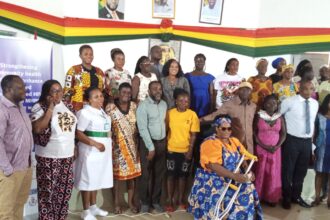
He made the observation at the opening session of a four-day conference of the Ghana Coalition of NGOs in WASH (CONIWAS) at Sogakope, in the South Tongu District of the Volta region.
The 29th annual Mole Water, Sanitation and Hygiene Conference was under the theme: “Reforming Ghana’s Water, Sanitation and Hygiene Sector towards Universal Access.”
More Read
Mr. Nkrumah said there was nothing to reform in the sector because the country had the right policies and adequate funds to ensure excellent output except for interference and the need to ensure integrity, accountability and effective monitoring.
“Look, when I talk about enough funding, the World Bank alone, aside other donors, has contributed over 600 million US Dollars to the water and sanitation sector for the past 15 years”, he said.
Mr. Nkrumah said failure to apply right practical approach to policies, often as a result of government’s booting out trained specialists at WASH sector offices, replacing them with their “political and tribal associates”, who abandoned technical and manpower structures were real challenges.
He said the above resulted in apathy among key staff, lack of monitoring, as well as corruption and loss of focus and criticised CONIWAS for failing to raise its voice against such bad conducts of political interference over the years.
“CONIWAS must know that, it is the voice of the rural poor for the WASH sector, when CONIWAS was being expected to raise its voice against a similar interference in the Ghana Water Company under the term of Public Private Partnership reforms years ago, you kept quiet and many people suffered”, he stated.
Mr. Nkrumah, on future funding of the WASH sector, said donors needed not be looked up to again, because water systems developed, the land fill sites and markets built were to sustained the sector if managed well.
Mr. Patrick Yaw Boamah, Deputy Minister, Ministry of Sanitation and Water Resources reiterated government’s commitment to attaining sustainable water, sanitation and hygiene accessibility for all by 2030 under the Sustainable Development Goal (SDG) Six.
He said government was undertaking institutional re-alignment for accelerated delivery, developing efficient sector policy strategies and localizing SDG six for sustainable financing at all levels for integrity, social accountability and monitoring to meet the target.
Mr. Boamah said the CONIWAS conference goal was in line with WASH sector reforms, including the creation of the sector ministry in 2017 and reforms by the Community Water and Sanitation Agency (CWSA).
“The operation VANGUARD by the Ghana Water Company and the Water Resources Commission against illegal mining is as well to stem the tide of water pollution and protect our bodies and the environment for the WASH access”, he said.
Mr Boamah said the country would need to focus on the increasing bad farming practices close to water bodies to prevent poisonous chemicals being washed into rivers.
The Deputy Minister said government would continue to dialogue and collaborate with all stakeholders and commended CONIWAS for its role over the years.
Mr. Martin Dery, CONIWAS Chairman, said the Association would use practical approaches to moving policy and strategy into extra practical actions ensuring nobody travelled more than 500 meters to access water.
He said with the recent re-basing, putting Ghana 27 percent in safe WASH management from its former 80 percent point, meant a lot needed to be done.
The conference scope included efforts at closing gaps between policy and strategy, coordination and harmonization, localizing SDG six, institutional re-alignment and integrity, social accountability, and monitoring.
Institutions, which supported and participated in the conference include UNICEF, Water Aid, World Bank, Canada, World Vision International, the EU, Global Community, Community Water representations and Ministry of Sanitation and Water Resources, Traditional Rulers and CWSA.
Source: GNA