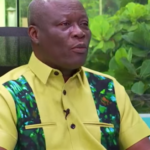
The Chairman of the Public Interest and Accountability Committee (PIAC), Dr Steve Manteaw, has raised concerns with the overall management of the country’s oil revenue, calling on the government to publicly explain how the money was being used.
According to him, although the country’s law states that 70 per cent of the revenue should go into capital expenditure, the chunk of the money was rather going into consumption.
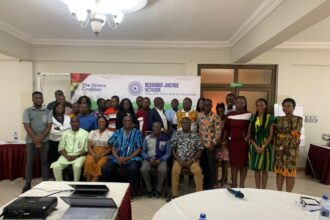
Addressing a forum of editors at Senchi in the Asuagyman District in the Eastern Region on the management and use of petroleum revenues for 2018 last Saturday, Dr Manteaw said it was wrong for the government to use oil revenue to fund the implementation of the free Senior High School (SHS) programme, which he considered to be a consumable.
More Read
He said if the current trend was not curtailed, the country’s oil reserves would get depleted while Ghana would have nothing to show for the oil discovery.
Dr Manteaw said although he was not against the implementation of the free SHS programme, he disagreed with the use of the oil money to fund the policy, adding that it contravened the dictates of the Petroleum Management Act.
He also wondered where all the revenue for the oil had gone since the government continued to maintain that the money had not been utilised.
Facts
Buttressing his case with facts, he said in 2017, out of the total oil money transferred to the Annual Budget Funding Amount (ABFA), USD$403 million was not utilised, adding that in 2018, another USD$252 million which was transferred to the fund was also not utilised.
Dr Manteaw said per the explanation from the Ministry of Finance, the money had been lodged into treasury accounts although there were no documentations to prove that claim.
In his view, any unspent oil money in the ABFA account should be returned to the Petroleum Holding Fund (PFH) to ensure proper accountability of the country’s oil revenue.
On free SHS
Touching on the free SHS programme, Dr Manteaw said the country should limit the dependence on oil revenue for financing the free SHS programme and diversify it in such a way that oil revenue became just a contributory revenue option of not more than 10 per cent.
He expressed concern that in a situation where the oil revenue took a dip, “how is the government going to find money to fund the programme?”
Using Uganda as an example, Dr Manteaw said because the country depended so much on donors, which is also unpredictable, it affected their education system.
“In Uganda today, the public secondary schools are now “cyto”, with the private schools playing the role of secondary schools, as the rich are sending their wards to the private ones,” he said.
Dr Manteaw urged the government to look at the wholesale approach to the free SHS programme in view of the argument that it was not possible to target only the poor, hence the rich were also targets in the programme.
He maintained that it was possible to target only the poor because the “poor are already being targeted as a result of the Livelihood Empowerment Against Poverty (LEAP) programme, because there is data based on which payment is made to them.”
In his view, “anybody who is on the LEAP programme should be entitled to the free SHS because they are classified as being poor, adding that “no rich person will allow his or her ward to wear the ‘cyto’ uniform but would love the ward to go to schools where they pay huge money”.
Source: Graphic.com