


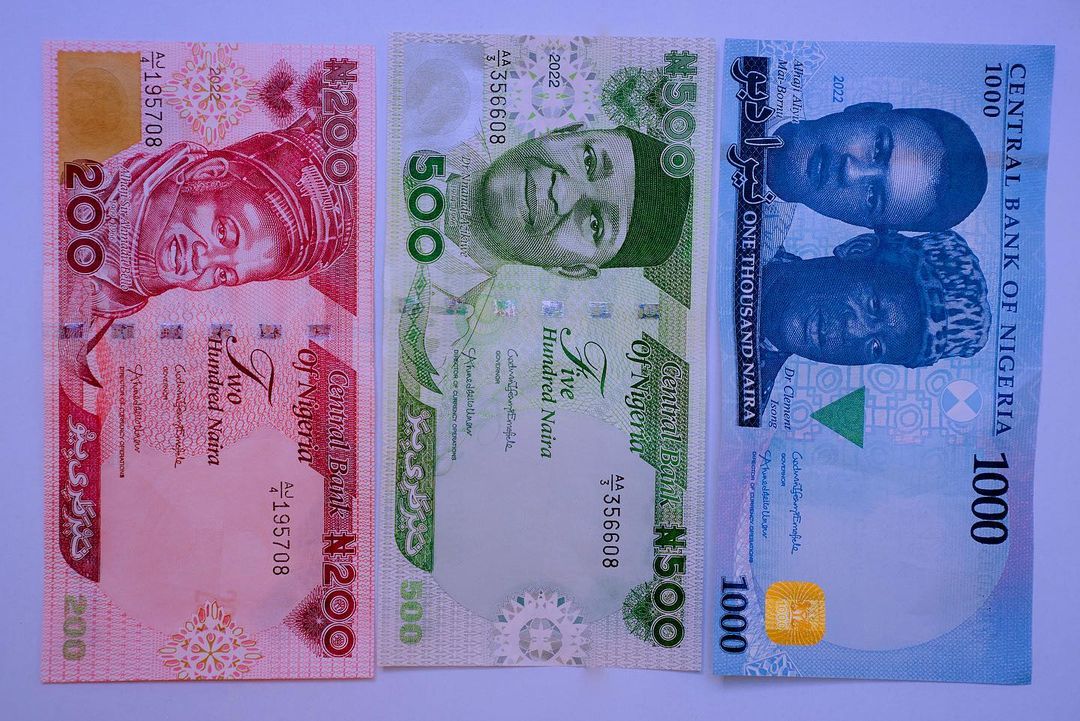
Nigeria’s Supreme Court has temporarily suspended Friday’s deadline to stop using old banknotes, which had caused a cash crisis in the country.
Banks have not been releasing enough of the new naira notes, leading to desperate and chaotic scenes as people tried to get their hands on them.
There were fights at ATMs, protests and mob attacks on commercial banks.
More Read

The chaos led to concern that it could affect this month’s elections, as many Nigerians do not have bank accounts.
The head of the election commission said some election service providers will need to be paid in cash, and that could prove to be difficult.
The Central Bank said the currency redesign and replacement policy, which was announced in October, would help it tackle inflation, which is currently running at about 21%, by reducing the amount of cash in circulation. It added that 80% of the notes currently in circulation were being held outside financial institutions.
It said that the new notes would be harder to forge and also said it would limit the amount of withdrawals in order to promote a cashless society.
The deadline to stop using the old naira notes was initially 31 January but this was extended until 10 February to give the banks more time to roll out the new notes.
However, this did not stop the chaos, which became a major election issue.
The presidential candidate for the ruling APC party, Bola Tinubu, alleged that powerful forces were intentionally making cash scarce in order to thwart his chances of victory.
A spokesperson for the Tinubu campaign has welcomed the Supreme Court ruling. “Our people have suffered greatly due to the incompetence of officials,” said Ajuri Ngelale.
Mr Ngelale added that the purpose behind the policy was “laudable” but that the lack of cash caused “rightful frustration” resulting in “civil unrest”.
Atiku Abubakar of the main opposition PDP backed the policy in principle but said it had been implemented poorly.
While Peter Obi of the Labour Party urged Nigerians to be patient, saying the reforms would have long-term benefits.
Some observers have pointed out that the lack of access to cash might make it more difficult for candidates to bribe voters – which is a common practice in the country.
The Supreme Court decision comes after a legal challenge initiated by the APC-run northern states of Kaduna, Kogi and Zamfara earlier this month.
Their lawyers argued that the government’s policy had led to an “excruciating situation that is almost leading to anarchy in the land”.
The case has been adjourned to 15 February.
It was initially thought the cash shortage was because the banking authorities had not released enough new notes.
However, the country’s anti-fraud agency, the Economic and Financial Crimes Commission (EFCC), recently shared information about raids in which officers had arrested bank managers for allegedly hoarding the new notes in vaults rather than putting them in ATMs and giving them to customers.
Last week APC governors met President Buhari and urged him to rethink the policy. However, Mr Buhari reiterated the deadline, vowing that the government would do “everything” to resolve the issues.
It is estimated that around 40% of Nigeria’s adult population does not have a bank account – especially those living in rural areas.
Source: BBC