

Agreement by countries to launch a process to develop a new global accord on pandemic prevention and response is cause for hope, the head of the World Health Organization (WHO) said on Wednesday in Geneva.
Tedros Adhanom Ghebreyesus welcomed the consensus decision, reached during a special session of the World Health Assembly (WHA), the UN agency’s top decision-making body, attended by representatives from its 194 Member States.
Historic session
The three-day meeting began on Monday with the sole goal of considering the benefits of creating a new international agreement on pandemic prevention preparedness and how best to avoid the pitfalls that have marred an effective response to COVID-19.
More Read

This marked only the second time the Assembly has met in a special session since WHO was founded in 1948.
“The adoption of this decision is cause for celebration, and cause for hope, which we will need,” Tedros said in his closing remarks, though noting the road ahead is long.
“There are still differences of opinion about what a new accord could or should contain. But you have proven to each other and the world that differences can be overcome, and common ground can be found.”
Negotiating body to meet
The decision will establish an intergovernmental negotiating body (INB) that will negotiate and draft any convention, agreement or other international instrument.
A first meeting will take place no later than 1 March 2022, and public hearings will also be held to inform deliberations.
The INB will deliver a progress report to the World Health Assembly in 2023 and submit its outcome for consideration the following year.
The development comes as the weekly global COVID-19 caseload plateaued, with nearly 3.8 million new cases reported during the period from 22 to 28 November.
As of Tuesday, there were more than 261 million confirmed cases of the disease globally, and 5.2 million deaths, with the Delta variant continuing to dominate.
Take Omicron seriously
Meanwhile, cases of the new Omicron variant have been reported in at least 23 countries in five of the six WHO regions.
Speaking later on Wednesday, Tedros said numbers are expected to grow.
“WHO takes this development extremely seriously, and so should every country,” he told journalists listening in to the agency’s regular virtual briefing on COVID-19.
“But it should not surprise us. This is what viruses do. And it’s what this virus will continue to do, as long as we allow it to continue spreading.”
Preliminary evidence suggests Omicron may have “potential immune escape”, and/or possibly higher transmissibility, when compared to previous variants of concern, according to WHO’s a latest weekly epidemiological update on COVID-19, also released on Wednesday.
Tedros said experts are learning more about the variant, “but there’s still more to learn about its effect on transmission, the severity of disease, and the effectiveness of tests, therapeutics and vaccines.”
He urged countries to take “rational, proportional risk-reduction measures”, including those aimed at delaying or reducing spread, such as screening passengers or implementing quarantines for international travelers.
Recipe for breeding variants
However, he stressed that “blanket travel bans will not prevent the international spread of Omicron, and they place a heavy burden on lives and livelihoods.”
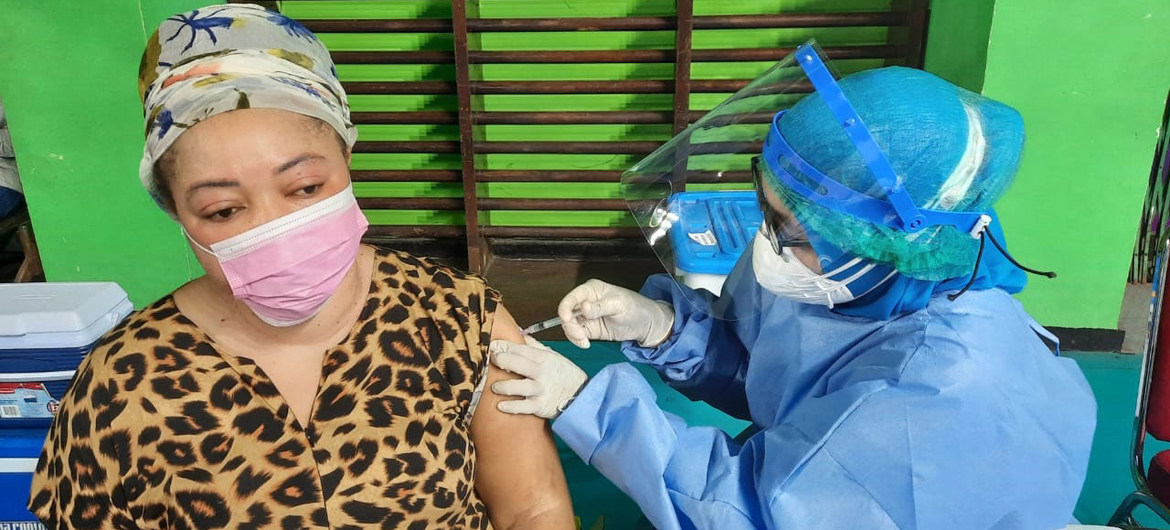
Tedros underlined the need to continue public health measures against coronavirus spread and ensure high-risk and vulnerable people are fully vaccinated.
He warned that the current “toxic mix” of low vaccine coverage, and very low testing, are a recipe for breeding and amplifying variants.
“We need to use the tools we already have to prevent transmission and save lives from Delta. And if we do that, we will also prevent transmission and save lives from Omicron. But if countries and individuals don’t do what they need to do to stop transmission of Delta, they won’t stop Omicron either,” he said.
Publicagendagh.com/UN News Centre