

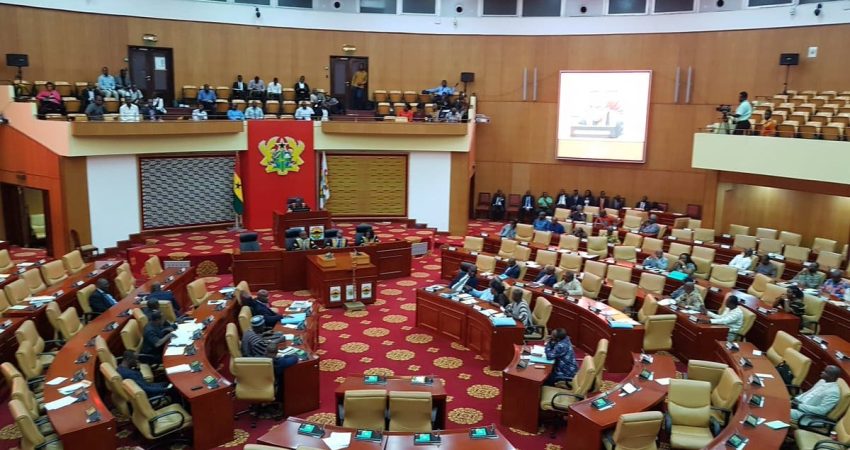
Ghana was one of the first countries in Africa to legislate an Affirmative Action Act in the early 60s which facilitated the entry of women members to the 114-member legislature to represent the regions of the country. Since then, the nation has made various commitments by signing global declarations and protocols that call for increased women’s participation and representation in public life yet Ghana has failed to meet the minimum United Nations recommended threshold of 30 percent women representation. There are at least 16 instruments in total (eight global, three Commonwealth, two Continental, and four sub-regional) that commit Ghana to achieving gender equality in political decision-making. Eight of these provide for affirmative action of some kind, progressing from 30% to 50%. For the past thirteen (13) years, citizens have embarked on the process for the passage of the Affirmative Action Bill but have still not been passed despite tremendous effort played by Civil Society Organisations (CSOs).
Research has shown that there is a gender imbalance in several spheres of life in Ghana and this position allows Affirmative Action to right the wrong of gender discrimination. Also, existing policies on Affirmative Action have not had the expected impact and discrimination continues particularly in public life.
Elections and Promotion of Gender Equality So Far
More Read
- Ghana has held elections for both national and local levels of governance.
- These elections have been hailed as fair and credible.
- However, elections are failing to deliver a national environment devoid of gender marginalisation against the desire for political legitimacy and fulfill promises of equitable, sustainable, and effective governance which requires gender sensitivity.
- Women have failed to benefit significantly from elections, whether partisan (nationally) or non-partisan (locally).
- They cannot be accepted as representing a genuine act of gender responsiveness but rather reinforces the ever-present gender equality gaps and challenges.
- This is evident in the table below which indicates the percentage of women elected and appointed during national and local level elections.
National Elections: Percentage of Women Elected
| Year | 1960 | 1965 | 1969 | 1979 | 1992 | 1996 | 2000 | 2004 | 2008 | 2012 | 2016 | 2020 |
| Percentage | 9% | 10% | 1% | 4% | 8% | 10% | 10% | 11% | 9% | 11% | 13% | 15% |
District Assembly Elections: Percentage of Women Elected
| Year | 1994 | 1998 | 2002 | 2006 | 2010 | 2015 | 2019 |
| Percentage | 4% | 4% | 7% | 10% | 7% | 9% | 4% |
Why Legislation is Necessary
- A law has a binding force unlike policy or a directive.
- Equality legislation (Affirmative Action) that will equalise the socio-political environment for increased women’s participation and assist them during elections is imperative.
- Ghana has been mandated by the Constitution and its international obligations to take necessary measures including legislation to promote women’s inclusion in public life.
- Demographic fairness and justice to the majority.
- The status of women 65 years after independence gives ample justification for Ghana to take urgent action in passing a law to remedy the situation as elections are failing the litmus test.
- Ghana is falling far behind the current global conversation of parity in participation as the country has not even reached the critical minority of 30%.
- Ghana is lowly ranked, around 161 out of 193 countries in the world.
- It is the responsibility of the state to address discrimination of any form because it has the power and the means to do so.
Law is pervasive. It has the power to address issues of inequalities in accessing resources, rights, social status, and voices deeply linked and buried in our norms and traditions. Affirmative Action is a temporary measure to ensure women’s effective inclusion in the development and decision-making processes in Ghana. The concept of affirmative action is to increase the active participation of women in public life from a minimum of 30% to parity of 50% by 2030 in line with the requirements of the Sustainable Development Goals (SDGs).
The Passage of an Affirmative Action Law that seeks to eliminate discrimination is the only way that can leapfrog Ghana towards achieving social justice, including gender equality for the marginalised, especially women. It is about human rights, fairness, equity and social justice. It makes economic sense. A recent global Report finds that Africa could add $316 billion to its GDP by 2025 if every country improved its score on gender equality indicators. Ghana, we cannot do that with elections.
Source: Abantu for Development