
Public Agenda NewsPaperPublic Agenda NewsPaper
  • General News
  • Politics
  • Business
  • Health
  • Development Agenda
  • World News
  • Features & Opinions
  • Election watch
  • Editorial
Font ResizerAa
Public Agenda NewsPaperPublic Agenda NewsPaper
Font ResizerAa
  • General News
  • Politics
  • Business
  • Health
  • Development Agenda
  • World News
  • Features & Opinions
  • Election watch
  • Editorial
Search
  • General News
  • Politics
  • Business
  • Health
  • Development Agenda
  • World News
  • Features & Opinions
  • Election watch
  • Editorial
Follow US
Breaking NewsBusiness

IMF warns of cedi depreciation

Latifa Carlos
Last updated: July 22, 2020 4:28 pm
Latifa Carlos
Share
3 Min Read
SHARE

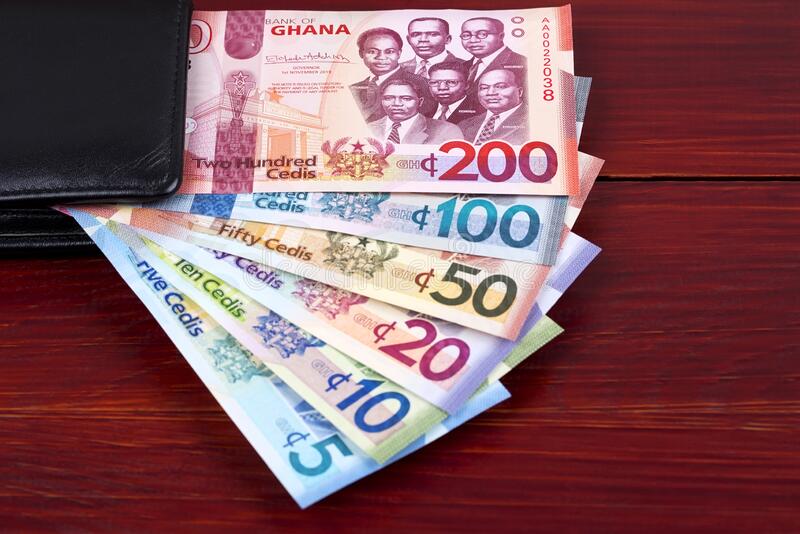
The further weakening of the Ghanaian Cedi against the U.S. dollar will worsen the impact of coronavirus pandemic, the International Monetary Fund has said.

Since late February 2020, the Cedi has consistently depreciated against the dollar by -2.46 percent, year to date, and -7.34 percent year-on-year.

The IMF in its staff policy-related analysis report on the dominance of the U.S. dollar said, “For the ongoing COVID crisis, the dominance of the US dollar implies that the observed weakening of emerging and developing countries’ currencies is unlikely to provide material boost to their economies in the short term.”

More Read

Finance Minister presents mid-year budget review today
ECOWAS reaffirms plans to launch single currency in 2027
Parliament approves $300m loan for SHS infrastructure expansion
Court convicts Wontumi on six illegal mining charges over Samreboi concession
Gov’t to build 50,000 houses for teachers – Haruna Iddrisu

“Effectively, the response of goods exports will be muted while some sectors that would normally respond more to exchange rates—like tourism—are likely to be impaired by COVID-related containment measures and consumer behavior changes,” The Fund stated.

The United Nations Conference on Trade and Development (UNCTAD) estimates that for every US$1 million lost in international tourism revenue, a country’s national income could drop by up to US$3 million, as the effects on employment could be dramatic.

Data from the Bank of Ghana suggested that the national economy entered a contraction phase right from March, the first month in which Ghana confirmed cases of coronavirus and began taking measures to curb its spread, but which inevitably also curb economic activity as well.

The central bank’s Composite Index of Economic Activity recorded its first ever year on year contraction in real terms, of 2.2 percent for March 2020. Instructively, in February, immediately prior to the arrival of COVID-19 in Ghana, the CIEA grew by 7.1 percent, year on year. The contraction in March is a reverse of the 5.6 percent growth recorded in March 2019. Indeed in 2019, the slowest growth in the CIEA was recorded in August, at 3.6 percent while the fastest growth was in December, at 14.0 percent.

The Fund also noted that the generalized strengthening of the US dollar may magnify the short-term fall in global trade and economic activity as both higher domestic prices of traded goods and services and negative balance sheet effects on importing firms contribute to lower demand for imports throughout the emerging and developing world.

Source: goldstreetbusiness.com

Share This Article
Facebook Whatsapp Whatsapp Email Copy Link Print

Recent Posts

  • Finance Minister presents mid-year budget review today
  • ECOWAS reaffirms plans to launch single currency in 2027
  • Parliament approves $300m loan for SHS infrastructure expansion
  • Court convicts Wontumi on six illegal mining charges over Samreboi concession
  • Gov’t to build 50,000 houses for teachers – Haruna Iddrisu
  • Honour Ghana, TI-Ghana Partner to Promote Integrity and Values-Based Education
  • ISODEC: Community Water Boards Exchange Best Practices to Strengthen Local Water Management
  • Community Voices Strengthened as ISODEC Successfully Concludes AVID II Project in Mfantseman Municipality
  • UK scraps £45 million girls’ education programme
  • Ghana’s inflation could ease below 5% in July – Databank
  • Mahama declares July 10–11 National General Cleaning Days in flood-affected regions
  • Study Recommends Royalty Share for Landowners in Mining Communities
  • Fuel prices drop for second consecutive time
  • From Trauma to Recovery: Strenthening Support for Victims of Torture
  • Drug networks infiltrating schools – NACOC warns
  • NDC renames National Headquarters after J. J Rawlings
  • GTMO Condemns Attack on Forestry Commission Checkpoint in Bono East Region
  • World leaders converge in Accra for high-level reparatory justice conference

You Might Also Like

Breaking NewsGeneral News

Honour Ghana, TI-Ghana Partner to Promote Integrity and Values-Based Education

July 20, 2026
Breaking NewsDevelopment Agendatop stories

ISODEC: Community Water Boards Exchange Best Practices to Strengthen Local Water Management

July 15, 2026
Breaking NewsDevelopment Agendatop stories

Community Voices Strengthened as ISODEC Successfully Concludes AVID II Project in Mfantseman Municipality

July 15, 2026
Breaking NewsDevelopment Agendatop stories

UK scraps £45 million girls’ education programme

July 7, 2026

About Us

Public Agenda is fou­nded and owned by Pu­blic Agenda Communic­ations.

Public Agenda was founded as a public interest Me­dia entity. Its Visi­on is to contribute to building a well-i­nformed society where accurate informati­on dissemination is the cornerstone of a democratic, just and equitable society.

Its mission is to inform, guide and bui­ld responsible citiz­enship and accountab­le decision making and strive for excell­ence in the media in­dustry. Public Agenda Communications is managed by a Board of Directors.

  • Contact us
  • Advertise with us
Welcome Back!

Sign in to your account

Username or Email Address
Password

Lost your password?