Public Agenda NewsPaperPublic Agenda NewsPaper
  • General News
  • Politics
  • Business
  • Health
  • Development Agenda
  • World News
  • Features & Opinions
  • Election watch
  • Editorial
Font ResizerAa
Public Agenda NewsPaperPublic Agenda NewsPaper
Font ResizerAa
  • General News
  • Politics
  • Business
  • Health
  • Development Agenda
  • World News
  • Features & Opinions
  • Election watch
  • Editorial
Search
  • General News
  • Politics
  • Business
  • Health
  • Development Agenda
  • World News
  • Features & Opinions
  • Election watch
  • Editorial
Follow US
Breaking NewsBusiness

Illicit financial flows cost Africa billions of dollars – Global Tax Justice Network

Suleman
Last updated: December 2, 2020 12:25 pm
Suleman
Share
2 Min Read
illicit-financial-flows
SHARE

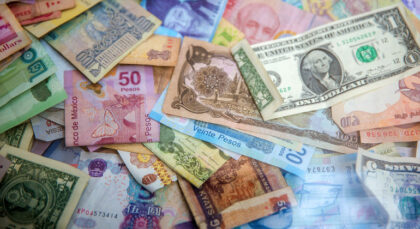
A new study conducted by a network of NGOs, including the Global Tax Justice Alliance, revealed that Tax evasion costs Africa more than $25 billion a year.

As African countries are grappling with the Covid-19 pandemic, tax evasion is considered “unacceptable”, as it reduces revenues that could be spent on citizens’ health.

Twenty-three billion dollars is the estimated amount that multinationals, local or foreign, operating in Africa have taken away from the countries in which they work. To this sum must be added over two billion held by rich Africans and hidden in tax havens.

More Read

Nigeria Just Raised the Bar for West African Fintech
13 new Mpox cases confirmed; total reaches 993
Ghana suspends citizenship process for people of African descent
IGP reshuffles top Police Command
Raw commodity exports undermining Africa’s growth – Mahama

The country most affected by this phenomenon of tax evasion is Nigeria, followed by South Africa, Egypt, and Angola. But even a country like Mauritius, which is considered by some to be a tax haven, is victim of the phenomenon, with an estimated loss of $60 million.

As revealed in a recent OECD report, such evasion is not always illegal since many multinationals, particularly in the mining sector, negotiate favorable tax conditions with states in exchange for their investment. This is what is modestly referred to as tax optimization, a kind of legal evasion, as it were. But whether it is legal or not, this capital flight handicaps countries.

The Global Alliance for Fiscal Justice estimates that in Africa, on average, fiscal justice accounts for half of national health budgets. In other words, in times of pandemic, African countries could hire ten million more nurses per year if the billions earned in Africa had stayed in Africa.

According to the Global Tax Justice Alliance report, countries throughout the world lose $427 billion in revenue annually from wealthy individuals and corporations abusing tax laws.

Source: NORTH AFRICA POST

Share This Article
Facebook Whatsapp Whatsapp Email Copy Link Print

Latest News

Ayariga accuses NPP minority of hypocrisy over certificates of urgency
January 27, 2026
Every cedi lost to corruption is a loss to national development – Deputy Finance Minister
January 27, 2026
ISODEC Introduces Whistleblower Policy to Strengthen Transparency and Accountability
January 27, 2026
Minister assures resumption of Kpong Irrigation Scheme amid funding delays
January 27, 2026
Reproductive mental health underreported among Ghanaian women- Gynaecologist
January 26, 2026
Ghana cedi best-performing currency in Africa for 2025 – IMF
January 26, 2026
Gold surges past $5,000 for first time
January 26, 2026

You Might Also Like

Breaking NewsFeatures & Opinionstop stories

How Ghana is losing water before it reaches the tap

January 22, 2026
Breaking NewsBusinesstop stories

Over 360,000 Ghanaians exited poverty in Q3 2025 – GSS report

January 21, 2026
Breaking NewsBusinesstop stories

GH¢107m EXIM loans recovered; dubious deals sent to security agencies – Trade Minister

January 21, 2026
Breaking NewsGeneral Newstop stories

Ga West MCE Calls for Stronger Enforcement of Disability Laws

January 20, 2026

About Us

Public Agenda is fou­nded and owned by Pu­blic Agenda Communic­ations.

Public Agenda was founded as a public interest Me­dia entity. Its Visi­on is to contribute to building a well-i­nformed society where accurate informati­on dissemination is the cornerstone of a democratic, just and equitable society.

Its mission is to inform, guide and bui­ld responsible citiz­enship and accountab­le decision making and strive for excell­ence in the media in­dustry. Public Agenda Communications is managed by a Board of Directors.

Welcome Back!

Sign in to your account

Username or Email Address
Password

Lost your password?