

Public Agenda NewsPaperPublic Agenda NewsPaper
  • General News
  • Politics
  • Business
  • Health
  • Development Agenda
  • World News
  • Features & Opinions
  • Election watch
  • Editorial
Font ResizerAa
Public Agenda NewsPaperPublic Agenda NewsPaper
Font ResizerAa
  • General News
  • Politics
  • Business
  • Health
  • Development Agenda
  • World News
  • Features & Opinions
  • Election watch
  • Editorial
Search
  • General News
  • Politics
  • Business
  • Health
  • Development Agenda
  • World News
  • Features & Opinions
  • Election watch
  • Editorial
Follow US
Breaking NewsWorld News

Illegal crossings at Zimbabwe-South Africa border after reopening

Latifa Carlos
Last updated: October 3, 2020 12:41 am
Latifa Carlos
Share
4 Min Read
Hundreds were arrested after trying to smuggle groceries into Zimbabwe
SHARE

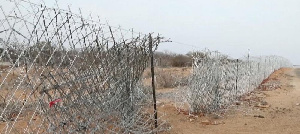
Zimbabwean street vendor Memory Chauke did not get very far when she hopped over a fence into neighbouring South Africa on the first day its borders reopened after a six-month closure due to the coronavirus pandemic.

South African patrol guards had anticipated that Zimbabweans would resume illegal crossings into the country to buy goods as soon as travel restrictions were lifted.

Hundreds were arrested. They had tried to smuggle groceries back to impoverished Zimbabwe, where an economic downturn and rampant hyperinflation have destroyed livelihoods.

More Read
NDC renames National Headquarters after J. J Rawlings
GTMO Condemns Attack on Forestry Commission Checkpoint in Bono East Region
World leaders converge in Accra for high-level reparatory justice conference
Mining, water supply and transport emerge biggest drivers of Producer Price Inflation
“Men’s Mental Health: Breaking the Silence, Saving lives

Chauke was caught on the way back to her village, on a gravel road around 500 metres (1,640 feet) away from the official Beitbridge border post. She looked sombre and exhausted as she sat under a large thorn tree, surrounded by grocery bags.

Chauke said it was the first time she had been arrested during crossing.

“I always run,” she told AFP. “Today, I didn’t manage. The 45-year-old mother of five had just walked more than 20 kilometres (12 miles) to South Africa’s northernmost town of Musina and bought goods she planned to resell in Zimbabwe for a profit.

“Where we stay there is no food, there is not enough food so we are hungry,” she said. “We come to nearby shops and buy cheaper food, then go back to Zimbabwe.”

Others sat on the ground alongside her, clutching recently purchased pots, maize meal, fuel and even sofas and a bed as they awaited their fate.

Many Zimbabweans rely on goods bought from richer South Africa for basic supplies, and informal cross-border trade is a lucrative business.

Some traders go as far as risking the treacherous crocodile-infested Limpopo river which divides the two countries to reach more affordably-priced South African stores. “It’s so dangerous but there is nothing I can do,” said Chauke, who had not dared to venture across the border since South Africa locked down on March 27.

She hoped to beg for forgiveness and “go back to my kids”.

‘A hungry stomach’

South Africa, the continent’s hardest-hit country by COVID-19, reopened some land borders as well as its three main airports on October 1.

Zimbabwean authorities had also planned to resume international travel on the same day. But the Beitbridge border post, one of the Africa’s busiest crossings, has remained shut on the Zimbabwean side.

Private vehicles were stopped at the gate and told to turn back. Only commercial trucks, which were already exempt from travel restrictions, were allowed through.

“We haven’t opened the Beitbridge border as yet,” Zimbabwe’s Home Affairs Minister Kazembe Kazembe told local media on Thursday, without giving a reason for the delay.

South African border patrols said they still intercepted many Zimbabweans jumping the fence on Thursday.

“There was a slight increase in numbers but for most of them it was with regard to the groceries,” military official David Mathetsha said.

“A hungry stomach is capable of doing anything,” he explained, adding that officers had confiscated a variety of goods and bulk purchases.

Mathetsha said that thousands of Zimbabweans crossed into South Africa each day before the pandemic. “At some stage you would arrest one person more than 20 times,” he recalled.

The fence separating South Africa and Zimbabwe has been notoriously porous since its de-electrification in 1994.

A multi-million rand renewal project was put on hold earlier this year after South Africa’s parliament deemed a new stretch of fencing inadequate and overpriced.

Source: africanews.com

Share This Article
Facebook Whatsapp Whatsapp Email Copy Link Print

Recent Posts

  • NDC renames National Headquarters after J. J Rawlings
  • GTMO Condemns Attack on Forestry Commission Checkpoint in Bono East Region
  • World leaders converge in Accra for high-level reparatory justice conference
  • Mining, water supply and transport emerge biggest drivers of Producer Price Inflation
  • “Men’s Mental Health: Breaking the Silence, Saving lives
  • NADeF Micro-Credit beneficiaries seek increased funding amid business growth
  • Gbetsile: Six-year-old girl drowns in septic tank while searching for water
  • Recurring Floods Continue to Threaten Lives and Property in Oyibi Community
  • Africa poised to lead global digital finance evolution — MTN CEO
  • Ghana risks outsourcing economic sovereignty under IMF PCI deal — ISODEC
  • Accountability Labs Engage Birim North Assembly on Development Needs
  • How Africa can escape the debt trap
  • US lists travel, visa requirements for World Cup fans
  • Mahama to lead decisive Cabinet meeting over Constitution Review today
  • Ghana’s economy expands by 7.7% in February 2026 – GSS
  • President Mahama urges African leaders to unite in tackling healthcare challenges
  • Chinese mining firm targets Ewoyaa lithium takeover in $210m deal
  • Ghana now 8th biggest economy in Africa

You Might Also Like

Breaking NewsBusinesstop stories

NADeF Micro-Credit beneficiaries seek increased funding amid business growth

May 31, 2026
Breaking NewsGeneral Newstop stories

Gbetsile: Six-year-old girl drowns in septic tank while searching for water

May 25, 2026
MTN Group CEO & President, Ralph Mupita
Breaking NewsBusinesstop stories

Africa poised to lead global digital finance evolution — MTN CEO

May 20, 2026
Breaking NewsBusinesstop stories

Ghana risks outsourcing economic sovereignty under IMF PCI deal — ISODEC

May 20, 2026

About Us

Public Agenda is fou­nded and owned by Pu­blic Agenda Communic­ations.

Public Agenda was founded as a public interest Me­dia entity. Its Visi­on is to contribute to building a well-i­nformed society where accurate informati­on dissemination is the cornerstone of a democratic, just and equitable society.

Its mission is to inform, guide and bui­ld responsible citiz­enship and accountab­le decision making and strive for excell­ence in the media in­dustry. Public Agenda Communications is managed by a Board of Directors.

  • Contact us
  • Advertise with us
Welcome Back!

Sign in to your account

Username or Email Address
Password

Lost your password?