

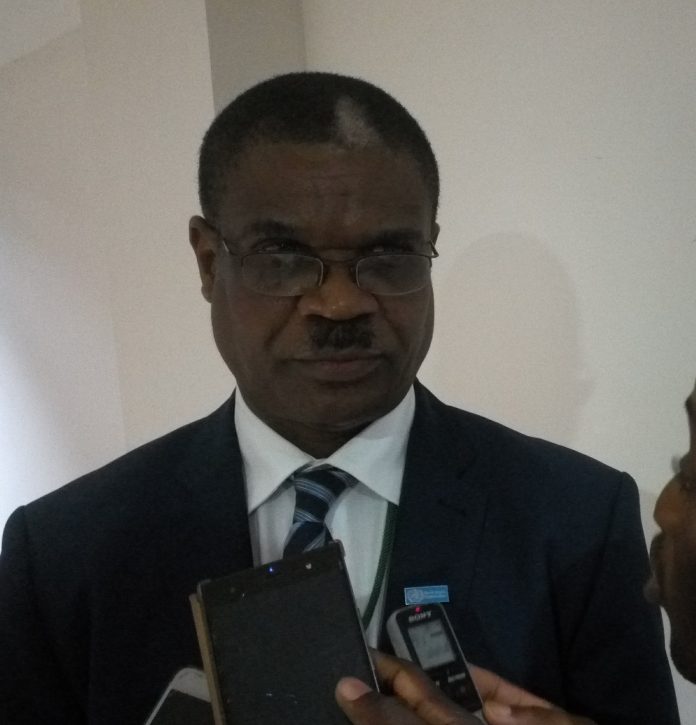
Dr Owen Laws Kaluwa, the World Health Organisation (WHO) Country Representative, has called on the Government to develop and strengthen evidence-based programmes to address the mental health needs of young people.
He urged the Government to put in place deliberate interventions, with the support of national policy-makers and programme managers, to prioritise and advocate for funding to finance the mental needs of the country, with special emphasis on adolescents and young people.
Dr Kaluwa made the call on Monday at a press launch of the 2018 Mental Health Week, which was organised by the Mental Health Authority (MHA) in collaboration with the Ministry of Health and WHO, in Accra.
More Read

The weeklong event, on the theme: “Young People and Mental Health in a Changing World,” seeks to draw attention to the importance of mental health, with particular focus on adolescent and young people, and create the platform for education, awareness and advocacy.
Dr Kaluwa described mental health as a complex social issue that could not be addressed by government alone or any single institution, as it went beyond health, to include sectors such as education and local government.
He said it was also fundamental to the overall health and for achieving the Sustainable Development Goals and Universal Health Coverage.
Dr Kaluwa said statistics show that half of all mental health globally began by the age 14, but most cases go undetected and untreated, and in the African Region, it was estimated that five per cent of the population, aged 15 years, suffered from a mental disorder.
Depression was the third leading cause of ill-health among adolescents, with suicide being the second leading cause of death among those aged 15 to 29 years, he said.
He said the harmful use of alcohol and illicit drugs among adolescents contributed to risky behaviours such as violence, unsafe sex and dangerous driving.
Also, children and adolescents with mental health disorders often faced stigma and limited access to healthcare and education, in violation of their human rights, he said.
Dr Kaluwa said the WHO had developed tools to support parents, caregivers and teachers to build life skills of children and adolescents, to help them cope with everyday challenges.
He recommended continuous training for primary healthcare workers to enable them to detect and manage common mental health problems in community settings.
He called for strengthened collaborations among stakeholders to build mental health resilience from an early age to help prevent the mental distress and illnesses among adolescents and young adults and to manage recovery.
Dr Pinaman Appau, the Executive Secretary of the Accra Psychiatric Hospital, said although the Mental Health fraternity in Ghana had worked hard to create awareness, increase advocacy and educate the public, it failed to prioritise mental health or investment in young people.
The MHA has, however, developed and embarked on a medium to long term development plan and was poised to bring on board all resources required for the effective and efficient implementation of projects designed in the strategy and called for the Mental Health Fund to be made functional.
“We need to get the Mental Health Fund up and running and conclude the conversation of having the NHIS cover mental healthcare in the nation,” Dr Appau said.
She said the unavailability of such in the NHIS had kept greater proportion of the youth who required mental healthcare from accessing such care, making them to suffer in silence, leading to complications in their otherwise mild conditions, which could have easily been treated and managed.
The lack of the necessary Legislative Instrument (LI) to back the Mental Health Law since its passage in 2012 had affected its smooth implementation to help navigate the problems that had plagued patients’ care.
Dr Appau said the MHA was addressing the issue of stigmatisation and discrimination against psychiatric patients by placing emphasis on community care rather than institutional care, and ensuring that mental health care was seen as any other illness for which patients could walk into health facilities for care.
She said the programmes outlined for the celebrations include public lecture, appearances on various media platforms, a health walk, outreach screening programmes, and Open Day at all Mental Health facilities for public interactions.
Dr Appau appealed to the media to intensify advocacy, public education and awareness to help eliminate the stigma and discrimination against persons with mental health challenges.
She said it was society’s responsibility to educate the youth on how to cope with the stresses of life and deal with everyday issues such as peer influence, alcoholism and substance abuse.
She said they must be guided and mentored as they grow up to understand themselves and the world around them.
Source: GNA