
Public Agenda NewsPaperPublic Agenda NewsPaper
  • General News
  • Politics
  • Business
  • Health
  • Development Agenda
  • World News
  • Features & Opinions
  • Election watch
  • Editorial
Font ResizerAa
Public Agenda NewsPaperPublic Agenda NewsPaper
Font ResizerAa
  • General News
  • Politics
  • Business
  • Health
  • Development Agenda
  • World News
  • Features & Opinions
  • Election watch
  • Editorial
Search
  • General News
  • Politics
  • Business
  • Health
  • Development Agenda
  • World News
  • Features & Opinions
  • Election watch
  • Editorial
Follow US
Breaking NewsGeneral News

Ghana must depart from export of raw materials – Senior Minister

Latifa Carlos
Last updated: October 9, 2017 3:41 pm
Latifa Carlos
Share
5 Min Read
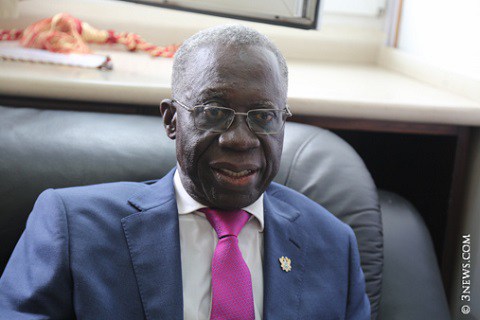
Hon. Yaw Osafo Maafo
SHARE

Mr Yaw Osafo-Maafo, the Senior Minister, says it is high time the nation departs from the export of raw materials and adds value to her agricultural produce in order to maximise profit for infrastructural development.

He said Ghana, and for that matter, Africa, should move away from the paradigm of relying heavily on the export of raw commodities to generate income.

Contents
Mr Yaw Osafo-Maafo, the Senior Minister, says it is high time the nation departs from the export of raw materials and adds value to her agricultural produce in order to maximise profit for infrastructural development. He said Ghana, and for that matter, Africa, should move away from the paradigm of relying heavily on the export of raw commodities to generate income. He cited for instance, Ghana and La Cote d’Ivoire, the two countries that produced 60 percent of the world’s cocoa output, out of which they earned a paltry $5.5 billion from the cocoa value chain, while the chocolate producers rather earned a hooping $100 billion. “We have a problem of earning a fair value of the cocoa value chain because we don’t determine the world prices, therefore, the only solution is to process our cocoa beans here in order to create jobs for our people,” he said. Mr Osafo-Maafo said this when he contributed to a Roundtable Discussion on “Democracy and Development in Africa: Trends and Paths” organised by the Ghana Centre for Democratic Development (CDD-Ghana), a policy think tank, in Accra, on Tuesday. The Senior Minister noted that the prices of cocoa in recent years had slumped on the global market from $3,000 to $1,750 per tonne, which should have resulted in the reduction of the prices paid to farmers, however, Government decided to subsidise it. Mr Osafo-Maafo, therefore, called for the expansion of the cocoa processing plants in the country, with available market for the finished products so that the nation would get a fair value for her products. He said African countries should take the education of their populations seriously because countries that were not endowed with raw materials like South Korea, Japan and Malaysia educated their citizens adequately, which they leveraged on to develop their economies to higher heights. “In Ghana we have redefined our basic education to include senior high school level, and this is a very big jump, which should reflect in our democratic dividends,” he noted. This, according to him, would change the attitudes of Ghanaians in terms of their consumption, governance system and positively impact on the socio-economic development of the nation. He said: “Education is a very key ingredient when we are talking about democracy, therefore, development and freedom should be given priority attention when developing the human index”. Professor Peter Lewis, the Vice Dean of the Academic and Faculty Affairs, Johns Hopkins University, School of Advanced International Studies, USA, in a presentation on the aforementioned topic, said African countries with dominant party system or multi-party democracy had enjoyed stable and prosperous economic fortunes from 1980s up to the year 2000, compared to those practising authoritarian system of governance, which had suffered decline in their economies. He said there was ample evidence to show that countries with good democratic system turned to produce better economic and education outcomes, which have had positive impact on their economies compared to those with authoritarian system of governance. He, therefore, suggested that African countries should adopt suitable system of governance that would inure to the benefit of their peoples, adding; “African countries should continue to experiment to see the best system of governance for each country”. Dr Bossman Asare, the Head of Political Science Department, University of Ghana, who chaired the function, said African countries should work at entrenching the rule of law and building consensus on very important national issues, instead of playing politics with every issue. He noted that democracy should be used to cater for the welfare of the ordinary citizen, especially supporting the education of the vulnerable people and providing their basic needs. Mr Yaw Osafo-Maafo,

He cited for instance, Ghana and La Cote d’Ivoire, the two countries that produced 60 percent of the world’s cocoa output, out of which they earned a paltry $5.5 billion from the cocoa value chain, while the chocolate producers rather earned a hooping $100 billion.

“We have a problem of earning a fair value of the cocoa value chain because we don’t determine the world prices, therefore, the only solution is to process our cocoa beans here in order to create jobs for our people,” he said.

More Read

Mental Health Groups Demand Criminal Probe into Alleged Sexual Assault of 14-Year-Old at Bolga Girls SHS
Mental Health Authority to shut Kumasi spiritual centre housing 2,000 mentally ill persons
Karpowership Ghana trains fisherfolk on fire safety, hygiene and financial management
Unforced Error! Contradictions of the Government’s PCI Decision
14 clandestine miners killed in disused South Africa mine

Mr Osafo-Maafo said this when he contributed to a Roundtable Discussion on “Democracy and Development in Africa: Trends and Paths” organised by the Ghana Centre for Democratic Development (CDD-Ghana), a policy think tank, in Accra, on Tuesday.

The Senior Minister noted that the prices of cocoa in recent years had slumped on the global market from $3,000 to $1,750 per tonne, which should have resulted in the reduction of the prices paid to farmers, however, Government decided to subsidise it.

Mr Osafo-Maafo, therefore, called for the expansion of the cocoa processing plants in the country, with available market for the finished products so that the nation would get a fair value for her products.

He said African countries should take the education of their populations seriously because countries that were not endowed with raw materials like South Korea, Japan and Malaysia educated their citizens adequately, which they leveraged on to develop their economies to higher heights.

“In Ghana we have redefined our basic education to include senior high school level, and this is a very big jump, which should reflect in our democratic dividends,” he noted.

This, according to him, would change the attitudes of Ghanaians in terms of their consumption, governance system and positively impact on the socio-economic development of the nation.

He said: “Education is a very key ingredient when we are talking about democracy, therefore, development and freedom should be given priority attention when developing the human index”.

Professor Peter Lewis, the Vice Dean of the Academic and Faculty Affairs, Johns Hopkins University, School of Advanced International Studies, USA, in a presentation on the aforementioned topic, said African countries with dominant party system or multi-party democracy had enjoyed stable and prosperous economic fortunes from 1980s up to the year 2000, compared to those practising authoritarian system of governance, which had suffered decline in their economies.

He said there was ample evidence to show that countries with good democratic system turned to produce better economic and education outcomes, which have had positive impact on their economies compared to those with authoritarian system of governance.

He, therefore, suggested that African countries should adopt suitable system of governance that would inure to the benefit of their peoples, adding; “African countries should continue to experiment to see the best system of governance for each country”.

Dr Bossman Asare, the Head of Political Science Department, University of Ghana, who chaired the function, said African countries should work at entrenching the rule of law and building consensus on very important national issues, instead of playing politics with every issue.

He noted that democracy should be used to cater for the welfare of the ordinary citizen, especially supporting the education of the vulnerable people and providing their basic needs.
 Mr Yaw Osafo-Maafo,

Share This Article
Facebook Whatsapp Whatsapp Email Copy Link Print

Recent Posts

  • Mental Health Groups Demand Criminal Probe into Alleged Sexual Assault of 14-Year-Old at Bolga Girls SHS
  • Mental Health Authority to shut Kumasi spiritual centre housing 2,000 mentally ill persons
  • Karpowership Ghana trains fisherfolk on fire safety, hygiene and financial management
  • Unforced Error! Contradictions of the Government’s PCI Decision
  • 14 clandestine miners killed in disused South Africa mine
  • NAIMOS launches major operation to clear illegal mining along Birim River
  • IMF urges Ghana to sustain quarterly electricity tariff adjustments‎
  • Oil prices fall on hopes Strait of Hormuz could reopen
  • Bekwai residents give Chinese quarry firm one-week ultimatum over blasting, environmental concerns
  • Veteran Nigerian Environmental Journalist Tunde Akingbade Dies at 67
  • AWSP Welcomes Government Decision to Restore Achimota Forest Reserve
  • Finance Minister presents mid-year budget review today
  • ECOWAS reaffirms plans to launch single currency in 2027
  • Parliament approves $300m loan for SHS infrastructure expansion
  • Court convicts Wontumi on six illegal mining charges over Samreboi concession
  • Gov’t to build 50,000 houses for teachers – Haruna Iddrisu
  • Honour Ghana, TI-Ghana Partner to Promote Integrity and Values-Based Education
  • ISODEC: Community Water Boards Exchange Best Practices to Strengthen Local Water Management

You Might Also Like

Breaking NewsGeneral News

NAIMOS launches major operation to clear illegal mining along Birim River

August 11, 2026
Breaking NewsBusinesstop stories

IMF urges Ghana to sustain quarterly electricity tariff adjustments‎

August 11, 2026
Breaking NewsBusinesstop stories

Oil prices fall on hopes Strait of Hormuz could reopen

August 5, 2026
Breaking NewsGeneral Newstop stories

Veteran Nigerian Environmental Journalist Tunde Akingbade Dies at 67

July 30, 2026

About Us

Public Agenda is fou­nded and owned by Pu­blic Agenda Communic­ations.

Public Agenda was founded as a public interest Me­dia entity. Its Visi­on is to contribute to building a well-i­nformed society where accurate informati­on dissemination is the cornerstone of a democratic, just and equitable society.

Its mission is to inform, guide and bui­ld responsible citiz­enship and accountab­le decision making and strive for excell­ence in the media in­dustry. Public Agenda Communications is managed by a Board of Directors.

  • Contact us
  • Advertise with us
Welcome Back!

Sign in to your account

Username or Email Address
Password

Lost your password?