Public Agenda NewsPaperPublic Agenda NewsPaper
  • General News
  • Politics
  • Business
  • Health
  • Development Agenda
  • World News
  • Features & Opinions
  • Election watch
  • Editorial
Font ResizerAa
Public Agenda NewsPaperPublic Agenda NewsPaper
Font ResizerAa
  • General News
  • Politics
  • Business
  • Health
  • Development Agenda
  • World News
  • Features & Opinions
  • Election watch
  • Editorial
Search
  • General News
  • Politics
  • Business
  • Health
  • Development Agenda
  • World News
  • Features & Opinions
  • Election watch
  • Editorial
Follow US
Breaking NewsBusiness

Food imports cost US$2.4bn annually

Latifa Carlos
Last updated: July 17, 2018 12:05 pm
Latifa Carlos
Share
2 Min Read
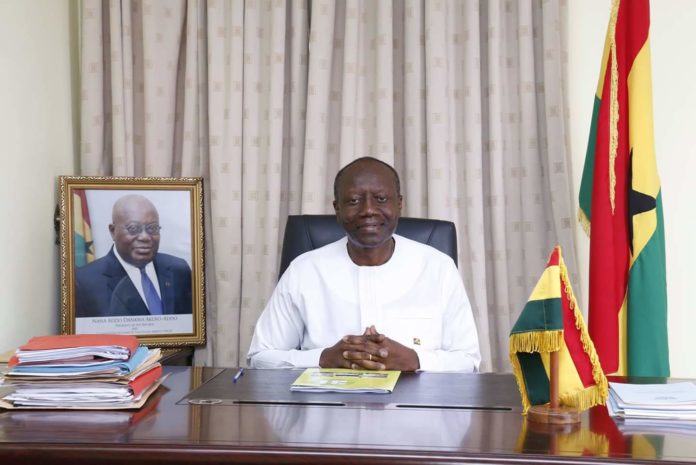
Ken Ofori-Atta
Ken Ofori-Atta
SHARE

The Minister of Finance, Mr Ken Ofori-Atta has revealed that food imports cost the nation an average of US$2.4 billion every year.

This means that about GH¢10.8 billion (one dollar to GH¢4.5) is used to import rice, sugar, sorghum, frozen chicken and meat, among other food items, for domestic and industrial consumption on annual basis.

At US$2.4 billion, the cost of food imports is about a quarter of the value of non-oil imports, which closed 2017 at US$10.66 billion.

More Read
Chinese mining firm targets Ewoyaa lithium takeover in $210m deal
Ghana now 8th biggest economy in Africa
Mahama, appointees donate GH¢6.1m to Mahama Cares Fund
Mawuedem Solution Supports Communities in Volta Region with Relief Items
Callistus Mahama warns against early succession talks, urges discipline and focus on governance

While bemoaning the impact of the huge food import bill on the economy, the minister told members of the Ghana Trades Union Congress (TUC) in Accra that the development was fueled by the corresponding strong appetite for imported consumables.

He said the importers were only taking advantage of a business opportunity that had been occasioned by a deficit in food supply and a strong preference for imported food.

The President of the Chamber of Agribusiness, Mr Anthony Morrison, said the dwindling fortunes of the sector were a reflection of how state funding had eluded the sector over the years.

Unlike other sectors, which are directly funded by state resources, Mr Morrison said the funding of agricultural activities was left to donors, making it difficult for growth enhancing programmes to achieve their desired objectives.

He intimated that almost 70 per cent of agric programmes were currently financed by donors, whose facilities were mostly channelled into administrative expenses and wages and salaries rather than capital expenditure.

That, he said, contributed to the sluggish nature of growth in the sector, leading to a hike in food imports to supplement dwindling domestic output.


Source: Graphic.com.gh

Share This Article
Facebook Whatsapp Whatsapp Email Copy Link Print

Latest News

Ghana rises to 39th in Press Freedom Index amid structural challenges
May 6, 2026
Water Justice Network Pushes for Affordable, Inclusive Water Systems
May 4, 2026
Overall cost pressures in construction are easing – Government Statistician
April 30, 2026
Ghana can’t industrialise without power, water – Nii Moi Thompson
April 30, 2026
Ghana walks away from US health agreement over sensitive data concerns
April 28, 2026
Mali at risk of splintering after jihadi and separatist attacks
April 28, 2026
Create ‘water markets’ to fix Ghana’s supply challenges — Former GWL MD
April 28, 2026

You Might Also Like

Breaking NewsDevelopment Agendatop stories

National Water Justice Campaign Launched to Tackle Inequality in Access

April 21, 2026
Breaking NewsGeneral Newstop stories

ISODEC Urges Collective Action to Secure Safe Water for All Ghanaians

April 21, 2026
Breaking Newstop storiesWorld News

Man kills seven of his children, and an eighth child, in Louisiana mass shooting

April 20, 2026
Breaking NewsPan Africa Politicstop stories

A decade of African politics: democratic gains and new pressures

April 20, 2026

About Us

Public Agenda is fou­nded and owned by Pu­blic Agenda Communic­ations.

Public Agenda was founded as a public interest Me­dia entity. Its Visi­on is to contribute to building a well-i­nformed society where accurate informati­on dissemination is the cornerstone of a democratic, just and equitable society.

Its mission is to inform, guide and bui­ld responsible citiz­enship and accountab­le decision making and strive for excell­ence in the media in­dustry. Public Agenda Communications is managed by a Board of Directors.

Welcome Back!

Sign in to your account

Username or Email Address
Password

Lost your password?