

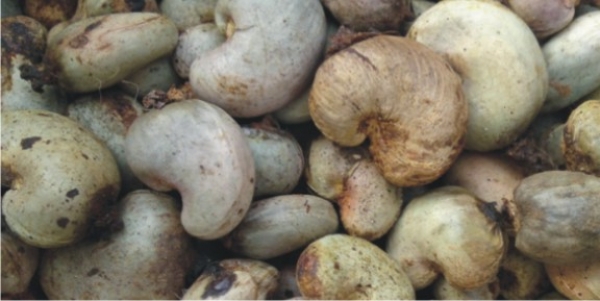
Cashew farmers and dealers at Seikwa and its surrounding communities in the Tain District in the Bono Region have suspended the sale of raw cashew nuts following a drastic reduction in the producer price of the commodity.
The price has slumped from GH¢1,000 per 100 kilogramme in 2018 to GH¢200 in 2019.
From January to March last year, a kilogramme of the commodity was sold between GH¢4 and GH¢8. However, within the same period this year, it was sold between GH¢2 and GH¢5.
More Read

Some disappointed farmers have also stopped picking raw cashew nuts from the farms because the cost involved in processing a bag of nuts is more than the price of a bag of nuts.
Cashew nut pickers charge the farmers GH¢120 per bag which, added to other expenses such as transportation, goes beyond GH¢200 paid for a bag.
Speaking to journalists at Seikwa, some of the farmers said following the reduction in the price of the commodity, they had decided not to sell cashew until international buyers agreed to raise the producer price from the current GH¢2 a kilo to at least GH¢8.
Meanwhile, some of the farmers who have no facilities to store the nuts or need money for various reasons continue to sell it at the lower price.
Appeal
The Secretary at the Tain District Cashew Secretariat, Mr Solomon Ameyaw, appealed to the government to set a regulatory body to ensure proper management of the industry.
“The current situation where the fixing of the price of the commodity is left in the hands of buyers is badly affecting the farmers, who are always compelled to sell their produce at ridiculously low prices,” he added.
He said the government was yet to fulfil its promise made at the launch of the 10-Year Cashew Development Plan (2017-2027) aimed at supporting the development of the produce.
He claimed that during the launch, the President, Nana Addo Dankwa Akufo-Addo, promised to provide two million grafted seedlings annually, expand the production of raw cashew nuts from the current 70,000 tonnes to 300,000 tonnes and also increase the processing capacity from 65,000 tonnes to 200,000 tonnes.
Mr Ameyaw said the government further promised to promote the production and marketing of cashew by-products and the local consumption of roast cashew products and also support capacity building in its value chain.
Cashew
Cashew was introduced into Ghana about 30 years ago, with the former Brong Ahafo Region becoming the leading producer of the commodity.
The region produced an average of 55,000 tonnes, out of the country’s current annual production of 70,000 tonnes of raw cashew nuts.
Statistics from the Ghana Export Promotion Authority (GEPA) indicate that cashew is currently the leading export commodity in Ghana’s non-traditional export (NTE) sub-sector.
It raked in about $197 million worth of export revenue in 2016, representing 53 per cent of the $371 million received from the total agricultural NTE sub-sector.
Source: Graphic.com.gh