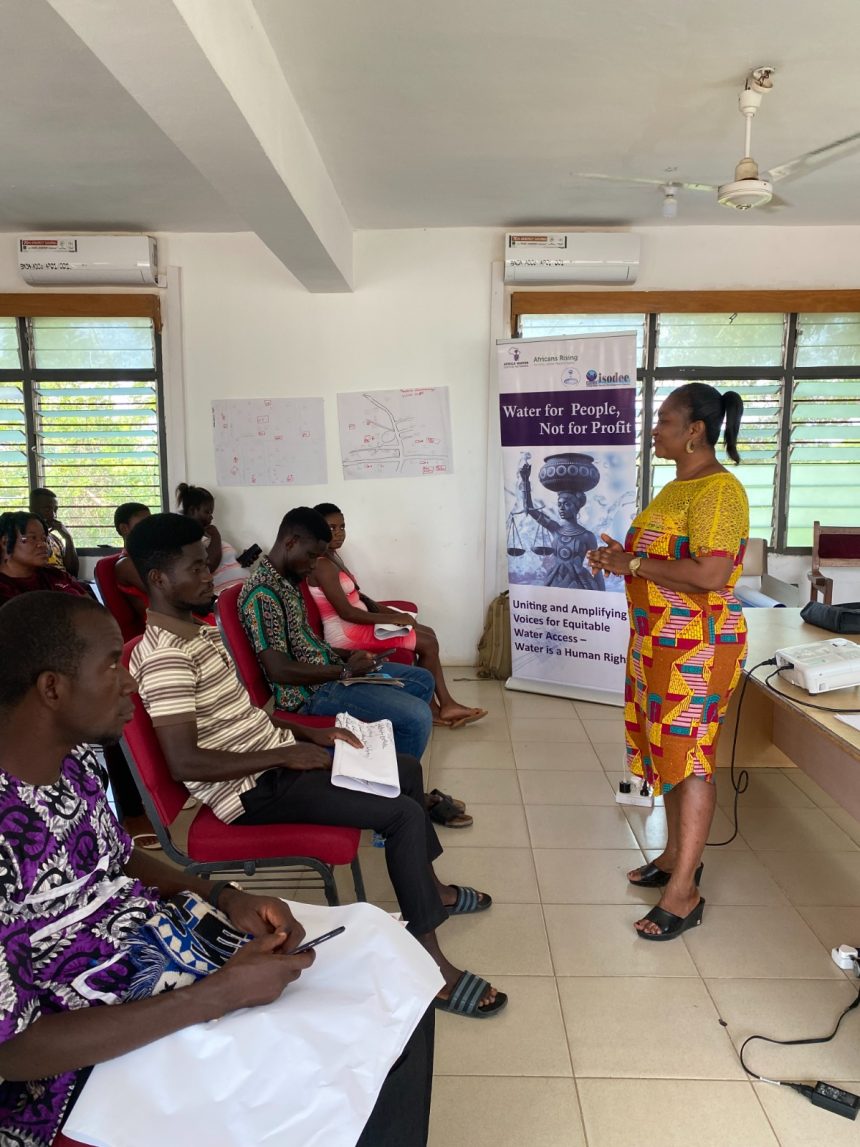
In a move towards inclusive and evidence-based local development, the Birim North District Assembly in the Eastern Region has indicated its readiness to adopt ISODEC’s Participatory Rural Appraisal (PRA) methodology to enhance its planning and decision-making processes.
The Integrated Social Development Centre (ISODEC) through the AVID-2 project is collecting data on community needs by employing the PRA approach in the Birim North District Assembly.
ISODEC employed six tools of the PRA including Transect Walk, Community Mapping, and Vision Map, Problem and Solution Analysis as well as the Pair Wise Ranking tools to collect the data.
More Read

The exercise coincided with the Assembly’s medium term development planning exercise where the Assembly was collecting data (needs assessment) to develop the Plan. The planning department joined ISODEC to the communities to under study the approach ISODEC was using to collect the data.
After participating in the deployment of the PRA tools by ISODEC on the field, the planning department expressed their satisfaction with the tools and expressed their willingness and readiness to adopt this approach for the remaining communities yet to be visited for the community needs assessment.
The District Planning Officer at the Birim North District Assembly, Audrey Sandra Arkon, had this to say after participating in the ISODEC’s exercise.., “This approach for collecting data or community needs assessment is one of its kind. We [Planning Department] have been conducting community needs assessment [data collection] to develop the Medium-Term Development Plans every five years and have never used this approach.
“We only go into the community to ask them of their needs but this your approach helps to identify the various resource points in the community, the community layout, and stakeholder analysis and how the community members want to see their communities in the future. What we are very much excited about is the Pair wise ranking. It will enable the Assembly to focus on the real needs of the communities that needs to be resolved. The Assembly will adopt this tools in the communities that we are yet to collect their needs to enable us develop a very detailed and rich MTDP.”
This success story emerged from a recent community engagement exercise where the Planning unit of the Birim North District Assembly fully participated in all activities. The department praised ISODEC’s PRA as a unique and effective method of gathering community data.
The community engagement formed part of activities under Action for Voice, Influence and Inclusive Development-AVID 2, supported by STAR-Ghana Foundation. The Project seeks to empower target communities to increase their level of consciousness to demand community development using bottom-up movements for social accountability.
The ISODEC Team, led by Ms Martha Owiredu-Baah explained that PRA empowers communities to actively share and analyze their own knowledge, while ensuring that development initiatives are both grounded in local realities and community-driven.
She stated that one of the key tools within this approach, the Transient Walk, enables facilitators to gain a clearer understanding of environmental, social, and economic conditions through direct observation and interaction with residents.
According to her, by integrating PRA and the Transect Walk method into its planning framework, the District Assembly would gain more detailed insights into community needs, promote greater participation and inclusivity among residents, while supporting evidence-based planning for the Medium-Term Development Plan (MTDP).
The District Assembly believed that, ISODEC’s participatory approach would lead to more targeted and sustainable development interventions, which would ultimately improve the lives of people across the District.