

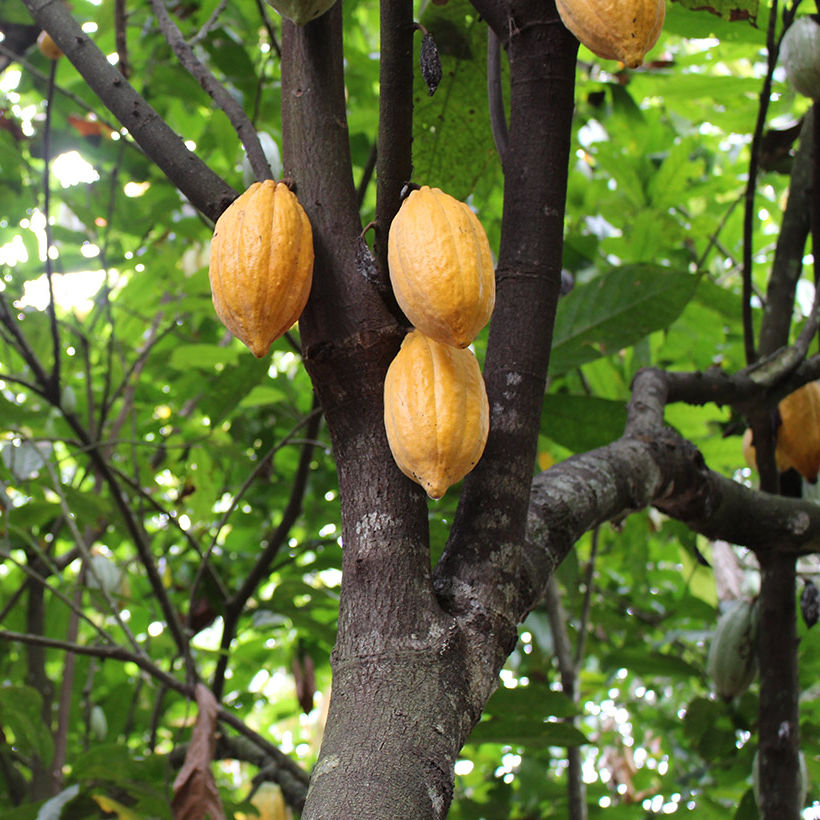
Cocoa is the most important cash crop to both the Ghanaian economy and as the main source of livelihood for over a million farmers. Ghana is the world’s second largest producer of cocoa, and exports about 800,000 metric tons accounting for over 9% of the country’s GPD.
As one of country’s key agricultural crop, cocoa rakes in an estimated $1.5 billion in foreign exchange yearly, while the sector employs about 2 million people including more than 720,000 cocoa farm owners.
In spite of these aforementioned positives derived by the state from the production of the crop, the cocoa sector continues to encounter some challenges that could potentially threaten its sustainability. The challenges include, child labour, access to farmlands, and conversion of cocoa farms to rubber plantation as well as fair prices for the produce.
More Read

Experts have observed that gains made in the cocoa supply chain as mentioned above, cannot be sustained if government does not adequately address the problem of child labour in the sector and access to farmlands for the youth who are interested in Cocoa cultivation.
Speaking at the 2nd Cocoa Farmers’ dialogue series organized by the Ghana Agricultural and Rural Development Journalists Association (GARDJA) at Sefwi Anyinabrim in the Western region recently, Dr Nii Tackie-Otoo, Acting Deputy Director in-charge of the Cocoa Health Extension Division (CHED, appealed to Chiefs and land owners in the country to make farmlands easily accessible to the youth who desire to go into cocoa farming.
According to Dr Tackie-Otoo, this will encourage more young people to take up cocoa farming from the aged.
He told participants at the Dialogue that things did not look so good for the cocoa sector as a result of the lack of enough farmlands for cocoa farming, adding that, “the future of cocoa production in Ghana is bleak considering the average age of cocoa farmers. COCOBOD is therefore grouping the youth to take over, but the challenge is the youth don’t have access to farmlands.
“We are therefore appealing to Chiefs and land owners to release farmlands to those who want to go into cocoa production.”
He bemoaned that the number of elderly farmers in the sector pose a threat to its sustainability, hence, COCOBOD is instituting incentive packages to entice the youth in cocoa production.
The Cocoa dialogue brought together journalists, farmers, civil society groups, government officials and agricultural experts to discuss and proffer solutions to challenges facing the cocoa sector.
President of GARDJA, Richmond Frimpong, said the trend of leaving cocoa production to the aged population is worrying.
“GARDJA has observed that, most farmers who are actively engaged in cocoa production have aged. This means that, if this trend continues, then Ghana may struggle in producing more cocoa in the next 10 to 20 years. There is therefore the need to incentivize the youth to take up cocoa farming”.
The dialogue was supported by the UTZ, a Netherlands based product certification firm. UTZ runs the largest certification program in the world for sustainable farming of coffee and cocoa.
By Mohammed Suleman