
Public Agenda NewsPaperPublic Agenda NewsPaper
  • General News
  • Politics
  • Business
  • Health
  • Development Agenda
  • World News
  • Features & Opinions
  • Election watch
  • Editorial
Font ResizerAa
Public Agenda NewsPaperPublic Agenda NewsPaper
Font ResizerAa
  • General News
  • Politics
  • Business
  • Health
  • Development Agenda
  • World News
  • Features & Opinions
  • Election watch
  • Editorial
Search
  • General News
  • Politics
  • Business
  • Health
  • Development Agenda
  • World News
  • Features & Opinions
  • Election watch
  • Editorial
Follow US
Breaking NewsDevelopment Agenda

Why girls in Paala are pushed into early marriages

Latifa Carlos
Last updated: February 26, 2020 12:54 am
Latifa Carlos
Share
3 Min Read
SHARE

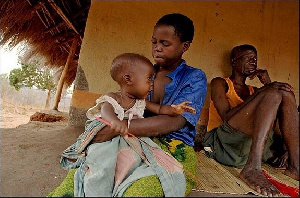
Girls in the Paala community in the Wa West District of the Upper West Region have resorted to early marriages due to their inability to access schools in their locality.

The girls have to commute long distances to other communities to attend basic school, which posed a challenge to many of the girls who chose to marry early, some at tender ages.

A resident of Paala told the Ghana News Agency (GNA) in an interview that because there was no school in the community, young girls were marrying at early age; one married at age 17 and another married at age 15, while many of them were also dropping out of schools.

More Read
United Nations COP31 climate talks collapse in bitter row over fossil fuels
Ghana calls for coordinated action to strengthen child protection systems
Dozens missing after boat carrying 100 migrants sinks off Senegal’s coast
Wassa group demands 10% mining equity, 2% mineral sales revenue in Takwa mines
Mahama orders nationwide performance assessment of all 261 MMDCEs

Madam Seonkomo Nyigna, said the situation was a source of worry to parents, especially mothers whose children were lacking behind in education.

Paala, a remote predominantly farming community with a population of more than five hundred, had been bedeviled with numerous challenges including inadequate source of potable water, poor access to health care and lack of roads.

Madam Martha Seonkomo, another resident of the community, indicated that children of school going age sat idle at home because there was no school in the community.

She said the children in the community attended school at the Bienye community, which was several kilometers away from Paala.

“There are many children who are not going to school because they cannot walk to the community where the school is located. They pass two communities before they get to the school,” Madam Seonkomo explained.

“Children, who had the courage to start school, had all dropped out along the line due to the distance from the community to the school.

“Our children and siblings want to go to school but they can’t go because the school is not close to the community,” she said.

The residents gave the assurance that they were ready to provide land and labour to build a school for the community, and appealed to the government, benevolent individuals and Non-governmental Organizations to support them with building materials such as cement and roofing sheets.

Mr Badia Zimbe Yussif, the Assembly Member for the area, indicated that improving education was one of his priorities and said he would lobby for a school for the community.

He observed that the challenge in accessing education at Paala was compounded by the lack of road network, which cuts off the community from other communities during the rainy season.

Meanwhile, the United Nations Sustainable Development Goal Four (4) enjoins member states signatory to those goals to ensure inclusive and equitable quality education and promote lifelong learning opportunities for all by 2030.

Source: GNA
Share This Article
Facebook Whatsapp Whatsapp Email Copy Link Print

Recent Posts

  • United Nations COP31 climate talks collapse in bitter row over fossil fuels
  • Ghana calls for coordinated action to strengthen child protection systems
  • Dozens missing after boat carrying 100 migrants sinks off Senegal’s coast
  • Wassa group demands 10% mining equity, 2% mineral sales revenue in Takwa mines
  • Mahama orders nationwide performance assessment of all 261 MMDCEs
  • 2027 Budget: Inside Mahama’s US$10bn New Economy programme
  • Gov’t won’t borrow to finance New Economy Programme – Ato Forson
  • ACA Participates in 15th VINACAS Golden Cashew Rendezvous in Vietnam
  • Farmers demand compensation over Newmont Ahafo North land acquisition
  • African Philanthropy Leaders Call for Collective Action to Drive Sustainable Development
  • Nkoranman Community Bank records 37% pre-tax profit growth
  • Ghana reaffirms commitment to women’s economic empowerment at Addis Ababa dialogue
  • Seven missing fishermen located in Togo’s waters – Western Regional Minister
  • Deploy more military, police to fight galamsey – Christian Council
  • Petrol, diesel prices set to fall from Oct. 16 as LPG faces 18.5% hike
  • IMF raises Ghana’s 2026 growth forecast to 5.7%, exceeding government’s target
  • CSOs, Fisheries Stakeholders Demand Revocation of Offshore Gold Licences
  • ActionAid ‘deeply alarmed’ by US government’s sanctions on the International Criminal Court

You Might Also Like

Breaking NewsFeatures & Opinionstop stories

2027 Budget: Inside Mahama’s US$10bn New Economy programme

November 11, 2026
Breaking NewsBusinesstop stories

Gov’t won’t borrow to finance New Economy Programme – Ato Forson

November 10, 2026
Breaking NewsGeneral Newstop stories

ACA Participates in 15th VINACAS Golden Cashew Rendezvous in Vietnam

November 5, 2026
Breaking NewsGeneral Newstop stories

Farmers demand compensation over Newmont Ahafo North land acquisition

November 5, 2026

About Us

Public Agenda is fou­nded and owned by Pu­blic Agenda Communic­ations.

Public Agenda was founded as a public interest Me­dia entity. Its Visi­on is to contribute to building a well-i­nformed society where accurate informati­on dissemination is the cornerstone of a democratic, just and equitable society.

Its mission is to inform, guide and bui­ld responsible citiz­enship and accountab­le decision making and strive for excell­ence in the media in­dustry. Public Agenda Communications is managed by a Board of Directors.

  • Contact us
  • Advertise with us
Welcome Back!

Sign in to your account

Username or Email Address
Password

Lost your password?