

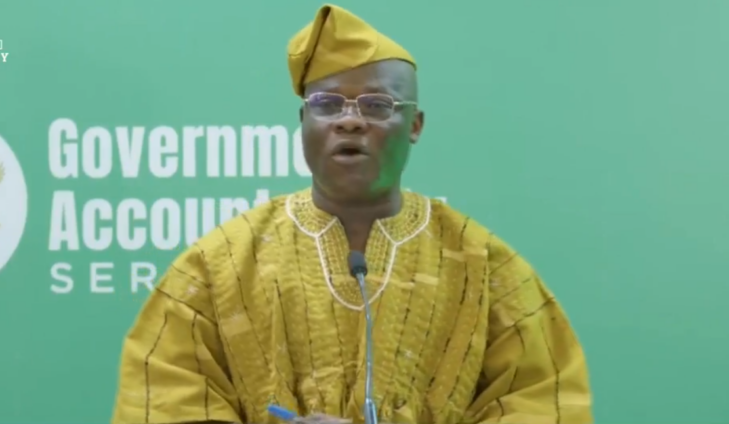
The Minister for Local Government, Chieftaincy and Religious Affairs, Ahmed Ibrahim, has criticised the previous administration led by former President Nana Addo Dankwa Akufo-Addo, accusing it of leaving behind a weak and under-resourced local governance system.
Speaking at the Government Accountability Series on Monday, April 20, Mr Ibrahim said the current government inherited a decentralisation structure that was not functioning effectively due to inadequate funding.
According to him, this situation affected the ability of Metropolitan, Municipal and District Assemblies (MMDAs) to deliver services and implement development projects.
More Read

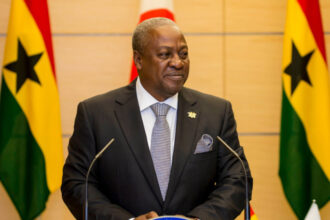
“The government of His Excellency John Dramani Mahama inherited in 2025 a dysfunctional local governance sector and decentralisation structure, occasioned by lack of adequate resources for the MMDAs to perform,” he said.
He added that this hampered the assemblies’ ability to fully discharge their statutory responsibilities, thereby affecting service delivery and infrastructure development nationwide.
Mr Ibrahim also claimed that concerns about the state of the sector were not limited to the current administration.
“This was highly and fervently voiced out by the former administrator of the District Assemblies Common Fund,” he said.
He further accused the New Patriotic Party (NPP) administration of failing to prioritise decentralisation during its tenure, particularly in relation to the management of the District Assemblies Common Fund (DACF).
“As a party, the New Patriotic Party… did not take decentralisation seriously,” he said.
He alleged that the DACF was not consistently disbursed to the assemblies.
“The District Assemblies Common Fund was not fully forthcoming. It was not regular. It was very erratic,” he stated.
According to him, less than 50 per cent of the fund was consistently transferred directly to the MMDAs over a period of nearly seven years.
“Less than 50 per cent of the DACF was transferred directly to the MMDAs consistently for almost seven years,” he said.
Mr Ibrahim also accused the previous administration of failing to issue operational guidelines for the use of the fund beyond its first year in office.
“They only issued guidelines for the first year, 2017, and stopped,” he said.
He described this as a breach of the Local Governance Act, noting that the law requires the Minister, in consultation with the Finance Minister, to issue guidelines governing the use of the fund.
“This is what controls the internal system and ensures the proper use of the money,” he added.
Meanwhile, the Minister outlined new measures aimed at improving accountability and sanitation management at the local level.
He said motorbikes have been procured for sanitation officers to enhance monitoring of environmental conditions in communities.
“Motorbikes have been bought, youth have been recruited… they will be patrolling all the principal ceremonial streets,” he said.
He explained that the officers, described as sanitation ambassadors, will assess cleanliness in various areas as part of a new monitoring system.
He also announced the introduction of dedicated phone lines and a call centre to enable the public to report sanitation concerns.
“When you see any filthy area, you call the call centre, and that one will be registered,” he said.
Mr Ibrahim said the system is designed to reduce human interference and improve transparency.
“It’s not about my interest… the human factor is going to be taken out,” he explained.
He added that the new approach would ensure local officials are assessed based on observable conditions in their jurisdictions.
“You will see the poor nature of sanitation in your area… it is that evidence that will be used to assess performance,” he said.